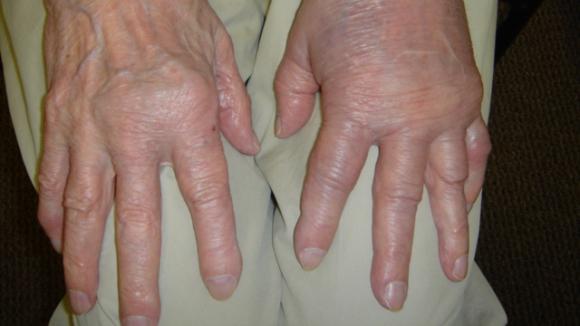
Since the millennium, we have seen an expansion in the number of advanced treatments both biologic and targeted synthetic disease modifying anti-rheumatic drugs for rheumatoid arthritis. The challenge remains on how best to characterise the subtypes of RA in order to choose the best drug to ensure optimal outcome for patients.
All News
Research work from the Accelerating Medicines Partnership (AMP: RA/SLE) Network, was published in Nature and more specifically characterizes RA synovium into several cell-type abundance phenotypes (CTAPs). Could CTAPs known disease features or more effective future therapies?
A recent CDC reports estimates that in 2019–2021, 21% of U.S. adults (53.2 million) have physician diagnosed arthritis. Now, an updated report shows a larger number (~33%) of U.S. veterans having diagnosed arthritis. Compared to nonveterans, this prevalence was double in men, and 60% higher in women.
A study of nearly 80,000 US veterans who underwent primary knee joint arthroplasty (TKA) showed the incidence of prosthetic joint infection (PJI) was highest in the first 3 months and remained elevated through 12 months compared with 12 months or more after surgery.
The American College of Rheumatology (ACR) expressed concern that the conversion factor included in the Centers for Medicare and Medicaid Services (CMS) CY 2024 Medicare Physician Fee Schedule and Quality Payment Program final rule is insufficient to address rising inflation.