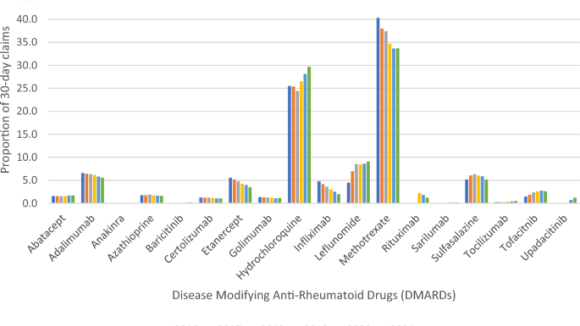
A trend analysis of DMARDs shows that only half of rheumatoid arthritis (RA) patients are taking DMARDs, and that the COVID-19 pandemic substantially affected DMARD use. Despite numerous DMARD advances and evolving treatment guidelines since 1990, older therapies are still commonly used and the latest agents make up a small percentage of overall DMARD use.
All News
Medscape has published an informative review of leflunomide, drawn from Dr. Eric Ruderman’s recent lecture on the subject at the February RWCS meeting in Maui.
JAMA has reviewed the "2022 EULAR Recommendations for the Management of Rheumatoid Arthritis With Synthetic and Biological Disease-Modifying Antirheumatic Drugs".
A follow-up analysis of a randomized clinical trial found that the use of calcium and vitamin D supplements among postmenopausal women was associated with decreased risk for cancer mortality, but increased risk for cardiovascular disease (CVD) mortality.
A systematic review of pharmacological treatments for adult-onset Still disease (AOSD) supports the efficacy of tocilizumab (TCZ), anakinra (ANK), and canakinumab (CNK).
Dr. Jack Cush reviews the news, journal reports and regulatory approvals from the past week.
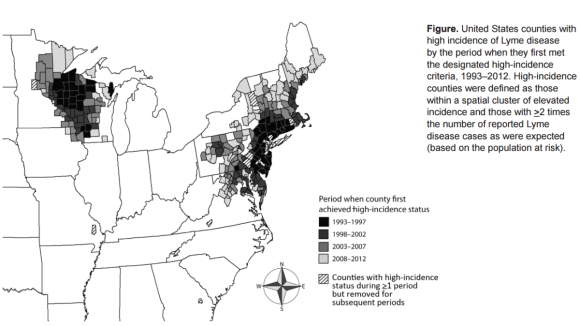
The CDC has updated its Lyme disease surveillance report based on a new case definition. Compared to 2017–2019, the number of cases in 2022 rose by 69%.
A Korean nationwide cohort study found that both seropositive and seronegative rheumatoid arthritis (RA) patients have a significantly higher risk of depression.
While it is believed that autoimmunity follows autoantibody positivity, a Danish study shows the incidence of polyautoimmunity to be similar in rheumatoid arthritis (RA) patients who are either anticyclic citrullinated peptide antibody (ACPA)–positive or ACPA–negative.
According to the National Health Interview Survey (NHIS), in 2022, the prevalence of diagnosed arthritis in adults was 18.9% (women 21.5%, more than men 16.1%). These numbers are down since the CDC's MMWR report of 2019–2021, where is was estimated 21.2% of U.S.
Data from the Global Burden of Diseases Study 2019, suggests that early-onset osteoarthritis (OA) (before age 55 yrs) is an emerging health issue that parallels societal problems of obesity.
Having patients waiting for knee arthroplasty undergo a preoperative program of weight loss, exercise, and other interventions gave them modestly improved pain, function, and quality of life, a small randomized trial showed.
Dr. Jack Cush reviews the news and journal reports from the past week on RheumNow.com. Are these associations with infection, biomarkers and weather real or imaginary? Linked or luck? Causal or casual? You decide....
Despite the availability of numerous advanced therapies for psoriatic arthritis (PsA), there remains a substantial burden and unmet need for improved therapies, according to a newly published Canadian study.
A multinational study of polyarteritis nodosa (PAN) through the international GLOBAL-PAN network shows PAN to be a complex, multisystem disorder with a high risk of relapse and low risk of death (11% at 10 years).
A UK population cohort study has shown that gout carries an increased risk for a wide variety of cardiovascular disorders.
The TARGET (Treatments Against RA and Effect on FDG PET/CT) trial showed that different treatment strategies equally benefited arterial inflammation (by FDG-PET) in rheumatoid arthritis. A subsequent analysis of these patients showed several candidate biomarkers that may correlate with baseline and treatment‐associated changes in arterial inflammation in patients with RA.
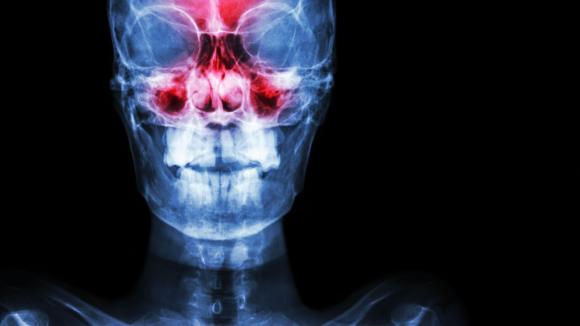
The common inflammatory condition sinusitis is linked to a 40% heightened risk of a subsequent diagnosis of rheumatic disease, particularly in the 5 to 10 years preceding the start of symptoms, finds research published in the open access journal RMD Open.
Dr. Jack Cush reviews the news and journal reports from the past 2 weeks on RheumNow.com; but begins with a discussion of what constitutes "immunosuppression" and how it applies to our patients.
No clear link between weather and MSK symptoms
There is a longstanding belief that changes in weather conditions, such as impending rain or temperature, can trigger or worsen muscle and joint pain but Australian researchers have found no clear pattern between the two.