While many autoinflammatory syndromes are driven and managed with select inhibition of IL-1, IL-18 or IL-6, a subset are driven by type I interferon and are referred to as interferonopathies. These monogenic IFN–mediated disorders present in infancy with fevers, systemic inflammation, an IFN response gene signature, inflammatory organ damage, and high mortality.

All News
While the risk of neoplasia with tumour necrosis factor inhibitor (TNFi) use has been largely nullified in most inflammatory disorders, this risk in children is less certain. However a recent study shows no risk of increased cancer in children treated with TNFi for juvenile idiopathic arthritis (JIA), pediatric inflammatory bowel disease (pIBD) and pediatric plaque psoriasis (pPsO).
Reuters reports that Canada’s Senate on Thursday voted to legalize recreational marijuana, clearing a major hurdle that puts the country on track to become the first Group of Seven nation to permit national use of the drug.
Dr. Jack Cush discusses the past week's news and journal articles featured on RheumNow.com - including reports on advance practice clinicians, baricitinib, gout, disease activity, hypomagnesemia and upadacitinib.
An analysis of SK&A outpatient provider files, covering 90% of physician practices in the United States, shows that between 2008 to 2016, there was a 22% increase in the employment of advanced practice clinicians (APCs) by specialty practices. By 2016, 28% of all specialty practices employed APCs.
The development and progression of interstitial lung disease in systemic sclerosis can be an ominous finding.
Racial discrimination was a key feature at a 2-day summit on pain management and the opioid crisis, hosted by the National Institutes of Health on Thursday and Friday.
A systematic review of prescription drug monitoring programs (PDMPs), advocated in the president's Prescription Drug Abuse Prevention Plan, fails to show evidence of efficacy in preventing nonfatal and fatal overdoses.
Patients with systemic lupus erythematosus (SLE) who were assessed as being in a low disease activity state during more than half of clinical visits had a decrease in organ damage events of approximately 50%, a retrospective study found.
The US Food and Drug Administration has approved baricitinib (Olumiant) for use in adults in moderate-to-severe active rheumatoid arthritis (RA) who have had an inadequate response to TNF inhibitors (TNFi). It is not approved for use, nor has it been studied, in children.
Today the U.S. Food and Drug Administration approved baricitinib (Oluminant) at the lower dose of 2 mg per day for use in adults with with moderate-to-severe active rheumatoid arthritis (RA) who have had an inadequate response to commonly-used treatments known as TNF inhibitors.
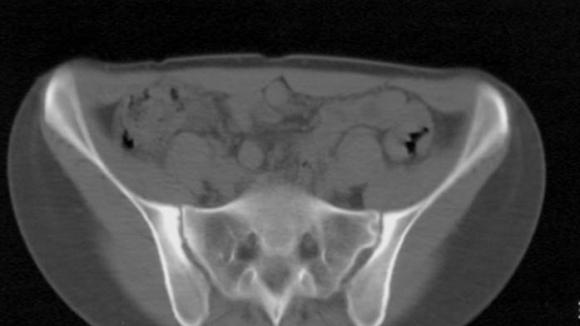
de Winter and colleagues from the Netherlands have reported on magnetic resonance imaging of the sacroiliac joints of healthy subjects, patients with axial spondyloarthritis, runners and those with chronic back pain, and found a high incidence of sacroiliitis in many, but that deep bone marrow edema was most specific for those with axial SpA.
Treatment of refractory giant cell arteritis (GCA) with ustekinumab (Stelara) showed therapeutic promise as a steroid-sparing agent in a small, open-label study, Irish researchers reported.
The current issue of Annals of Internal Medicine examines patterns of potential opioid misuse that are associated with subsequent adverse outcomes nationally.
Amgen announced that the U.S.
The New England Journal of Medicine reports that the anti-interleukin (IL)-1β monoclonal antibody canakinumab (Ilaris) was effective in the treatment of three distinct autoinflammatory recurrent fever syndromes (FMF, TRAPS, HIDS) with responses that were far superior to what was see
Dr. Jack Cush reviews the news and journal articles from the past week on RheumNow.com. He discusses opioids, new approval for polyarticular JIA, running and osteoarthritis, and modifiable behaviors that influence outcomes.
Lee and colleagues from Brigham and Women's Hospital have analyzed the last decade of disease‐modifying antirheumatic drugs (DMARDs) use in patients with psoriatic arthritis (PsA) and found nearly 40% were treated with a bDMARD, along with a decreasing trend in complete DMARD discontinuations.
A current study in JAMA Internal Medicine showed that while US physicians who received no opioid-related marketing payments had fewer opioid prescriptions in 2015 compared with 2014, those receiving such payments wrote for more opioid in 2015.
Researchers at University of California San Diego School and the Icahn School of Medicine have found a high-resolution epigenomic landscape of rheumatoid arthritis (RA) that overlaps with that seen in Huntington's disease, suggesting potentially new unanticipated pathways that could be devel