
Article
An open-label, uncontrolled pilot trial has shown that JAK signaling is involved in the pathogenesis of PMR and that tofacitinib is as effective as glucocorticoids (GC) in patients with polymyalgia rheumatica (PMR).

Search for Terms or Answers
An open-label, uncontrolled pilot trial has shown that JAK signaling is involved in the pathogenesis of PMR and that tofacitinib is as effective as glucocorticoids (GC) in patients with polymyalgia rheumatica (PMR).

Dr. Jack Cush reviews the news and journal reports from the past week on RheumNow.com. This week COVID persists, mortality from misdiagnosis, and cervical pain is more than a pain in the neck.

IL-23 inhibitors are approved for the treatment of psoriasis and psoriatic arthritis; a single center real-world observational study shows three commercially available IL-23 inhibitors have high and similar drug survival and effectiveness in difficult-to-treat psoriasis and PsA.

Large scale analysis of adverse events (AEs) in World Health Organization (WHO) VigiAccess database showed no new safety signals associated with long-standing use of five TNFα inhibitors.

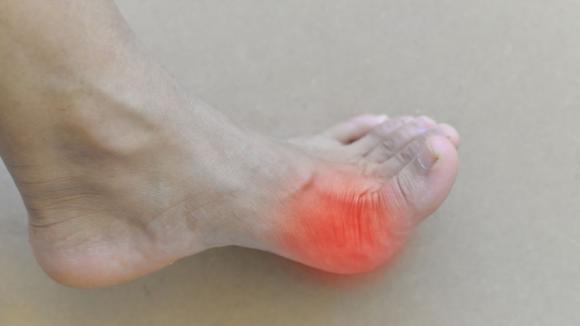
A cohort analysis shows that gout patients initiating sodium–glucose cotransporter-2 inhibitors (SGLT2is) had lower serum urate levels and fewer gouty flares requiring emergency department (ED) visits or hospitalizations.
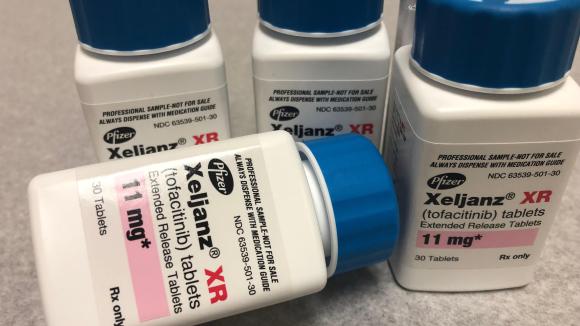
Tofacitinib is FDA approved for psoriatic arthritis and rheumatoid arthritis, but long term safety outcomes beyond a year are limited. A real-world, post-marketing surveillance of tofacitinib in PsA and RA shows a consistent pattern of safety with no new safety concerns identified.
The AURORA 2 study evaluated the long-term safety and efficacy of voclosporin lupus nephritis patients and, after three years, demonstrated long term safety and efficacy following the one-year AURORA 1 study.
A UK registry study of moderate to severe systemic lupus erythematosus (SLE) patients showed that treatment with rituximab or belimumab was not associated with a greater risk of serious infection, when compared to standard of care therapy.

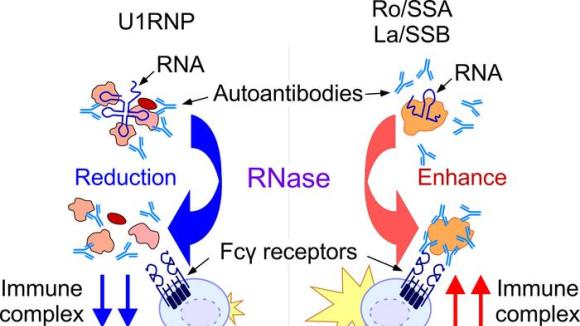
U1RNP complex, Ro/SSA and La/SSB are major RNA-containing autoantigens associated with autoimmune disorders. Immune complexes (ICs) composed of RNA-containing autoantigens and autoantibodies are suspected to be involved in the pathogenesis of some systemic autoimmune diseases.
A large cohort study shows that severe non-adherence to hydroxychloroquine (HCQ) results in serious risks for SLE flares, damage, and mortality.

In 2018, Park et al showed optimal responses to influenza vaccination in RA patients was best achieved by holding methotrexate for 2 weeks following immunization, with improved humoral responses. Now, a followup trial suggests that equivalent results are had by holding MTX for only 1 week with the "flu" vaccine.

Obstetric complications and poor pregnancy outcomes are not uncommon in women with SLE, especially with active disease. A large Spanish cohort trials shows that term pregnancy is more likely before the diagnosis of SLE and that poorer pregnancy outcomes were associated with antibody positivity to anticardiolipin IgG and anti-beta-2- glycoprotein IgG/IgM, but not lupus anticoagulant.

The transition from psoriasis to PsA – and the early diagnosis of PsA – is of considerable scientific and clinical interest. People typically have psoriatic skin disease for a decade or more before they begin to experience the joint involvement of PsA.






By downloading this material, I acknowledge that it may be used only for personal use and personal education and that I will accredit RheumNow.com as the source and owner of this material. Commercial use or mass reproduction of this material without permission from RheumNow (info@rheumnow.com) is prohibited.


