The American College of Rheumatology (ACR) today applauded the Centers for Medicare and Medicaid Services (CMS) for taking steps to appropriately value cognitive care and expand telehealth access in its CY 2021 Physician Fee Schedule (PFS) Proposed Rule.
All News
Dr. Jack Cush reviews why we all love our rheumatology fellows and our best advice for them stemming from these articles.
The Annals of Internal Medicine reports that biannual rituximab infusions over 18 months was effective at maintaining remission in patients with antineutrophil cytoplasmic antibody–associated vasculitis (AAV).
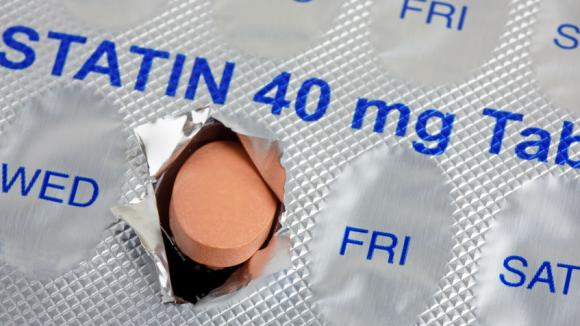
Ridker and colleagues have shown that statins (3-hydroxy-3-methylglutaryl coenzyme-A (HMG Co-A) reductase inhibitors) are effective at treating hyperlipidaemia and lowering C-reactive protein levels; Aranaow and colleagues have shown that lovastatin, when given to rheumatoid arthritis (RA) patients with elevated CRP levels failed to significantly lower disease activity.
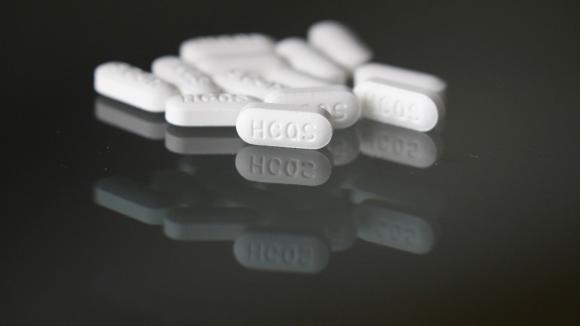
JAMA Internal Medicine has posted an Editor's note on the use of hydroxychloroquine for COVID-19; noting the sequence of dysfunction since the president promoted its use on March 21, 2020, when he said “What do you have to lose? I’ll say it again: What do you have to lose? Take it.”.
If you’re looking for some great advice to consider or rebuke, here is the generous guidance of nearly two dozen leaders in rheumatology who sincerely offer you their wisdom and best wishes.
A study from 2 gout clinics implementing different treatment strategies has shown that a treatment strategy that aims to strictly achieve low uric acid (UA) results in a higher a rate of targetd serum UA lowering and less gout flares.
Dr. Jack Cush reviews the news and TOP 13 list of Best Rheumatology Hospitals.
A proof-of-concept study published in Annals of Rheumatic Disease suggests that colchicine significantly improves COVID-19 outcomes.
Efficacy and safety must be determined in controlled clinical trials.he outbreak of COVID-19 posed the issue of urgently identifying treatment strategies. Colchicine was considered for this purpose based on well-recognised anti-inflammatory effects and potential antiviral properties.
The efficacy of intravenous pegloticase (PEG) therapy in gout can be limited by its toxicity, but when coadministered with weekly methotrexate, higher response rates and less toxicity was observed.
Danve and Neogi have an editorial in the current Arthritis & Rheumatology about the burden of gout that affects 41 million adults worldwide, according to the Global Burden of Disease Study 2017 (GBD 2017) also published in the same issue.
This makes gout twice as prevalent as rheumatoid arthritis (19 million). This prevalence of this most common inflammatory arthritis is undermined by numerous challenges in the diagnosis and examples of insufficient disease management. The editorial points out the magnitude of the disease and the many challenges facing rheumatologists.
Does repeat bone mineral density (BMD) measurement predict subsequent fracture risk in postmenopausal women?
The SEMIRA trial studied the tapering vs continuing oral glucocorticoids in rheumatoid arthritis (RA) patients who achieved a low disease activity state (with tocilizumab) were more likely to show safety and better disease control with continuing steroids - even though two-thirds of patients were able to safely taper their glucocorticoid dose.
A study from a Swedish population shows the real-world risk of gastrointestinal (GI) perforations in rheumatoid arthritis (RA) patients taking biologics finds that the risk was greatest in RA patients taking tocilizumab (TCZ), compared with RA patient taking tumour necrosis factor inhibitors (TNFi) and other non-TNFi biologics.
The American College of Rheumatology (ACR) has issued a guidance document for rheumatologists and rheumatology health professionals to consider as practices, business and patient care begins to reopen in this next phase of the COVID-19 pandemic.
In an Annals of Rheumatic Disease report, Italian investigators performed consecutive testing for SARS-CoV-2 (IgM and IgG) between 25 March to 25 May 2020 and compared test results between rheumatic disease (RMD) patients and the general population.
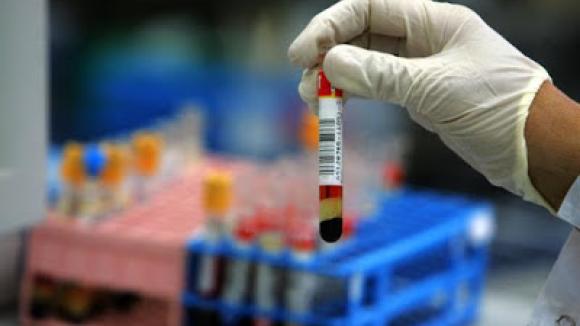
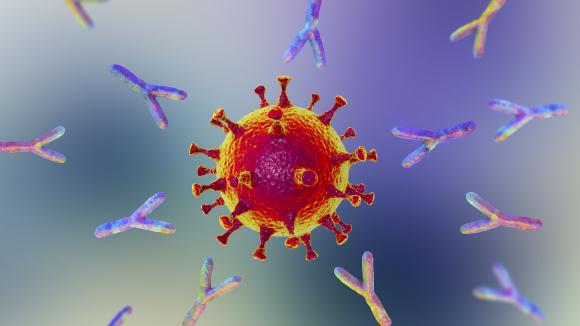
According to a small, observational study out of UCLA published as correspondence in the NEJM on July 21, 2020, those with mild COVID-19 symptoms showed an approximate antibody half-life of 73 days.
COVID-19 infection was confirmed by PCR in 30 out of 34 study participants. The remaining four patients developed consistent symptoms and cohabitated with a person who had a known positive test but could not get testing due to availability or mild symptoms.
The number of reporting cases of COVID-19 infection tends to underestimate the true prevalence of infection as only the more severe cases (e.g.,acute respiratory syndrome) get tested or go to the hospital. JAMA Internal Medicine reports that a cross-sectional seroprevalence study from the U.S. shows that COVID-19 is underreported and that actual infection rates can be 6 to 24 times more prevalent than currently reported infections due to SARS-CoV-2.
Patients with rheumatoid arthritis (RA) who were obese were significantly less likely to remain on treatment with tumor necrosis factor (TNF) inhibitors -- but so were those who were underweight, a large, long-term study determined.
Compared with patients with normal weight, patients in obesity class II, whose body mass index (BMI) was 35 to 39.9, had a hazard ratio for shorter drug survival (i.e., the drug's effectiveness, safety, and tolerability) of 1.28 (95% CI 1.06-1.54), while those in obesity class III, whose BMI exceeded 40, had a hazard ratio of 1.67 (95% CI 1.29-2.18), according to Sytske Anne Bergstra, PhD, of Leiden University Medical Center in the Netherlands, and colleagues.