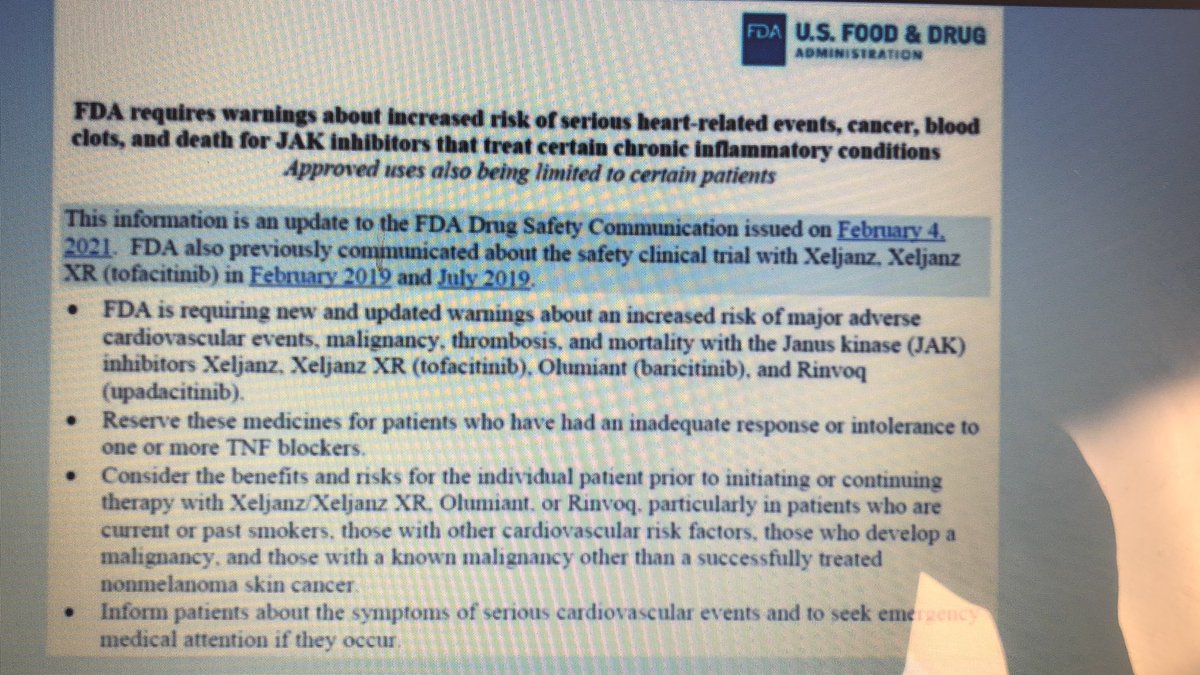
Patients with rheumatic diseases – requiring lifelong immunosuppressants— are at high risk for respiratory and viral infections. Over the past decade, an armamentarium of biologic and targeted therapies has led to better control of disease activity in patients with rheumatoid arthritis. Whether these patients, especially those receiving newer biological and targeted therapies such as JAK inhibitors, are at an increased risk of severe COVID-19 outcomes remains uncertain.

All News
Dr. Cush reviews the news, and kicks off ACR21 learning and how to take in the annual meeting.
Since the start of the pandemic, hydroxychloroquine (HCQ) was forced into the limelight for the prevention/treatment of COVID-19.
New research presented this week at ACR Convergence, the American College of Rheumatology’s annual meeting, shows that allopurinol and febuxostat may effectively lower urate levels when used in a treat-to-target approach. Importantly, both urate-lowering therapies were very effective with 90% of patients reaching target urate levels. Additionally, both appeared safe, with no evidence of increased cardiovascular toxicity (Abstract #1900).
New research presented this week at ACR Convergence, the American College of Rheumatology’s annual meeting, shows that proactive therapeutic drug monitoring, a newer treatment strategy where a patient’s drug serum levels are regularly assessed to adjust the dose and intervals, controlled disease more effectively than standard therapy with infliximab, a tumor necrosis factor (TNF) inhibitor.
New research presented this week at ACR Convergence, the American College of Rheumatology’s annual meeting, shows significant decreases in infections among people with psoriatic arthritis over the years 2012-2017.
New research presented this week at ACR Convergence, the American College of Rheumatology’s annual meeting, shows immunocompromised patients using rituximab (a drug used to treat diseases like rheumatoid arthritis) were able to produce antibodies against COVID-19 (seroconvert) after receiving a t
New research presented this week at ACR Convergence, the American College of Rheumatology’s annual meeting, shows that people with difficult-to-treat rheumatoid arthritis who do not have success with one Janus kinase inhibitor (JAK inhibitor) can achieve success either cycling to other JAKi medic
New research presented this week at ACR Convergence, the American College of Rheumatology’s annual meeting, shows that in one study, the majority of rheumatoid arthritis patients on an ultra-low dose of the drug rituximab maintained low disease activity for up to four years, and rarely needed to switch to other biologic drugs or glucocorticoids to control their disease (Abstract #1443).
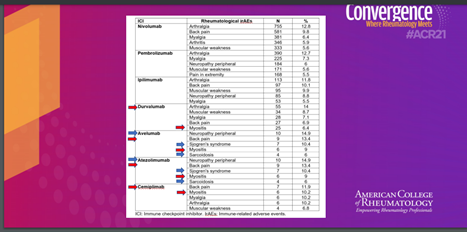
The American Society of Clinical Oncology, Inc (ASCO) has updated its guidelines and recommendations for the management of immune-related adverse events (irAEs) in patients treated with immune checkpoint inhibitor (ICPi) therapy. Below are select statements from this guideline.