Article
Dr. Jack Cush reviews why we all love our rheumatology fellows and our best advice for them stemming from these articles.

Search for Terms or Answers
Dr. Jack Cush reviews why we all love our rheumatology fellows and our best advice for them stemming from these articles.

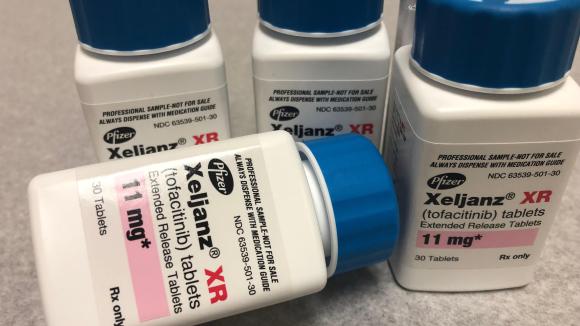
An analysis of the tofacitinib (Xeljanz) drug development program in patients with rheumatoid arthritis (RA), psoriatic arthritis (PsA) and ulcerative colitis suggests a low level risk for venous (VTE) and arterial thromboembolism (ATE).
The Annals of Internal Medicine reports that biannual rituximab infusions over 18 months was effective at maintaining remission in patients with antineutrophil cytoplasmic antibody–associated vasculitis (AAV).

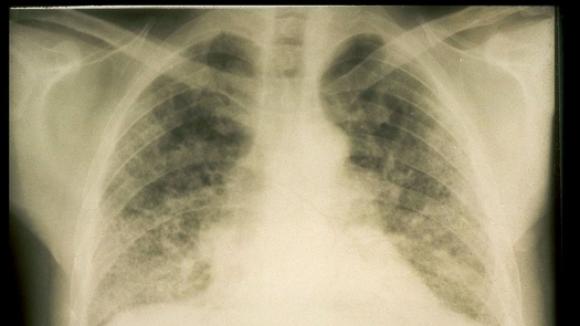
A case-controlled study shows that methotrexate (MTX) use in rheumatoid arthritis (RA) is not associated with interstitial lung disease (ILD) according to a report in the European Respiratory Journal.
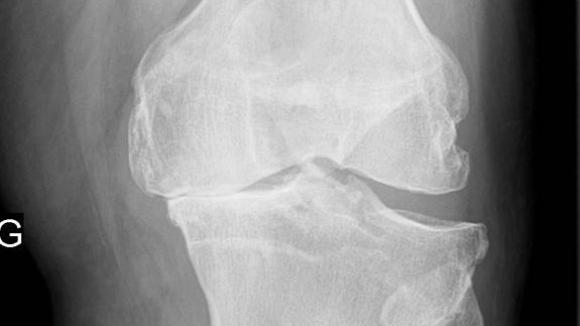
The interleukin (IL)-1β inhibitor canakinumab (Ilaris) showed promise for preventing the need for hip or knee replacement among patients with osteoarthritis in an exploratory analysis of data from a randomized clinical trial, investigators reported.
Among patients enrolled in CANTOS, the pooled incidence rate for total hip replacement/total knee replacement was 0.31 events per 100 person-years for those receiving the monoclonal antibody every 3 months for up to 5 years compared with 0.54 per 100 for those given placebo, according to Paul M. Ridker, MD, of Harvard Medical School in Boston, and colleagues.
In this lockdown, virtual medicine, post-COVID world, wouldn't it be ideal to have an reliable digital readout on patient activity as a measure of health?

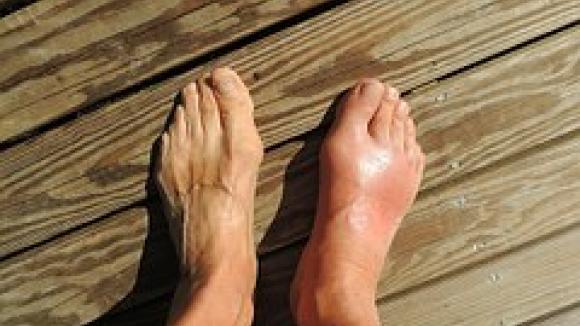
A study from 2 gout clinics implementing different treatment strategies has shown that a treatment strategy that aims to strictly achieve low uric acid (UA) results in a higher a rate of targetd serum UA lowering and less gout flares.

The efficacy of intravenous pegloticase (PEG) therapy in gout can be limited by its toxicity, but when coadministered with weekly methotrexate, higher response rates and less toxicity was observed.
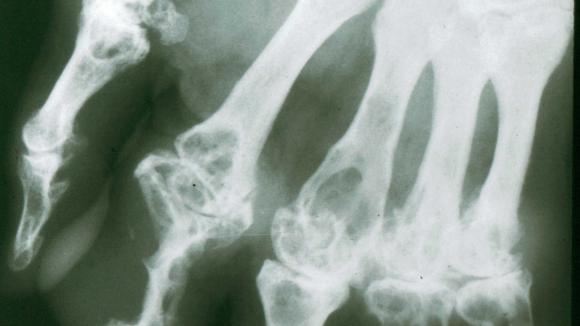
Danve and Neogi have an editorial in the current Arthritis & Rheumatology about the burden of gout that affects 41 million adults worldwide, according to the Global Burden of Disease Study 2017 (GBD 2017) also published in the same issue.
This makes gout twice as prevalent as rheumatoid arthritis (19 million). This prevalence of this most common inflammatory arthritis is undermined by numerous challenges in the diagnosis and examples of insufficient disease management. The editorial points out the magnitude of the disease and the many challenges facing rheumatologists.
Does repeat bone mineral density (BMD) measurement predict subsequent fracture risk in postmenopausal women?

The SEMIRA trial studied the tapering vs continuing oral glucocorticoids in rheumatoid arthritis (RA) patients who achieved a low disease activity state (with tocilizumab) were more likely to show safety and better disease control with continuing steroids - even though two-thirds of patients were able to safely taper their glucocorticoid dose.
A study from a Swedish population shows the real-world risk of gastrointestinal (GI) perforations in rheumatoid arthritis (RA) patients taking biologics finds that the risk was greatest in RA patients taking tocilizumab (TCZ), compared with RA patient taking tumour necrosis factor inhibitors (TNFi) and other non-TNFi biologics.

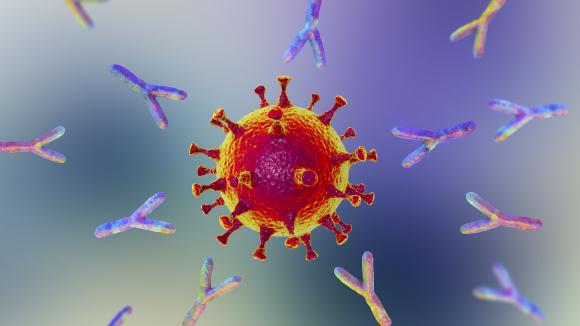
The number of reporting cases of COVID-19 infection tends to underestimate the true prevalence of infection as only the more severe cases (e.g.,acute respiratory syndrome) get tested or go to the hospital. JAMA Internal Medicine reports that a cross-sectional seroprevalence study from the U.S. shows that COVID-19 is underreported and that actual infection rates can be 6 to 24 times more prevalent than currently reported infections due to SARS-CoV-2.
The IMMerge trial has demonstrated the superiority of interleukin (IL)‐23 over IL-17A inhibition adults with plaque psoriasis.

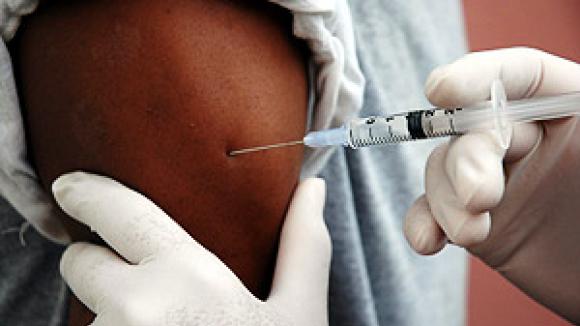
Inflammatory events following infection with SARS-CoV-2 can often worsen the morbid or mortal outcomes with COVID, yet it has been unclear if glucocorticoids may modulate inflammation-mediated damage and lung injury. The RECOVERY trial reports that dexamethasone (DEX) use lowered 28-day mortality among COVID-19 patients requiring respiratory support.
The RECOVERY trial was performed in the UK and enrolled hospitalized COVID-19 patients who were randomly assigned patients to usual care alone or the addition of oral or intravenous dexamethasone (at a dose of 6 mg once daily) for up to 10 days. The primary outcome was 28-day mortality.
Pain management in knee osteoarthritis (OA) is confounded by studies showing less is equal to usual standards of care. A recent trial showed that meloxicam was superior to placebo or cognitive behavioral therap (CBT); although the differences were small.
From January 1, 2020–May 18, 2020, approximately 1.3 million cases of coronavirus disease 2019 (COVID-19) and 83,000 COVID-19–associated deaths were reported in the United States.

The current issue of NEJM reports a novel cell type that may be used to identify rheumatoid arthritis (RA) patients who may flare.
Investigators prospectively collected blood samples from 4 patients for longitudinal RNA sequencing (RNA-seq) for discovery of moleculartranscripts that were differentially expressed before flares.

By downloading this material, I acknowledge that it may be used only for personal use and personal education and that I will accredit RheumNow.com as the source and owner of this material. Commercial use or mass reproduction of this material without permission from RheumNow (info@rheumnow.com) is prohibited.