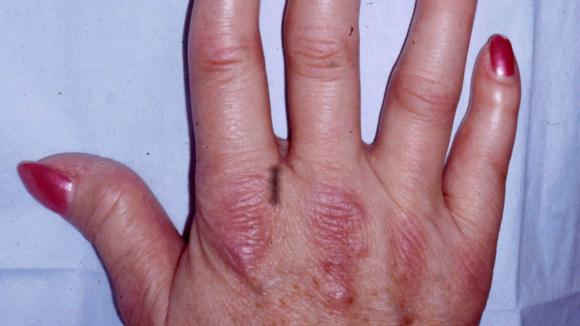
Nearly 25 years ago, while lecturing on best therapies for rheumatoid arthritis (RA), I loudly stated that hydroxychloroquine was “useless” and, deservedly, I was “boo-ed” off stage. My point then was that rheumatologists needed to be aggressive, if not overly aggressive, in treating all RA patients. And my view was that HCQ was representative of under-treatment. I have reconsidered the use of HCQ in RA substantially in the last few years, based on its merit.
All News
Dejaco and colleagues have published a glossary of terms often used in conjunction with giant cell arteritis. The glossary of definitions for 23 signs and symptoms of GCA was developed through a consensus process involving international experts.
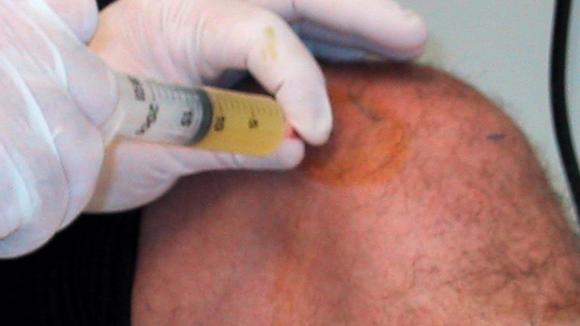
A single center, retrospective review of patients undergoing knee joint fluid aspirations for presumed crystalline arthritis (CA) showed that synovial WBC may provide a useful diagnostic marker for SA with an optimal threshold of 50,000 cells/mm3.
Researchers from the University of Pennsylvania have published an open-access review of dermatomyositis (DM) - its manifestations, hallmark cutaneous features, etiopathogenesis and treatment options.
JAMA has published a clinical guideline on the use of vitamin D to prevent disease in children and adults.
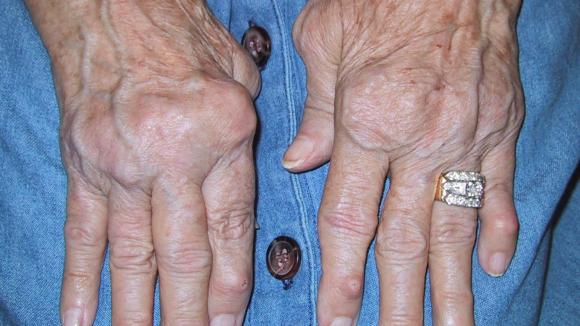
Methotrexate (MTX) is the most commonly used DMARD in rheumatoid arthritis (RA); however, there is significant intolerance to this drug among adult RA patients - especially at doses above 15 mg per week.
The FDA has approved nerandomilast (Jascayd), a PDE4b inhibitor, to treat adults with progressive pulmonary fibrosis (PPF). Nerandomilast was approved to treat idiopathic pulmonary fibrosis (IFP) in October 2025.
A current systematic review in Rheumatology addresses the clinical features seen in the VEXAS syndrome.
As the utilization of APPs (nurse practitioners and physician assistants) in rheumatology becomes more prevalent, here are three things to consider if you are thinking about adding an APP to your practice.