Article
Patients with SLE are at increased risk for HF, not just of MI and stroke, with risk similar to that of patients with diabetes, researchers found in an analysis of Medicaid data.

Search for Terms or Answers
Patients with SLE are at increased risk for HF, not just of MI and stroke, with risk similar to that of patients with diabetes, researchers found in an analysis of Medicaid data.

A large administrative claims analysis of rheumatoid arthritis (RA) patients undergoing arthroplasty has shown no difference among biologics with regard to the risk of infections, but corticosteroid use was associated with a dose dependent risk of infection.

A novel trial presented at EULAR 2019 last week assessed whether the use of urate-lowering therapy (ULT) would control hypertension in those at risk; however, results of this trial were largely negative.
Hypertension is one of the many comorbidities that plagues gout patients.

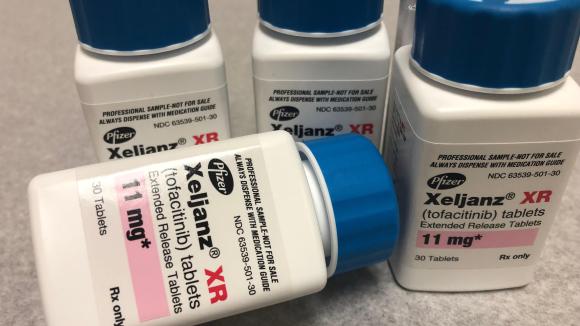
Rheumatoid arthritis patients taking tofacitinib (Xeljanz) plus methotrexate who achieved low disease activity (LDA) may be able to withdraw from the latter agent without significant worsening of disease activity, a researcher reported at EULAR 2019 in Madrid.
It was a full and lively 2nd day in Madrid with sessions dedicated to Lupus, RA, Sjogren’s, imaging, rare diseases, psoriatic arthritis and spondyloarthritis. Here are a few of the highlights from day 2 EULAR in Madrid

Many of the great presentations from EULAR 2019 feature industry sponsored clinical trials. Often these become the pivotal studies for regulatory approval and the annual congresses are their first look.

Patients with gout not only have a well-recognized increased risk of dying from cardiovascular (CV) disease, but also have higher all-cause mortality and die prematurely from other diseases, a Swedish study indicated.

Despite the lack of good evidence, there has been great speculation about the role of diet in causing or alleviating inflammation. Now there's new research suggesting that proinflammatory diets can increase serum C-reactive protein levels and also the risk of rheumatoid arthritis onset.

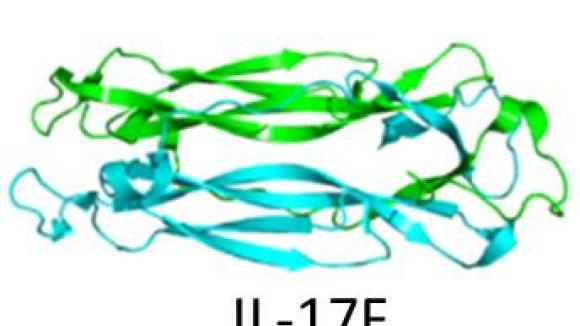
Interleukin 17 (IL-17) inhibitors are highly effective and FDA approved for use in psoriasis, psoriatic arthritis and ankylosing spondylitis. However, many of the initial trials were done in rheumatoid arthritis (RA) where it was projected to be effective, but was not. A recent metanalysis examines how effective IL-17 inhibition was in two RA populations: biologic-naïve or tumor necrosis factor inhibitor inadequate responders (TNF-IR).
A systematic review of the medical literature shows anterior cruciate ligament (ACL), meniscus or combined ACL and meniscus injury significantly increases the risk of future knee osteoarthritis (OA).

Australian researchers have assessed the problem of exercise in ankylosing spondylitis (AS). After posing 10 questions to 11 experts they have provided evidence and consensus-based ecommendations on exercise in AS.

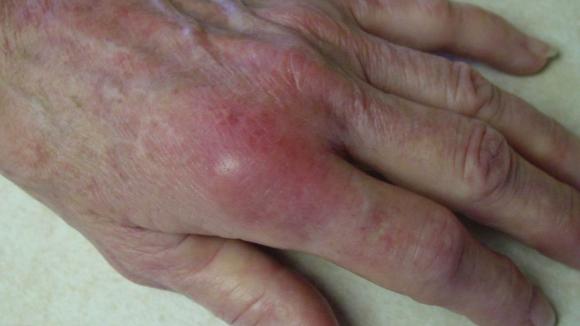
A population-based survey from South Australia shows that gout flares are common in the community and have a significant effect on health-related quality of life (HRQoL), yet there is significant undertreatment of gout, even in those on current allopurinol.
Dr. Jack Cush presents the news and best of rheumatology and medicine from the past week on RheumNow.com

Rituximab (Rituxan) may be an option for maintenance therapy in patients with difficult-to-treat systemic lupus erythematosus (SLE), European researchers reported.

A EULAR task force has reviewed the medical literature and developed evidence-based recommendations for the management of antiphospholipid syndrome (APS) in adults. They note that a high-risk antiphospholipid antibody (aPL) profile is associated with greater risk for thrombotic and obstetric APS.

A study of biologic-naïve patients with ankylosing spondylitis (AS) who started therapy with a tumour necrosis factor inhibitor (TNFi) shows that after 5 years only 46% are still on a TNFi and that some are able to lower the dose over time.
Upadacitinib (UPA) is an oral, selective JAK1-selective inhibitor being developed for use in rheumatoid arthritis patients; Lancet has reported the SELECT-MONOTHERAPY trial showing that UPA is safe and effective in RA patients with an inadequate response to methotrexate (MTX).

The risk of serious infectious events (SIE) with rituximab (RTX) is similar to that seen in other biologics (e.g., RA: 2% or 4.3/100PY), but with prolonged use the risk may change. Recent research says that low IgG levels, RTX induced neutropenia, prior SIE and comorbidities can significantly augment this risk.
A retrospective longitudinal single center study of 700 rheumatic and musculoskeletal diseases (RMDs) treated monitored serum immunoglobulins (at baseline and 4–6 months after each cycle), clinical outcomes and SIE over time.

Dr. Jack Cush Reviews the news and journal articles from the past week on RheumNow.com
By downloading this material, I acknowledge that it may be used only for personal use and personal education and that I will accredit RheumNow.com as the source and owner of this material. Commercial use or mass reproduction of this material without permission from RheumNow (info@rheumnow.com) is prohibited.