
Article
Dr. Jack Cush reviews selected news and journal reports from the past week on RheumNow.com.

Search for Terms or Answers
Dr. Jack Cush reviews selected news and journal reports from the past week on RheumNow.com.

Eli Lilly announced today the results of the COAST-W trial showing that ixekizumab (Taltz) was effective in a Phase 3 study Ankylosing Spondylitis (AS) patients who had an inadequate response or intolerance to tumor necrosis factor (TNFi) inhibitor therapy.
A pattern of increased primary care visits and joint complaints during the 2 years before rheumatoid arthritis (RA) was diagnosed were predictive of the diagnosis, a British case-control study found.

Public Citizen has petitioned the U.S. Food and Drug Administration (FDA) to remove Takeda's drug febuxostat (Uloric) from the market, citing the FDA's own warnings and evidence of serious cardiovascular harms. This follows on a recent FDA safety warning and NEJM paper citing cardiovascular concerns over febuxostat.

Preclinical rheumatoid arthritis (RA) is a hot new area wherein at risk individuals (seropositive, first degree relatives of RA patients, etc.) are being studied to assess the triggers that lead to progression to RA or whether therapies can be used to avert the onset of RA.

Patients with psoriatic arthritis (PsA) whose disease manifestations include enthesitis showed significantly greater responses to interleukin (IL)-23 inhibition than to blocking tumor necrosis factor (TNF), suggesting the possibility that treatment decisions in the future might be guided by speci
Dr. Richard Furie, MD, of Northwell Health in New York, presented the findings ofa large phase III trial of abatacept (Orencia) in lupus nephritis showing the agent failed to achieve a complete renal response.
Novartis announced today that the US Food and Drug Administration (FDA) approved the inclusion of new evidence that Cosentyx® (secukinumab) significantly slows the progression of joint structural damage at Week 24 versus placebo in those with active psoriatic arthritis (PsA).

A study from the American Journal of Obstetrics & Gynecology analyzed pregnant women from the Kaiser Permanente healthcare system and compared newly pregnant women who took non-steroidal anti-inflammatory drugs or acetaminophen or neither showed that using NSAIDs around conception carried a more than four-fold higher risk of early miscarriage. (Citation source: http://bit.ly/2tqNWN6)

Obese knee osteoarthritis (OA) patients who lose > 20% of their weight were in significantly less pain, had better function and improved quality of life.

Our colleagues in gastroenterology measure drug levels with certain biologics used in inflammatory bowel disease in order to increase the dose for optimal benefit if the patient has a low trough level (i.e. targeting drug level).

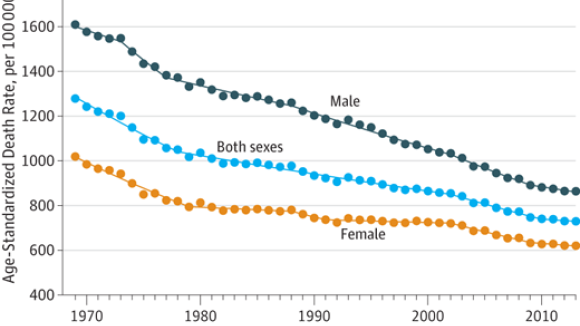
There were many presentations at EULAR 2018 in Amsterdam about the mortality of RA.
As we gather more knowledge about psoriatic arthritis ( PsA) and psoriasis (PSO) over time, and achieve better outcomes with new therapies, more questions arise about quality of life, survival and comorbidities in PsA and PSO.

Not a surprise to anyone anymore, increased risk of cardiovascular disease poses a danger of significant morbidity and mortality in patients underlying inflammatory arthritides.

Abbvie press releases feature the results from 3 new trials to be presented during the Annual European Congress of Rheumatology (EULAR 2018) in Amsterdam from three Phase 3 trials evaluating upadacitinib, an investigational, once-daily oral JAK1-selective inhibitor, in adult patients with moderat

Recent shifts in the cancer treatment paradigm towards immune therapies has led to wide implementation of the novel immune check point inhibitors (ICI) in the treatment of multiple types of advanced cancer.

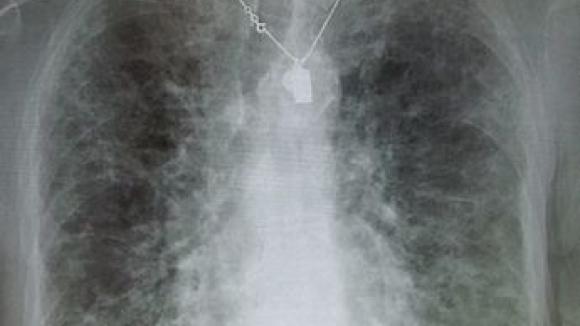
The development and progression of interstitial lung disease in systemic sclerosis can be an ominous finding.
A systematic review of prescription drug monitoring programs (PDMPs), advocated in the president's Prescription Drug Abuse Prevention Plan, fails to show evidence of efficacy in preventing nonfatal and fatal overdoses.

Patients with systemic lupus erythematosus (SLE) who were assessed as being in a low disease activity state during more than half of clinical visits had a decrease in organ damage events of approximately 50%, a retrospective study found.

The genetics and heritability of gout has suggested a higher risk in certain families. A UK cohort study examined the prevalence of gout and monosodium urate (MSU) crystal deposition among those at risk (sons of gout patients) for gout and found a high incidence of hyperuricemia and MSU crystal deposition.

By downloading this material, I acknowledge that it may be used only for personal use and personal education and that I will accredit RheumNow.com as the source and owner of this material. Commercial use or mass reproduction of this material without permission from RheumNow (info@rheumnow.com) is prohibited.

