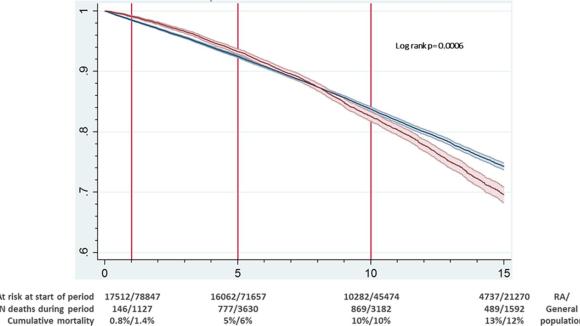
Data from the Swedish Rheumatology Quality (SRQ) Register studied death rates in patients with rheumatoid arthritis (RA) between 1997 and 2014. Holmqvist and colleagues studied 17,512 RA and 78,847 matched controls from the general population, until their death.
All News
A polulation-based study from Sweden has shown that treatment with tocilizumab, abatacept, rituximab, or tumor necrosis factor (TNFi) inhibitors does not affect the risk of malignant neoplasms among patients with rheumatoid arthritis. Specifically, use of a first or second TNFi or biologic DMARDs (bDMARD) does confer a different cancer risk when compared to conventional DMARDS in biologic–naive RA patients.
On Friday the U.S. Food and Drug Administration announced that will not approve Johnson & Johnson’s rheumatoid arthritis drug sirukumab, stating further data and study would be needed to establish its safety.
The RheumNow Week in Review discusses the past week's news, journal articles and highlights from RheumNow.com. This week's report discusses survey results on membranous nephritis and patient perceptions of steroids, nonadherence, celebrity arthritis and IgG4 treatment.
The Journal of Bone and Mineral Research reports that older men with undiagnosed vertebral fractures are likely to report new or worsening back pain. (Citation source bit.ly/2y9rMiZ)
The NEJM reports that in high risk post-menopausal women, romosozumab for 12 months followed by alendronate resulted in a significantly lower fracture than alendronate alone.
The CDC has reported its 2013 and 2014 prevalence statistics for arthritis and other chronic medical conditions affecting U.S. adults aged ≥18 years. Data is drawn from the ongoing Behavioral Risk Factor Surveillance System (BRFSS), a state-based, telephone survey of noninstitutionalized adults. Data herein is self-reported arthritis (OA, RA, Gout, FM) and is quantified by state and metropolitan areas.
Annals of Rheumatic Disease has published a Danish population based study demonstrating the high mortality rates seen with interstitial lung disease (ILD).
A large multi-center study of cardiovascular (CV) risk factors in rheumatoid arthritis (RA) has shown, after nearly 6 years follow-up, more CV events in males than females (21% vs. 11%, respectively) and that RA itself accounts for 30% of the attributable CV risk.
Noe and colleagues have reported in the Journal of Investigative Dermatology that by estimating the extent of skin involvement in psoriasis (%BSA) they may assess future mortality risk.
As a practicing rheumatologist for more than 30 years, I can recall a time – just a couple of decades ago – when waiting rooms were full of patients in wheelchairs, debilitated and in pain from rheumatoid arthritis (RA) and other related conditions.
The CANTOS trial has shown that interleukin 1β inhibition by Canakinumab (CAN) resulted not only in a reduction of cardiovascular deaths but also significantly decreased the incidence and death from lung cancer.
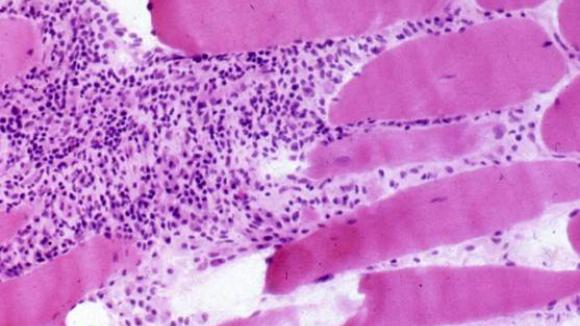
A Swedish population-based study found a nearly fourfold greater risk of all-cause mortality in idiopathic inflammatory myopathy (IIM) patients compared with the general population.
The results of a randomized, double-blind trial have shown that canakinumab (CAN), an interleukin-1β inhibitor, given as 150 mg every 3 months, resulted in a significantly lower rate of recurrent cardiovascular events (in high-risk CV patients), independent of lipid-level lowering. The results of the CANTOS studywere simultaneously published in NEJM, Lancet and were presented at the European Society of Cardiology meeting in Barcelona.
On Friday August 25th, the FDA approved another adalimumab biosimilar: Cyltezo (generic name: adalimumab-adbm).
Dr. H. Ralph Schumacher passed away from ALS in July 30, 2017. The current issues of The Rheumatologist and the Journal of Clinical Rheumatology have beautiful tributes written by Dr. Simon Helfgott and past ACR president Dr.
Treat-to-target strategy is widely advocated as an important means of optimizing treatment responses in patients with rheumatoid arthritis. Even though T2T is encouraged by most guidelines, a current report shows that US Rheumatologists fail to implement T2T in their daily practice.
In this Therapeutic Update, Drs. Mease, Gibofsky and Cush answer five questions regarding the August 3rd FDA Arthritis Advisory Committee meeting that reviewed the potential approval of tofacitinib (Xeljanz) in patients with active psoriatic arthritis. The panel was nearly unanimous (10-1) in favor of the efficacy and safety profile of of tofacitinib, and similarly voted 10-1 to approve this drug for use in PsA. Final decisions on these recommendations from the AAC panel will be made at a later date by the FDA.
Studies have shown that rheumatoid arthritis (RA) patients have increased risk of acute coronary syndrome (ACS) and may suffer from poorer short-term outcomes after ACS. The long-term outcomes in patients with RA with ACS was shown to be worse than matched non-RA patients also with ACS.
The introduction of intravenous pegloticase (PEG) in 2010 was felt by many to be a major advance in the treatment of patients with severe, refractory tophaceous gout. But for some, concerns over infusion reactions and safety have limited its use.