There were new developments in the treatment of axial Spondyloarthritis (AS) at ACR 2019. The first area is on the use of anti-IL17A drugs, secukinumab and ixekizumab in non-radiographic AS. The second area is the use of JAK-1 inhibitor Upadacitinib in radiographic AS.

All News
Dr. Jack Cush presents his favorite abstracts and presentations from Rheumatology Round Up and ACR 2019.
Dr. Jack Cush reviews the news and journal articles from the past week on RheumNow.com.
A Spanish prospective cohort of active, uncontrolled gout patients were followed and showed that failure to reach a target serum uric acid (sUA) level of 6 mg/dl (0.36 mmol/L) or less was associated with a 2-3 fold increase in mortality.
A cohort study of 97 patients with psoriatic arthritis (PsA) examined the prescribing practices in PsA, and found biologics are commonly initiated as the primary mode of therapy in outpatients with PsA. However, treatment modifications can be made regarding patients who are managed with apremilast alone.
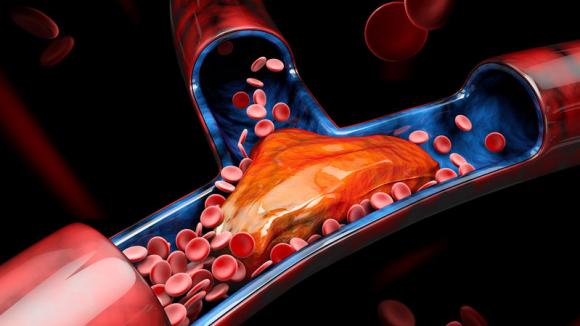
The European Medicines Agency safety committee (PRAC) has concluded that Xeljanz (tofacitinib - TOFA) could increase the risk of blood clots in the lungs and in deep veins in patients who are already at high risk for venous thromboembolic events. The PRAC is recommending that TOFA should be used with caution in patients at high risk of blood clots (VTE), regardless of dose used.
Reuters reports that Mallinckrodt Plc has received a subpoena from the U.S. Securities and Exchange Commission for documents related to the drugmaker’s lawsuit against the U.S. Department of Health and Human Services (HHS).
Major new insights into the treatment of psoriatic arthritis dominated the headlines during the past year, with a head-to-head trial comparing IL-17A inhibition with tumor necrosis factor blockade, another study considering whether methotrexate can improve outcomes with anti-TNF therapy in PsA, and an investigation into the effects of biologic therapy on bone.
Novartis has announced the results of the EXCEED trial that pitted its IL-17 inhibitor, Cosentyx (secukinumab - SEC) against Humira (adalimumab - ADA) in patients with active psoriatic arthritis. The trial demonstrated that SEC was not non-inferior to ADA, but failed to meet its primary endpoint of superiority over ADA as far as drug efficacy.
Yesterday, AbbVie reported the top-line study results showing the efficacy of Rinvoq (upadacitinib - UPAD) adult patients with active psoriatic arthritis who previously had an inadequate response to a biologic DMARD.
Dr. Jack Cush reviews recent journal articles and info bits from the past week on RheumNow.com.
A Canadian population-based study shows that pregnant women with rheumatoid arthritis (RA) frequently discontinue their DMARD medications, especially in the first trimester.
Children with inflammatory diseases who were treated with tumor necrosis factor (TNF) inhibitors had a higher rate of incident psoriasis than those not exposed to these biologics, a single-center retrospective study found.
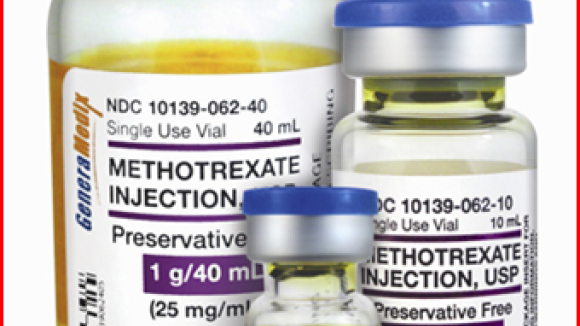
Rheumatology has a comprehensive overview of methotrexate (MTX) and the risk of lung injury, MTX-related pneumonitis and interstitial lung disease (RA-ILD) with rheumatoid arthritis (RA). Past reports suggest the frequence of MTX-pneumonitis to be between 0.3 and 11.6%; recent studies suggest it may be much lower.
JAMA has an article this week on the shift from biologic drugs to less expensive therapeutic biosimilar agents. The impact of biosimilars can be easily represented by the shift from adalimuamb - a biologic with nearly $19 billion in sales in 2018 - to any one of the four FDA approved biosimilars for adalimumab (see the daily download for slides on new adalimumab and other biosimilars).
A nice review by Physician Sense and MDLinx discusses potential physician violations of current HIPAA law, largely driven by the digital age and common work flows. Several mistakes you you be aware of and avoid, include:
Dr. Jack Cush reviews the news and journal articles from the past week on RheumNow.com.
The U.S. Food and Drug Administration has issued a new draft guidance document calling for a boxed warning and delineation of risks with breast implants.
Despite the well known, well publicized treat-to-target (T2T) goal of a serum uric acid (SUA) level 6 mg/dl, this goal is seldom achieved ( 40%) in clinical practice and patient adherence has been unacceptably low. A recent study shows that nurse-led care led to better outcomes in gout including patient acceptability, long-term adherence, and less flares.
Sanofi has initiated a voluntary recall of all Zantac OTC (over-the-counter) products in the United States. This includes Zantac 150®, Zantac 150® Cool Mint, and Zantac 75®.