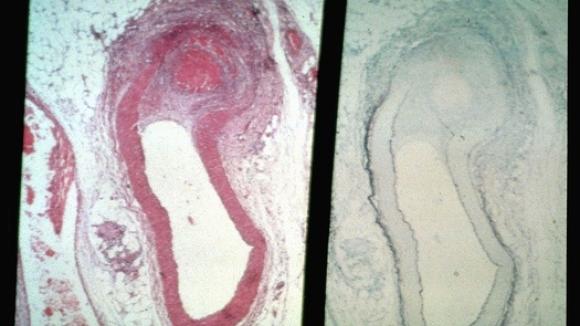
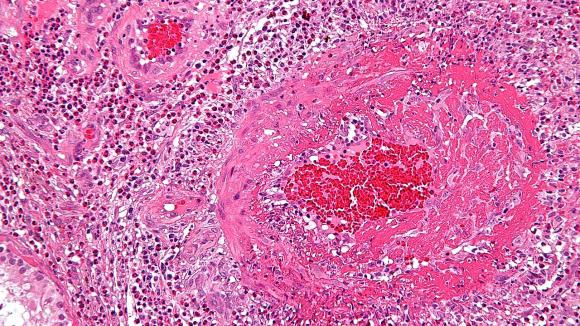
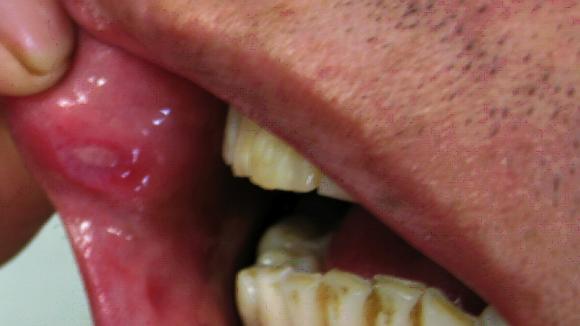
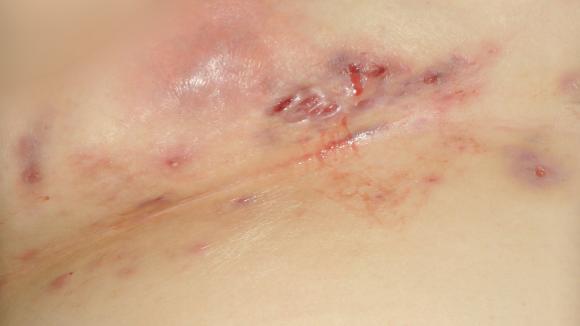
Hidradenitis suppurativa (HS) is a suppurative inflammatory skin disorder that is considered to be autoinflammatory by many. HS includes a specturm of disorders, linked by suppurative (or psoriatic) skin disease and potentially genetics.
All News
A systematic review of pharmacological treatments for adult-onset Still disease (AOSD) supports the efficacy of tocilizumab (TCZ), anakinra (ANK), and canakinumab (CNK).
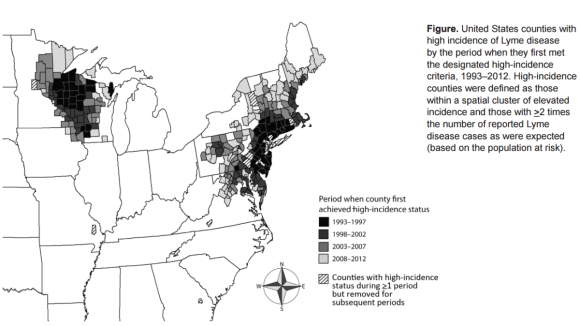
The CDC has updated its Lyme disease surveillance report based on a new case definition. Compared to 2017–2019, the number of cases in 2022 rose by 69%.
According to the National Health Interview Survey (NHIS), in 2022, the prevalence of diagnosed arthritis in adults was 18.9% (women 21.5%, more than men 16.1%). These numbers are down since the CDC's MMWR report of 2019–2021, where is was estimated 21.2% of U.S.
Dr. Jack Cush reviews the news and journal reports from the past week on RheumNow.com. Are these associations with infection, biomarkers and weather real or imaginary? Linked or luck? Causal or casual? You decide....
A multinational study of polyarteritis nodosa (PAN) through the international GLOBAL-PAN network shows PAN to be a complex, multisystem disorder with a high risk of relapse and low risk of death (11% at 10 years).
A multicenter, double-blind, phase 3, randomized, active-controlled trial has shown that Benralizumab (BEN) was noninferior to mepolizumab (MEP) for the induction of remission of patients with relapsing or refractory Eosinophilic granulomatosis with polyangiitis (EGPA).
A comprehensive overview of Behcet's syndrome appeared in last week's NEJM, reviewing the numerous advances in the immunogenetics, syndrome recognition, and targeted therapeutic approaches.
Dr. Jack Cush reviews the news and journal reports from the past 2 weeks on RheumNow.com; but begins with a discussion of what constitutes "immunosuppression" and how it applies to our patients.
The NEJM has published the results of CD19 B cell depletion (by CAR-T cell therapy) in autoimmune disease patients, demonstrating it to be feasible, safe, and efficacious.
Dr. Jack Cush answers audience clinical case questions sent by email or "ask Cush anything". Cases and questions from:
Dr. Jack Cush reviews the journal reports from the past week on RheumNow.com. Highlights are summarized by three songs: "Stairway to Heaven", "You're No Good", and "How Long (has this been going on)".
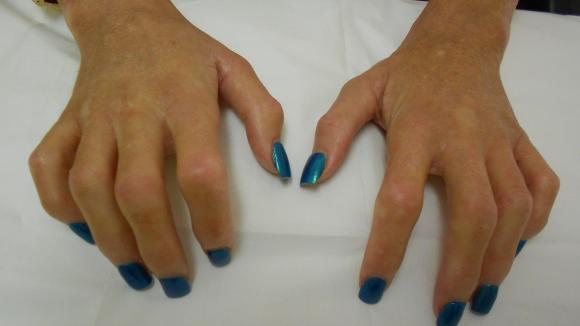
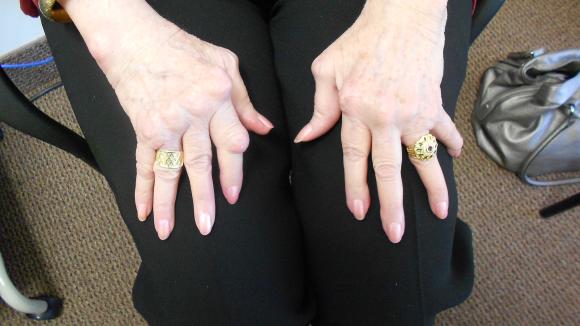
Inflammatory arthritis (IA) is a common manifestation in systemic sclerosis (SSc), affecting nearly one-third of patients.
Autoimmune disease and pregnancy
For many aspiring mothers with autoimmune disease, pregnancy can be daunting and full of unknowns. In some cases, those suffering from specific autoimmune conditions have chosen to forego pregnancy altogether due to concerns about their disease treatments and adverse pregnancy outcomes.
Somewhere between 24 and 50 million Americans have an autoimmune disease, a condition in which the immune system attacks our own tissues. As many as 4 out of 5 of those people are women.
On 1-19-2024, the Food and Drug Administration (FDA) issued a Drug Safety Communication about the risk of severe hypocalcemia in chronic kidney disease (CKD) patients taking denosumab for osteoporosis, with an accentuated risk in older women who are dialysis-dependent.
This report is an update to their November 2022 investigation, the results of a related study being recently reported in JAMA.
The original randomized controlled, prospective MAINRITSAN study of 115 patients (87 with granulomatosis with polyangiitis, 23 with microscopic polyangiitis, and 5 with renal-limited ANCA-associated vasculitis [AAV]) demonstrated superiority of rituximab (RTX) over azathioprine (AZA) for maintenance of remission at 22 months in ANCA-associated vasculitis patients after CYC remission induction.
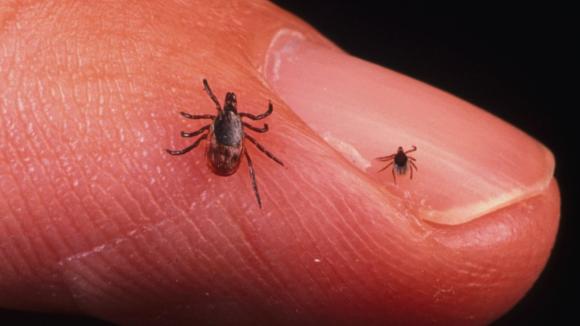
Findings from a population based cross-sectional study suggests that while up to 20% of patients have antibodies to tick-borne exposures, only a minority reported musculoskeletal symptoms.
Dr. Jack Cush reviews highlights, advances and hot topics in rheumatology from 2023 and the RheumNow website.
2023 was a year of growth and new horizons while returning to operational and practice standards (in care and education) established before the pandemic.
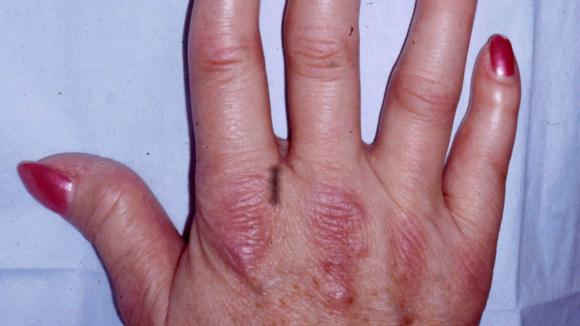
A JAMA Dermatology systematic review of drug-induced dermatomyositis (DM) found the most commonly implicated agents include hydroxyurea, immune checkpoint inhibitors, statins and lipid-lowering agents, penicillamine, and tumor necrosis factor inhibitors.