The British Society for Rheumatology Biologics Register for Rheumatoid Arthritis has studied nearly 20,000 patients and observed that there is no substantially different risk of opportunistic infections between different biologics.

All News
The CARES study was presented Monday at the American College of Cardiology meeting in Orlando and finds that while the rates of all major cardiovascular (CV) events were comparable between febuxostat or allopurinol, there were more CV deaths with febuxostat.
Dr. Jack Cush reviews highlights, news and recent research published this past week on RheumNow.com. This week's report includes news on new regulatory changes, new indication for tofacitinib, the rise and deficits of opioids and the benefits of fish and bariatric surgery.
Yesterday a FDA advisory panel voted 15-0 in favor of approving Xeljanz (tofacitinib) 10 mg bid for patients with moderate to severe ulcerative colitis.
Exposure to biologic therapies among women with autoimmune diseases was not associated with increased risks of preterm delivery or having small for gestational age babies, a population-based Canadian study found.
This edition of RheumNow's Drug Safey Bulletin includes drug safety news, FDA updates, FDA safety labeling changes and reported drug shortages.
The CDC released new information yesterday showing that emergency department (ED) visits for opioid overdoses rose 30% in the US from July 2016 through September 2017; in addition, those with an overdose are more likely to a repeat overdose.
Subcutaneous abatacept (Orencia) showed efficacy among children with polyarticular juvenile idiopathic arthritis (JIA) in an open-label phase III trial.
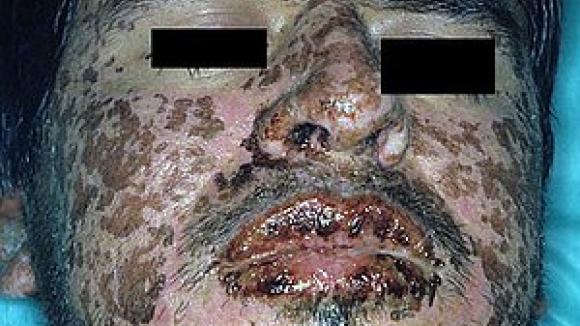
The Journal of Clinical Investigation reports the results of a trial wherein etanercept (ETN) was shown to be effective in treating cytotoxic T lymphocyte–mediated (CTL-mediated) severe cutaneous adverse reactions (SCARs), including Stevens-Johnson syndrome (SJS) and toxic epidermal necrolysis (T
Dr. Jack Cush reviews the news and highlights from the past week on RheumNow.com.
Pregnant women (n=254) with rheumatoid arthritis who enrolled in the MotherToBaby Autoimmune Diseases in Pregnancy Study and who were taking oral glucocorticoids were studied.
Capelli and colleagues have studied patients treated with ICIs and found two variants of inflammatory arthritis (IA) - a reactive arthritis like large joint arthritis with combination ICI therapy or a small joint IA with ICI monotherapy.
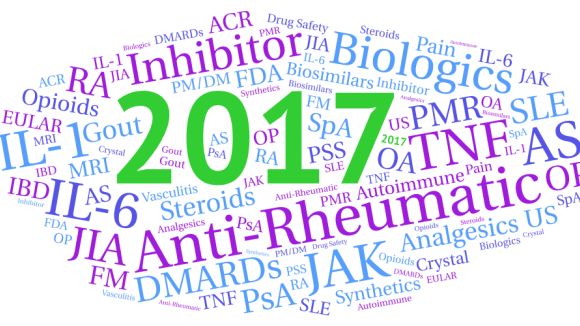
This retrospective review is drawn from the authors collection of the most impactful publications, research and news that occurred in 2017. In no particular order, here are my top rheumatology advances, news and research reports for calendar year 2017.
Gabay and colleagues have reported the results of a novel new recombinant human IL-18 binding protein, tadekinig alfa, demonstrating its effectiveness in an open-label dose escalating study in patients with adult-onset Still's disease (AOSD).
In animal studies, probenecid was shown to have positive inotropic effects on the cardiomyocyte mediated by transient receptor potential vanilloid 2 activation.
Dr Jack Cush reviews highlights from the past week on RheumNow.com. This week’s video is in two parts; for part Ii, go to https://buff.ly/2BM9MjL
Many protocols call for anticoagulation after total hip or total knee arthroplasty to prevent venous thromboembolism (proximal deep-vein thrombosis or pulmonary embolism), and some reports have suggested a role for aspiring or direct oral anticoagulants as preventative therapy. The NEJM has reported that oral anticoagulation with rivaroxaban (Xarelto) followed by aspirin to be effective prophylaxis.
A Taiwanese study of 55,629 hypertensive patients shows no increased risk of major cardiovascular events comparing outcomes of patients started on COX-2 selective NSAIDs compared with nonselective NSAIDs (including ibuprofen, diclofenac and naproxen).
New guidelines have been developed by the American Society of Clinical Oncology (ASCO) and the National Comprehensive Cancer Network (NCCN) on how to assess and manage of immune checkpoint inhibitor side effects that are often autoimmune in nature.
A study of USA administrative claims data between 2000 to 2014 assessed the risk of cancer with exposure to tumour necrosis factor inhibitor (TNFi) in pediatric patients and found that TNFi therapy did not significantly increase the risk compared those not receiving TNFi.