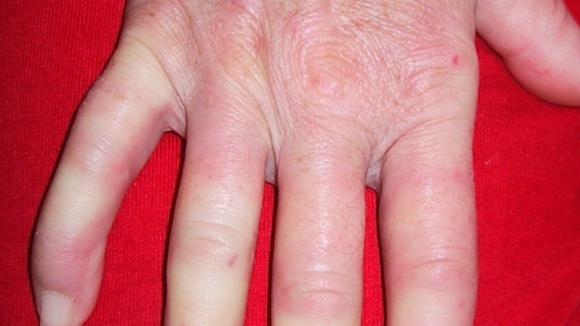
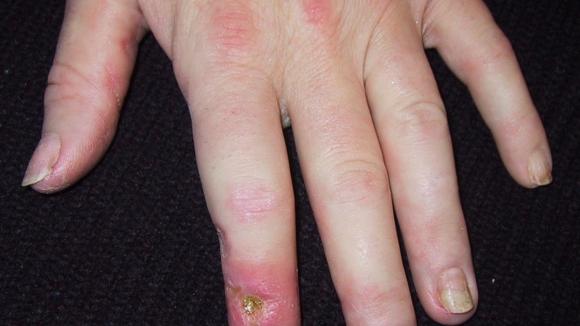
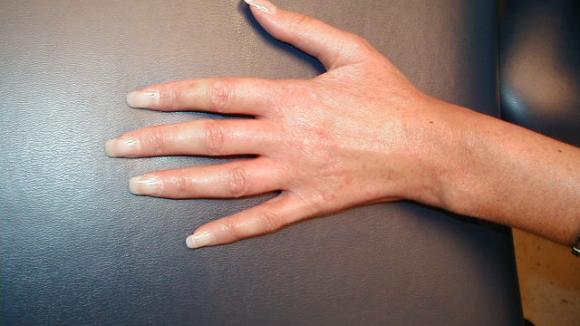
Riociguat is an oral, selective soluble guanylate cyclase stimulator that has been studied in patients with digital ulcers (DU) due to systemic sclerosis (SSc) but study results show that short term (16 weeks) riociquat therapy does not sufficiently reduce the DU burden in SSc patients.
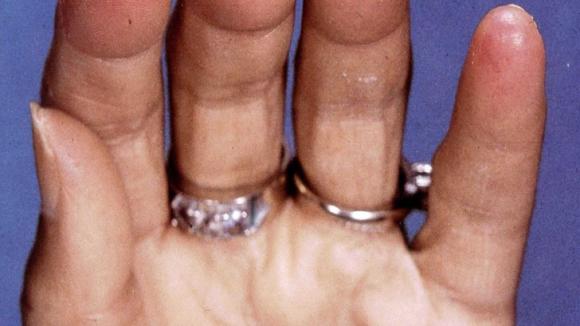
All News
Last Friday, the US Food and Drug Administration approved Ofev (nintedanib) to slow the rate of decline in pulmonary function in adults with interstitial lung disease associated with systemic sclerosis or scleroderma, called SSc-ILD.
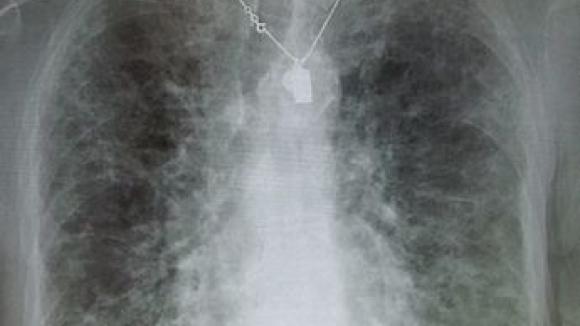
ILD as a complication of SSc may lead to progressive loss of lung function and may be associated with a significant mortality risk. Prior to the approval of Olev, there were no FDA approved drugs for SSc-ILD.
Dr. Jack Cush reviews the journal articles and news reports from the past week on RheumNow.com:
MMP-7 and Myositis-ILD; Post-surgical gout attacks; CV events and testosterone; and a Boxed warning for tofacitinib.
A 12‐month, Phase 2 trial has shown that subcutaneous abatacept was well tolerated in patients with diffuse cutaneous systemic sclerosis (dcSSc), but failed to significantly change the skin outcomes as measured by the change in modified Rodnan skin score (mRSS)
Dr. Jack Cush reviews the news, journal reports, and FDA releases and deliberations covered this past week on RheumNow.com
The FDA convened Arthritis Advisory Committee to consider nintedanib for the treatment of systemic sclerosis-associated interstitial lung disease (SSc-ILD) and voted 10-7 in favor of approving the drug for this new indication.
Editor's note: July 1 - 5, RheumNow is running the best of the EULAR 2019 meeting. It was a full and lively second day in Madrid with sessions dedicated to Lupus, RA, Sjogren’s, imaging, rare diseases, psoriatic arthritis and spondyloarthritis. Here are a few of the highlights from day two at EULAR 2019.
It is estimated that up to 50% of patients with idiopathic inflammatory myopathy will be complicated by interstitial lung disease, and having ILD may impart a poor prognosis. A recent review of the Johns Hopkins myositis-related ILD cohort has shown that azathioprine and mycophenolate mofetil use is associated improved lung function and less prednisone use.
It was a full and lively 2nd day in Madrid with sessions dedicated to Lupus, RA, Sjogren’s, imaging, rare diseases, psoriatic arthritis and spondyloarthritis. Here are a few of the highlights from day 2 EULAR in Madrid
Dr. Jack Cush presents the news and best of rheumatology and medicine from the past week on RheumNow.com
Dr. Jack Cush Reviews the news and journal articles from the past week on RheumNow.com
The NEJM reports a randomized placebo controlled trial of nintedanib, a tyrosine kinase inhibitor, in systemic sclerosis patients with interstitial lung disease (ILD) resulted in less pulmonary decline, but had no effect on other features of systemic sclerosis.
Dr. Jack Cush reviews the news and journal articles from the past week on RheumNow.com
Dr. Jack Cush reviews this week's news and highlights from RheumNow.com.
A EULAR international committee of 15 experts in pediatric rheumatology have established consensus-based recommendations for the management of juvenile localised scleroderma (JLS).
PHAROS is a prospective cohort studying the natural history of pulmonary hypertension (PH) in systemic sclerosis (SSc). They have shown that risk factors for poor outcomes in this cohort included male sex, DLCO < 50%, exercise oxygen desaturation, and pericardial effusions.
Dr. Jack Cush reviews this past week's news and reports from RheumNow.com:
It has been historically said that risk factors for scleroderma renal crisis (SRC) includes include cold exposure, steroid use, dehydration, rapid progression of skin disease, tendon friction rubs, anti-RNA polymerase III antibodies and pregnancy. A new study examines risk factor for S
Interactions between disease-related inflammatory processes and the development of several morbidities have been well-studied in RA, particularly heart disease. This is not the case for the often-lethal SSc (estimated standardized mortality ratio between 2.5 and 4.0).
Frustration may be the word that best characterizes many scleroderma management plans - owing to a lack of trials, lack of agreement and lack of clear guidance on management.