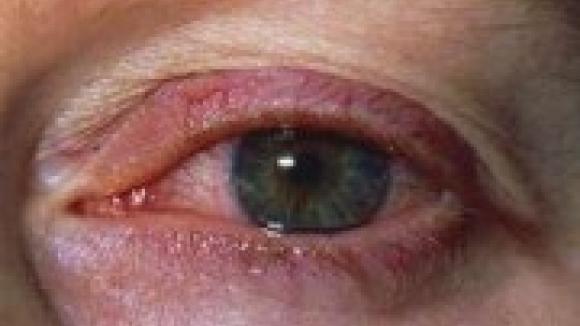
Many topical and OTC products are recommended when treating chronic dry eyes, including omega-3 fatty acids (fish oil or n−3 fatty acids) to relieve symptoms; the NEJM reports that the DREAM trial shows no clinical benefit of n−3 fatty acids for 12 months when compared to placebo.

All News
The Centers for Disease Control and Prevention has a new report showing that from 2004 to 2016, the number of Americans infected by mosquitoes, ticks or fleas tripled from 27,388 in 2004, to 96,075 in 2016.
From 2015 to 2016, these infections rose by 73 percent. This included new Zika and chikungunya virus infections, (41,680 in 2016), followed by Lyme disease (36,429 cases). This may be an underestimation as as many infections are not reported.
A study from the Veterans Affairs clinics and the National Data Bank of Rheumatic Diseases shows that rheumatoid arthritis (RA) patients who were severely obese had a greater risk of progressive disability compared to overweight patients; that was not explained by their arthritis or inflammation.
Should celecoxib (Celebrex) be officially declared as no riskier for the heart than other non-steroidal anti-inflammatory drugs (NSAIDs) naproxen and ibuprofen, and do those other NSAIDs interfere with aspirin for cardiovascular prevention?
On Monday, April 23rd the FDA convened the Arthritis Advisory Committee (AAC) to evaluate Lilly’s resubmitted NDA for the approval of the JAK inhibitor baricitinib for use in rheumatoid arthritis (RA).
FDA staff remain worried about the safety of baricitinib, an oral JAK inhibitor intended for treatment of rheumatoid arthritis, according to briefing documents prepared for an advisory committee meeting on Monday.
Dr. Jack Cush reviews the news and journal reports from the past week on RheumNow.com. A second life for Syk kinase, Vitamin D talk, VTE, regulatory hearings and the Lupus clinic edge.
Proceedings of the National Academy of Sciences (PNAS) has published new research on the mechanistic link between the rheumatoid arthritis (RA) "shared epitope" (SE) risk alleles and environmental triggers such as cigarette smoke that leads to joint inflammation and bony destruction.
The U.S. Preventive Services Task Force (USPSTF) concludes current scientific evidence is insufficient regarding the use of vitamin D and calcium, alone or in combination, to prevent fractures in men and premenopausal women. The USPSTF recommends against daily supplementation with 400 IU or less of vitamin D and 1,000 mg or less of calcium to prevent fractures in postmenopausal women. Current scientific evidence is insufficient regarding the use of vitamin D and calcium at doses greater than 400 IU of vitamin D and greater than 1,000 mg of calcium in postmenopausal women.
A recent meeting (April 9-12) of the European Medicines Agency’s (EMA) Pharmacovigilance Risk Assessment Committee (PRAC) considered the problem of dosing errors with methotrexate (MTX), citing "continued reports of overdose."
CreakyJoints and Pfizer have selected the Mayo Clinic and the University of Alabama at Birmingham (UAB) to each receive a $500K research award (funded by Pfizer Independent Grants) for Learning & Change.
Dr. Jack Cush reviews the news and journal reports from the past week on RheumNow.com. Highlights includes manpower shortfalls, comorbidities in AA Lupus, certolizumab pregnancy safety, which Shingles vaccine is best and the power of combination biologics in severe refractory SLE.
Arthritis & Rheumatology has published the results of the 2015 Workforce Study of Rheumatology Specialists, and estimates a current shortage (demand > supply) of 700 (12.9%) full-time rheumatologists and that this deficit will worsen (102%) to 4133 FTE by 2030.
Dr. Maya Buch from Leeds has a thoughtful Viewpoint article in Annals of Rheumatic Disease on how to consider and manage the refractory or difficult rheumatoid arthritis (RA) patient.
Clowse and colleagues have published an extensive review of the certolizumab pegol (CZP) in pregnancy database, and found no evidence that CZP has a teratogenic effect or contributes to fetal harm when compared to the general population.
A European group of experts has formulated consensus-based recommendations for the treatment of juvenile idiopathic arthritis (JIA)-associated uveitis, focusing on screening, monitoring, and treatment of this potentially devastating extra-articular manifestation of JIA.
The German Autoinflammatory Disease (AID) registry has studied the effects of the IL-6 inhibitor tocilizumab (TCZ) in systemic juvenile idiopathic arthritis (sJIA) patients and shown a clinical response rate of 35% during the first 12 weeks, and inactive disease and/or remission (with medication)
Dr. Jack Cush reviews the news and journal reports from the past week on RheumNow.com. News on drug regulatory decisions, fenofibrate and gout, Still's disease, TB and infection rates, SpA and hidradenitis suppurativa, and predicting methotrexate non-responders.
Investigators from Glasgow and Oxford have identified changes in genomic architecture, represented by a chromosome conformation signature, that can predict nonresponse to methotrexate in early rheumatoid arthritis patients.
Recognizing that studies show 35–59% of RA patients do not achieve clinically meaningful responses after starting MTX, they sought to identify a pattern of genetic changes in 59 early RA patients that would predict poor responses to MTX therapy.
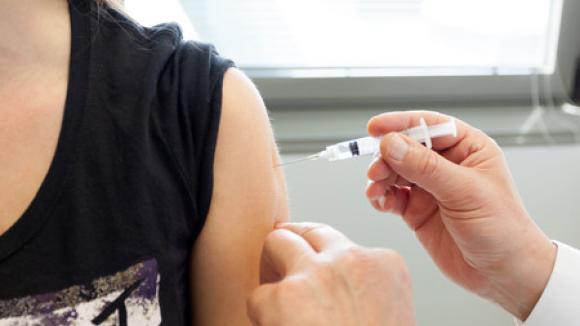
Stopping methotrexate for 2 weeks after the administration of flu vaccine led to improved immunogenicity without increasing disease activity among patients with rheumatoid arthritis (RA), a prospective Korean study showed.