
Article
Chronic inflammation is a well-known risk factor for cardiovascular disease and stroke.

Search for Terms or Answers
Chronic inflammation is a well-known risk factor for cardiovascular disease and stroke.
There is a significant unmet need with regard to counseling and managing SLE and APS patients who become pregnant or who may be planning for pregnancy.

The Washington Post has reported on the variable laws, views and use of marijuana in treating pain.
Currently 1.4 million patients in 28 states use legal medical marijuana for a variety of medical conditions - chronic pain being one.

Dr. Jack Cush reviews highlights from the past week on RheumNow.com:

Sirukumab is a human monoclonal antibody that selectively binds to the interleukin-6 (IL-6) and is being developed for use in rheumatoid arthritis (RA) and other inflammatory diseases.

Patients often characterize certain foods as “inflammatory” or “anti-inflammatory” as they combat their arthritis.

Multiple patient- and disease-related factors -- including medication use -- were associated with the development of severe infections among patients with systemic lupus erythematosus, a Spanish study found.

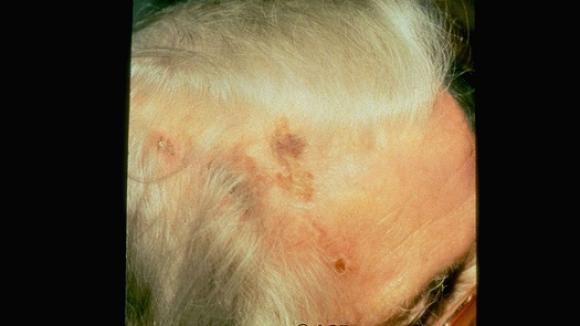
This appears to be the year for biologic treatments in giant cell artertis (GCA).
Biosimilar reports is an ongoing series dedicated to advances, discussions and developments in biosimilar agents intended for use by rheumatologists. Many of these items were compiled from news sources, journal articles and regulatory documents and are cited and linked within each section.

Dr. Jack Cush reviews this week's news and information from the 2017 RWCS meeting in Maui.
The European Commission has approved Eli Lilly's rheumatoid arthritis drug Olumiant (baricitinib) for use in Europe for RA patients with moderate-to-severe active disease in adults who have not responded one or more disease-modifying antirheumatic drugs.

The American College of Physicians (ACP) recommends that physicians avoid prescribing drugs, especially narcotics, for patients with acute or subacute low back pain.

Dr. Jack Cush discusses the news and reports from this week on RheumNow:

Oligoarticular-onset juvenile idiopathic arthritis accounts for nearly half of all JIA patients. While many of these children will require DMARD therapy, many others are treated with antiinflammatory meds or intra-articular corticosteroids. But the evidence for this latter approach is scant.

The George Institute for Global Health has performed a systematic review of drugs used to treat back pain. Their findings, published in the Annals of the Rheumatic Diseases, shows that only one in six improve their pain with NSAID therapy.
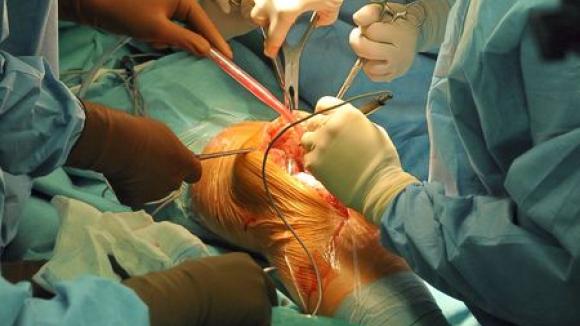
Up to 30% of patients with rheumatoid arthritis (RA) will eventually undergo joint reconstructive surgery, yet we have limited data to guide the perioperative management of DMARDs and biologics.
Dr. Jack Cush reviews this week's highlights from RheumNow.

Kevzara (sarilumab), an interleukin-6 (IL-6) receptor monoclonal antibody, was approved by Health Canada for use in rheumatoid arthritis (RA).

Prior to the biologic era, nonsteroidal antiinflammatory drugs (NSAIDs) were the mainstay of drug therapy in thos with spondyloarthritis (SpA) and ankylosing spondylitis (AS). Their role in the modern era has changed and the claims for efficacy have varied.

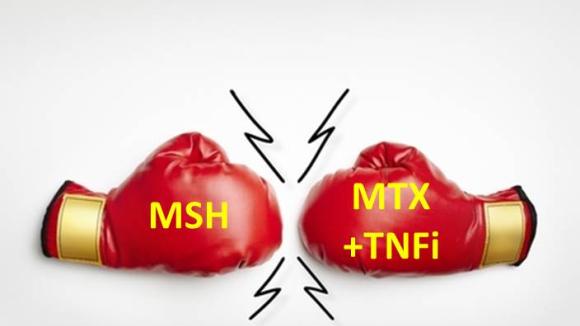
There are several trials that test the efficacy and safety of combination tumor necrosis factor inhibitor (TNFi) plus methotrexate against triple therapy (methotrexate plus hydroxychloroquine plus sulfasalazine) in patients with rheumatoid arthritis.
By downloading this material, I acknowledge that it may be used only for personal use and personal education and that I will accredit RheumNow.com as the source and owner of this material. Commercial use or mass reproduction of this material without permission from RheumNow (info@rheumnow.com) is prohibited.

