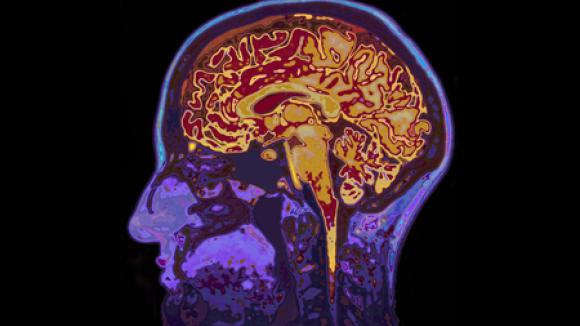
A new study has found that the brain system enabling us to inhibit our own pain changes with age, and that gender-based differences in those changes may lead females to be more sensitive to moderate pain than males as older adults.
All News
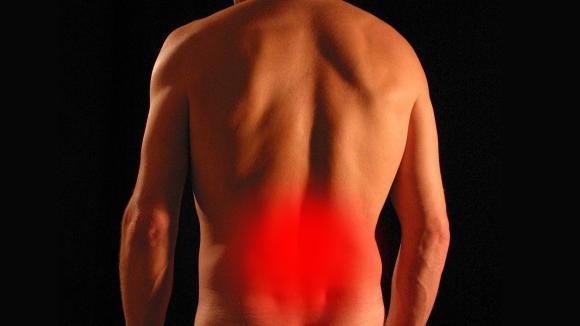
Low back pain is a major cause of disability around the globe, with more than 570 million people affected. In the United States alone, health care spending on low back pain was $134.5 billion between 1996 and 2016, and costs are increasing.
SPACE study of adults referred to rheumatology with less than 2 years of chronic back pain (CBP), shows that only one-third can be reliably diagnosed with axial spondyloarthritis (axSpA).
EULAR has published the 2023 updated recommendations for the optimal non-pharmacological management of hip and knee osteoarthritis (OA).
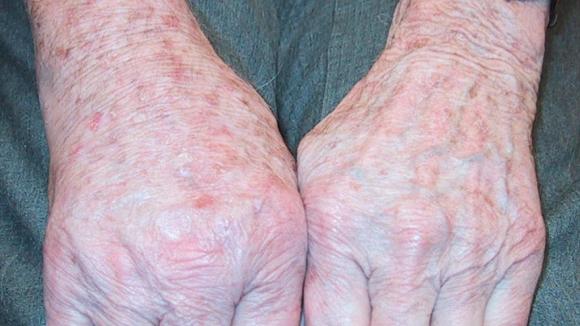
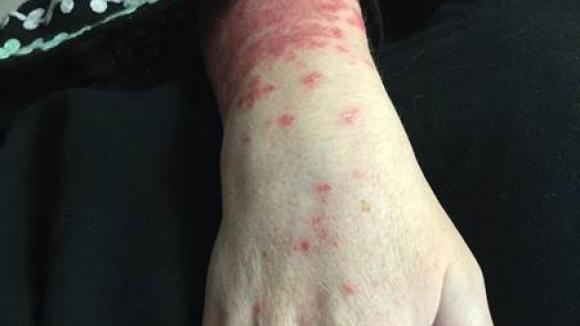
A cohort study suggest that patients with dermatomyositis (DM) are at an increased risk for multiple comorbidities, including chronic kidney and cardiovascular disease,
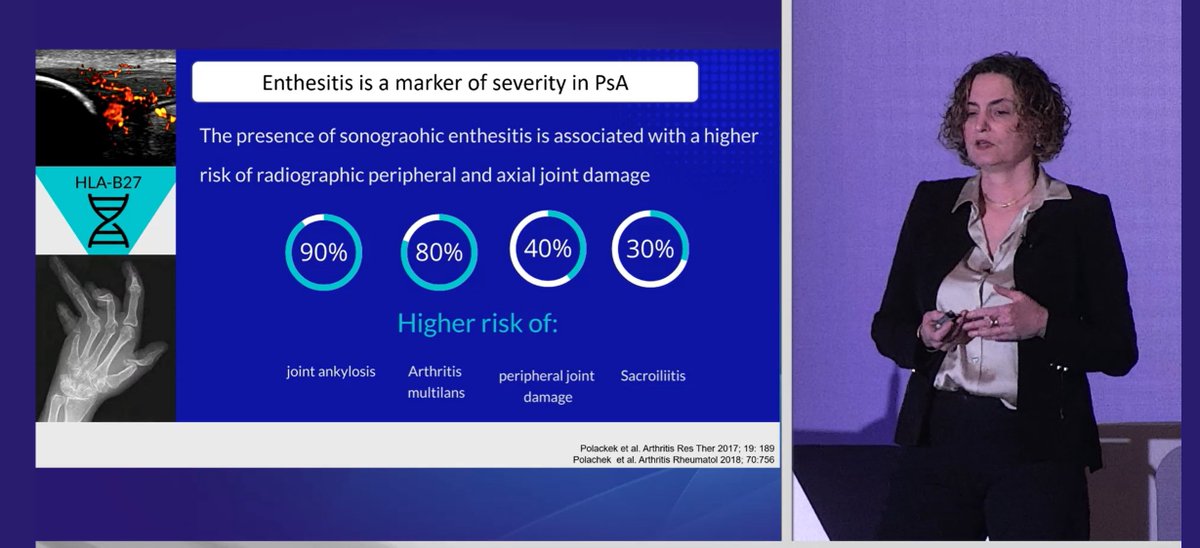
An ultrasound study suggests that enthesitis is associated with both synovitis and tenosynovitis in patients with Psoriatic arthritis (PsA).
Biomarker Predicts Survival in Autoimmune Lung Disease
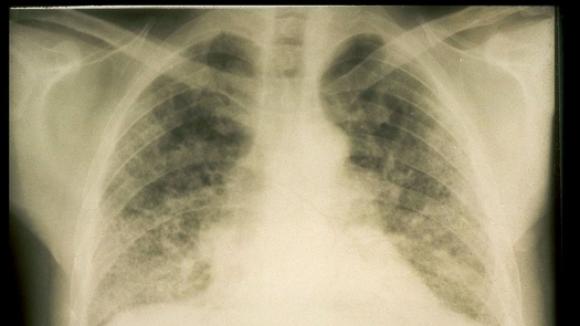
One major subgroup of patients with interstitial lung disease (ILD) arising from polymyositis/dermatomyositis (PM/DM) survived significantly longer when serum levels of interferon-λ3 were relatively low, researchers found.
Best of 2023: ACR Guidelines for Interstitial Lung Disease in Patients with Rheumatic Conditions
The American College of Rheumatology released summaries of two new guidelines for the Screening and Monitoring of Interstitial Lung Disease in People with Systemic Autoimmune Rheumatic Disease and for the Treatment of Interstitial Lung Disease in People with Systemic Autoimmune Rheumatic Diseases.
The prevalence of radiographic chondrocalcinosis is estimated to be 4% to ≥10% in older adults, but the prevalence of symptomatic calcium pyrophosphate deposition (CPPD) disease is unknown. To advance our understanding of CPPD, the American College of Rheumatology and EULAR have published validated classification criteria for symptomatic CPPD disease.
This week I reached out to many leaders in rheumatology and asked: who are the great women in rheumatology who should be recognized? This was prompted by a smart article in Annals of Rheumatic Disease written by Drs. Tuhina Neogi (Boston) and Nicola Dalbeth (N. Zealand), entitled "Where are the women ‘Heroes and Pillars of Rheumatology’?
Guidelines (ACR/EULAR/GRAPPA) for the management of psoriatic arthritis (PsA) recommend the early referral of patients with the suspected condition for early assessment and treatment.
Since the millennium, we have seen an expansion in the number of advanced treatments both biologic and targeted synthetic disease modifying anti-rheumatic drugs for rheumatoid arthritis. The challenge remains on how best to characterise the subtypes of RA in order to choose the best drug to ensure optimal outcome for patients.
A lot of interesting studies will be presented at the poster sessions on Sunday, November 12 and some of them address practical real-world issues such as treatment intensification and the impact of pregnancy on axSpA imaging.
Chronic low back pain is a common complaint that brings patients to the doctor’s attention. Although the majority of low back pain is mechanical in nature, an important minority is inflammatory in nature.
Drs. Jack Cush and Arthur Kavanaugh discuss highlights and key takeaways from ACR 23.