Pregnancy and drug safety is a complex issue, often with limited information about maternal drug exposure on the offspring. Greater uncertainty exists when considering whether paternal exposure may also influence fetal outcomes.

All News
Hydroxychloroquine retinopathy prevention guidelines have revised from ideal body weight-based dosing to actual body weight-based dosing; the question remains whether these have been adopted in clinical practice.
A database of nearly 21,000 new HCQ users from a UK general population database studied HCQ dosing and use between 2007 and 2016. Specifically they examined whether users were subjected to excess HCQ dosing per ophthalmology guidelines (defined by exceeding 6.5 mg/kg of IBW and 5.0 mg/kg of ABW).
When psoriatic arthritis (PsA) patients become pregnant, they do not have more infertility or adverse pregnancy outcomes compared to healthy controls.
Another, new Janus kinase 1 (JAK1) inhibitor is out with impressive data - this time its filgotinib, demonstrating its efficacy and safety two separate clinical trials of patients with psoriatic arthritis or ankylosing spondylitis.
Dr Jack Cush reviews the News and Journal reports from the past week on RheumNow.com. Be sure to check out our upcoming meeting in March 2019 - RheumNow Live.
This past week in Chicago gave us a plethora of new and eye-opening research, people, KOLs, exhibits, sessions, guidelines, posters and a never-ending supply of coffee served in small paper cups. ACR 2018 highlights for me included:
Highlights from Tuesday, day 3 of the ACR Annual meeting in Chicago, included:
The PEXIVAS Study – 2x2 Trial of Plasma Exchange and Reduced Steroids in ANCA-Associated Vasculitis (AAV) - Abstract #2788
Pregnancy and drug safety is a complex issue, often with limited informatoin about maternal drug exposure on the offspring. Greater uncertainty exists when considering whether paternal exposure may also influence fetal outcomes.

Dr. Jack Cush reviews the news and journal reports from the past week on RheumNow.com.
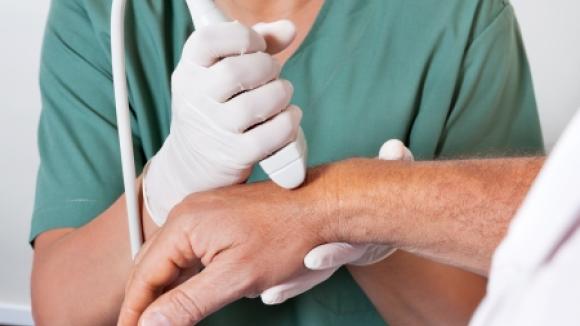
Musculoskeletal ultrasound (US) has become a more widely used tool in rheumatology clinical practice. This study of early inflammatory arthritis patients shows that US-defined digit flexor tenosynovitis was more predictive of subsequent rheumatoid arthritis than findings of ACPA positivity or US-defined joint synovitis.
Hydroxychloroquine retinopathy prevention guidelines have revised from ideal body weight-based dosing to actual body weight-based dosing; the question remains whether these have been adopted in clinical practice.
A database of nearly 21,000 new HCQ users from a UK general population database studied HCQ dosing and use between 2007 and 2016. Specifically they examined whether users were subjected to excess HCQ dosing per ophthalmology guidelines (defined by exceeding 6.5 mg/kg of IBW and 5.0 mg/kg of ABW).
Dr. Jack Cush reviews EULAR 2018 and the past week's news and reports from RheumNow.com, including DMARDs in OA, the price of Penicillamine, Infections when ANCA+, CV outcomes in gout, NSAIDs in Pregnancy and Seropostive vs. Seronegative Outcomes.
A study from the American Journal of Obstetrics & Gynecology analyzed pregnant women from the Kaiser Permanente healthcare system and compared newly pregnant women who took non-steroidal anti-inflammatory drugs or acetaminophen or neither showed that using NSAIDs around conception carried a more than four-fold higher risk of early miscarriage. (Citation source: http://bit.ly/2tqNWN6)
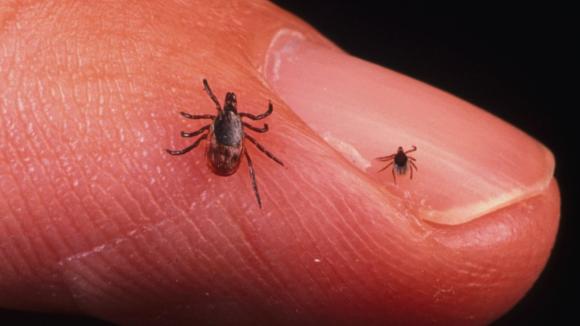
The Centers for Disease Control and Prevention has a new report showing that from 2004 to 2016, the number of Americans infected by mosquitoes, ticks or fleas tripled from 27,388 in 2004, to 96,075 in 2016.
From 2015 to 2016, these infections rose by 73 percent. This included new Zika and chikungunya virus infections, (41,680 in 2016), followed by Lyme disease (36,429 cases). This may be an underestimation as as many infections are not reported.
Dr. Jack Cush reviews the news and journal reports from the past week on RheumNow.com. Highlights includes manpower shortfalls, comorbidities in AA Lupus, certolizumab pregnancy safety, which Shingles vaccine is best and the power of combination biologics in severe refractory SLE.
Clowse and colleagues have published an extensive review of the certolizumab pegol (CZP) in pregnancy database, and found no evidence that CZP has a teratogenic effect or contributes to fetal harm when compared to the general population.
Dr. Jack Cush reviews the highlights from the news, journals and major meetings. New announcements and approval from the FDA; novel associations between ANCA vasculitis and thyroid disease; flare rates after arthroplasty; and pregnancy outcomes for men and women.
Seminars in Arthritis and Rheumatism features a review of the effects of paternal use of antirheumatic drugs on pregnancy, specifically addressing the effects of NSAIDs, steroids, DMARDs and biologics on spermatogenesis and the effect on pregnancy outcomes and offspring.
A large cohort study of pregnant and non-pregnant women with systemic lupus erythematosus has shown that lupus flares are increased during pregnancy and in the 3 months follwing delivery.
Exposure to biologic therapies among women with autoimmune diseases was not associated with increased risks of preterm delivery or having small for gestational age babies, a population-based Canadian study found.