For over 70 years, glucocorticoids, (GC) have been a part of standard therapy in SLE. They are classically used to not only induce remission or treat an acute flare, but also as maintenance therapy. They are a valuable 'friend' if used wisely, and can become a 'foe' if used excessively.

All News
Several abstracts have studied the mechanism of action of JAK inhibitors (JAKi) in various diseases. JAKi alter many other mediators affected by the JAK STAT pathway. For instance, T cell signature in blood that is proliferative was associated with a response in RA.
It has been just over a decade since the approval of tofacitinib (JAK1/JAK3-inhibitor) by the US FDA for the treatment of rheumatoid arthritis. Since then, baricitinib (JAK1/JAK2-i), filgotinib and upadacitinib (both selectively targeting JAK1) also have been licensed for the treatment of rheumatoid arthritis. As there are many more JAK-inhibitors evaluated in clinical trials currently, how do you stand out?
Here's what I learned at ACR23 that will change the way I practice in rheumatoid arthritis.
You can see that the JAKi/TYK2i have both approved or potential seropositive and seronegative indications. There are also improvements in PsO for the class and studies in CTDs. So, it is difficult to know which to choose.
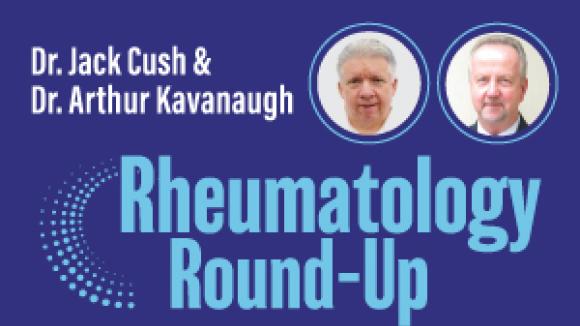
Drs. Jack Cush and Arthur Kavanaugh discuss highlights and key takeaways from ACR 23.
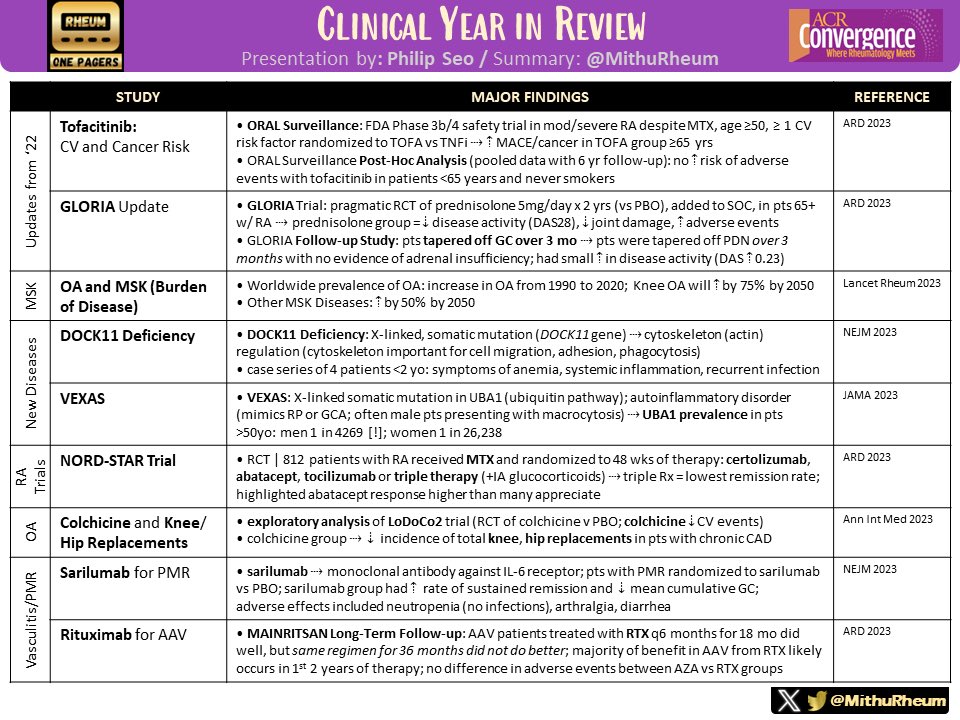
We have known about the VEXAS (vacuoles, E1 enzyme, X-linked, autoinflammatory, somatic) syndrome for nearly 3 years, but there has been relatively little to say about how to treat it. To date there have been over twice as many publications about VEXAS (263 publications) as there have been patients described with respect to treatment strategies (116 patients). One of the late breaking abstracts may finally have rectified this imbalance.