
Article
Dr. Cush reviews the RheumNow.com highlights in rheumatology for the week ending 19 August 2016.

Search for Terms or Answers
Dr. Cush reviews the RheumNow.com highlights in rheumatology for the week ending 19 August 2016.

The European League Against Rheumatism (EULAR) has published comprehensive recommendations on reproductive health and family planning for women with systemic lupus erythematosus and/or antiphospholipid syndrome – conditions that largely affect women of childbearing age.

Pregnancy complications of anti-phospholipid syndrome (APS) have included recurrent abortions, spontaneous fetal loss, preeclampsia, and premature birth. The etiopathogenesis of these events has been presumed to be placental thrombosis or infarction.
The PROMISSE (Predictors of Pregnancy Outcome: Biomarkers in Antiphospholipid Antibody Syndrome and Systemic Lupus Erythematosus) study has revealed several important lessons in lupus care.

Dr. Jack Cush reviews highlights from the news and social media in the past week on RheumNow.com
Tocilizumab is currently listed as a Category "C" pregnancy risk based on limited pre-clinical (animal) data that was negative.

Sjogren's syndrome is a highly prevalent disorder, affecting women ten times more frequently than men. Although the typical onset follows menopause, a minority of women may develop primary Sjogren’s syndrome (pSS) during child-bearing years.

In April and May 2016, RheumNow sent 82 tweets regarding news, research and teaching points that strongly impacted the rheumatology community and resulted in a reach of 203,500 impressions, with 136 mentions, and over 6378 visits to RheumNow.com. Here are the top tweets from April and May.

This is a reposting of an earlier report on RheumNow that includes additional commentary from Dr. Sunada Kane, a gastroenterologist at the Mayo Clinic who specializes in both inflammatory bowel disease (IBD) and pregnancy.
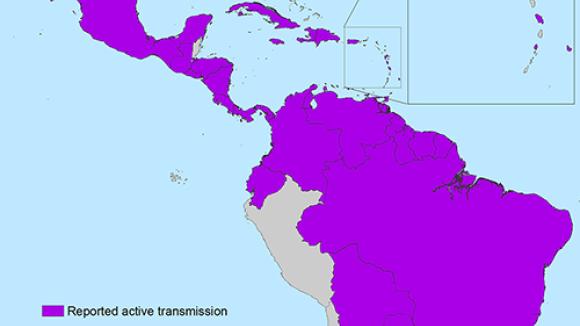
The Centers for Disease Control and Prevention (CDC) reported that in the last year (January 2015 to February 2016), they have identified and confirmed 116 cases of the Zika virus among US residents, with nearly all having traveled to endemic regions.
Arkema and colleagues assessed maternal and fetal outcomes in patients with SLE, pre-clinical (prior to onset) SLE and prevalent maternal SLE during pregnancy compared with the general population.
Highlights from this week on RheumNow:

Pregnancy and Immune Modulating Therapies
A Quebec administrative claims analysis examined the birth outcomes of women with a history of juvenile idiopathic arthritis (JIA) who subsequently had a first-time birth (between 1983-2010).
A population-based study of 1,272,424 live-born infants from Denmark and Sweden examined the prevalence of birth defects among infants born to 683 women with chronic inflammatory disease (inflammatory bowel disease, rheumatoid arthritis, ankylosing spondylitis, psoriatic arthritis, or psoriasis)

Treatment paradigms for managing pregnancy in rheumatoid arthritis (RA) have been challenged in recent years with the introduction of new agents and reclassification of drug safety during pregnancy by the FDA.

Although ankylosing spondylitis affects a predominantly male population, the ratio of men to women has declined from 9-10:1 in earlier studies to more recent estimates of 2-3:1 (F:M).

Desai and coworkers analyzed public and private insurance claims data (2001-2012) to assess patterns of drug use in pregnant woment with RA, SLE, PsA and AS. Specifically, they looked at immunosuppressive drug use in the 3 months preceding and during pregnancy.
Brouwer and colleagues from the University Medical Center Rotterdam in The Netherlands have studied the issue of infertility in a cohort of RA patients followed prospectively.
The following is a compilation of abstracts presented at the 2015 Annual ACR meeting in San Francisco. These were chosen on the basis of impact, quality and safety message.

By downloading this material, I acknowledge that it may be used only for personal use and personal education and that I will accredit RheumNow.com as the source and owner of this material. Commercial use or mass reproduction of this material without permission from RheumNow (info@rheumnow.com) is prohibited.

