
Article
What do you tell your patients who are considering augmentation mammoplasty? Or who question the safety of prior implants?

Search for Terms or Answers
What do you tell your patients who are considering augmentation mammoplasty? Or who question the safety of prior implants?

Women with rheumatoid arthritis are said to have a normal number of pregnancies. However, most of these are conceived prior to the onset of RA. Once diagnosed, the RA patient who wishes to become pregnant may be faced with difficult medication choices if she is planning to become pregnant.

The PROMISSE (Predictors of Pregnancy Outcome: Biomarkers in Antiphospholipid Antibody Syndrome and Systemic Lupus Erythematosus) study has revealed several important lessons in lupus care.

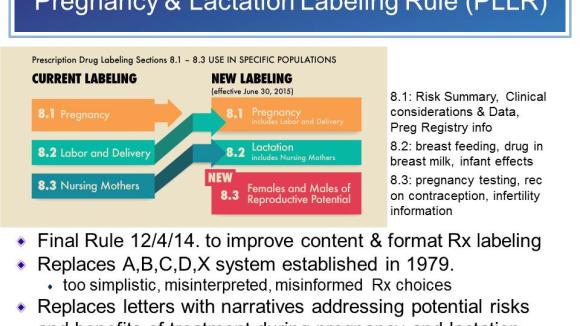
A recent article from Healio.com reviewed the FDA’s Pregnancy and Lactation Labeling Rule (PLLR) that became effective June 30th.
The effects of prior breastfeeding on bone density of postmenopausal women have been controversial. Several studies suggest that breastfeeding and childbirth lead to maternal calcium loss and a decline in bone mineral density (BMD).

At EULAR 2015, Brouwer and colleagues reported on their cohort of 162 evaluable pregnancies in 239 Dutch women enrolled during 2002-2010 in the nationwide Pregnancy-Induced Amelioration of Rheumatoid Arthritis (PARA) study – a large prospective cohort of pregnant RA patients.

Obesity is associated with adverse outcomes in pregnancy, especially with higher rates of infertility and miscarriage.

An incident cohort study from Denmark showed that 84 SLE pregnancies resulted in 62 live births. Lupus disease activity strongly influenced maternal complications seen in half and fetal complications were observed in one-third of cases.

EULAR 2015 started the afternoon of Wednesday June 10th.


The traditional FDA pregnancy risk categories (A, B, C, D, X) have been scrapped in favor of a new labeling mandate called the pregnancy and lactation labeling rule (PLLR). This change has been under consideration at the FDA for nearly 2 years and was brought about by the belief that the old
By downloading this material, I acknowledge that it may be used only for personal use and personal education and that I will accredit RheumNow.com as the source and owner of this material. Commercial use or mass reproduction of this material without permission from RheumNow (info@rheumnow.com) is prohibited.

