
Article
Researchers at the National Institutes of Health, led by Dr. Dan Kastner, have led the way in the discovery and understanding of numerous autoinflammatory diseases.

Search for Terms or Answers
Researchers at the National Institutes of Health, led by Dr. Dan Kastner, have led the way in the discovery and understanding of numerous autoinflammatory diseases.

Dr. Jack Cush reviews news and journal reports from the past week on RheumNow.com.

SHARE (Single Hub and Access point for pediatric Rheumatology in Europe) is a group established in 2012 to develop and optimize diagnostic and management regimens in Europe for children and young adults with rheumatic diseases.
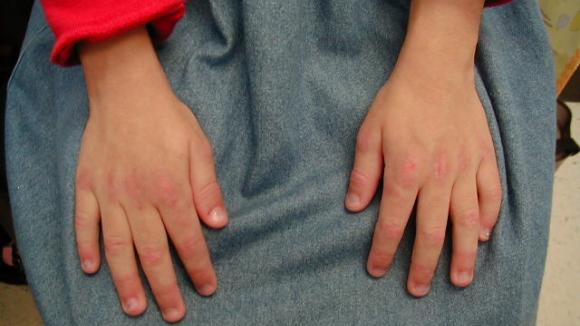
The European League Against Rheumatism (EULAR) has published comprehensive recommendations on reproductive health and family planning for women with systemic lupus erythematosus and/or antiphospholipid syndrome – conditions that largely affect women of childbearing age.

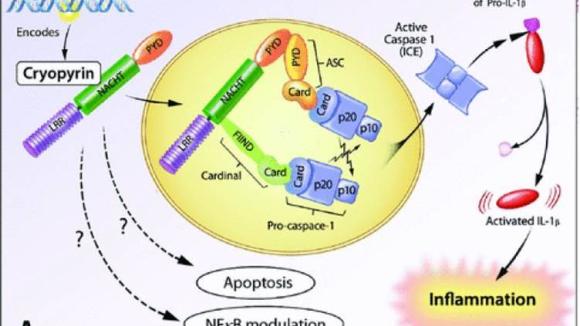
Tumor necrosis factor (TNF) receptor-associated periodic syndrome (TRAPS) is an autosomal-dominant autoinflammatory disease resulting from mutations of the TNF super family receptor 1A (TNFRSF1A) gene.

The gene mutations underlying inflammasome activity have been well described, but there appears to be variable penetrance among patients with the same gene mutation, suggesting additional mechanisms may influence disease expression.
The Food and Drug Administration’s Arthritis Advisory Committee (AAC) yesterday recommended that the Sandoz etanercept (Enbrel) biosimilar (GP-2015) be approved for use in the United States.

Systemic lupus is a clinically heterogeneous disorder, unified by requisite clinical features and exuberant humoral response to unknown triggers. While the diagnosis is easy, the disease course and management can be complicated and challenging.

The EULAR Annual European Congress of Rheumatology meeting was held in London from June 8-11, 2016 and was well attended by thousands. This year’s meeting had over 2,000 poster displays, and the EULAR 2016 Congress presented new recommendations on the management of rheumatoid arthritis, spondyloarthritis, and fibromyalgia.

Men and women with arthritis have nearly a two-fold higher prevalence of lifetime suicide attempts than those without arthritis, according to a recent study from the University of Toronto.

Women with a history of juvenile idiopathic arthritis (JIA) are more than twice as likely as those without this condition to be diagnosed with heart disease, according to the results of a new study.

Amidst a stringent regulatory environment, and with the rising use and abuse of narcotics and increasing regulation limiting narcotic analgesic use, the FDA approved (August 2015) the use of extended-release oxycodone in children (11 to 16 years old) with severe, "around-the-clock" pain

Video recap of highlights from this week at RheumNow.com.
Systemic lupus is a clinically heterogeneous disorder, unified by requisite clinical features and exuberant humoral response to unknown triggers. While the diagnosis is easy, the disease course and management can be complicated and challenging.
Juvenile idiopathic arthritis (JIA) is clearly not related to rheumatoid arthritis and until recently has no identifiabile autoantigen linked to JIA.
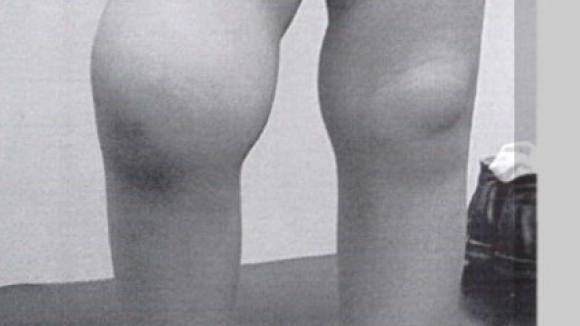
Systemic juvenile idiopathic arthritis (SoJIA) is one of the most common underlying etiologies to the macrophage activation syndrome (MAS).

In the current issue of Lancet, Pierre Miossec discusses the challenges of studying and managing juvenile dermatomyositis and, specifically, the
Recent Developments in Osteoarthritis, Osteoporosis and Gout
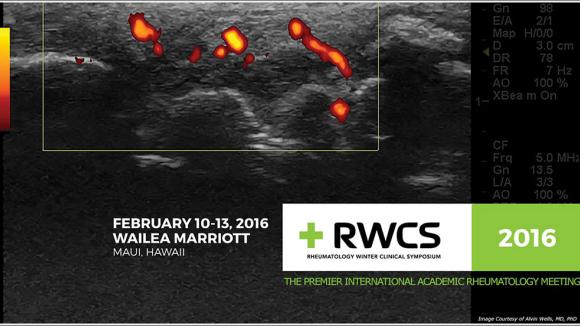
Juvenile idiopathic arthritis (JIA) is commonly managed with methotrexate (MTX), with many pediatric rheumatologists preferring to use parenteral MTX for compliance and absorption reasons.
Lancet reports the results of a randomized controlled trial comparing prednisone alone to prednisone combined with either methotrexate (MTX) or cyclosporine (CyA) in new-onset juvenile dermatomyositis (JDM).
By downloading this material, I acknowledge that it may be used only for personal use and personal education and that I will accredit RheumNow.com as the source and owner of this material. Commercial use or mass reproduction of this material without permission from RheumNow (info@rheumnow.com) is prohibited.

