This week's Tuesday Nite Rheumatology features presentations and interviews with Drs. Peter Nash and Philip Robinson. Dr. Robinson presents latest data on the Rheum-Covid.org Registry, that he helped establish under the Global Rheumatology Alliance. Dr. Nash presents the impact of COVID in Australia and pragmatic COVID management.
All News
Nagaraja, Khanna and colleagues have published an overview of current and future therapies in patients with systemic sclerosis (SSc) and have reviewed the potential outcome measures for this difficult autoimmune disorder.
Hydroxychloroquine is one of many medications frequently used in rheumatology practice. Its remarkable versatility is attested by its routine use in lupus, in patients with an autoimmune coagulopathy, in patients with rheumatoid arthritis, as well as in those with a low-level inflammatory arthropathy.
The latest hazardous spinoff to the coronavirus infection is an inflammatory, Kawasaki-like syndrome unique to children or adolescents with COVID-19. Sporadic reports from around the globe of this severe pediatric COVID syndrome have littered the news with brief mentions and little detail.
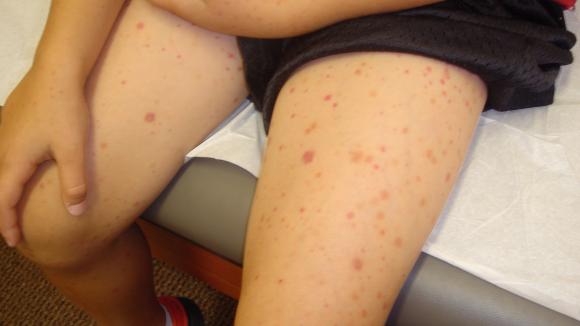
As data continue to emerge about a multi-system inflammatory disorder in children apparently connected to COVID-19, evidence is growing that this is not your typical Kawasaki disease.
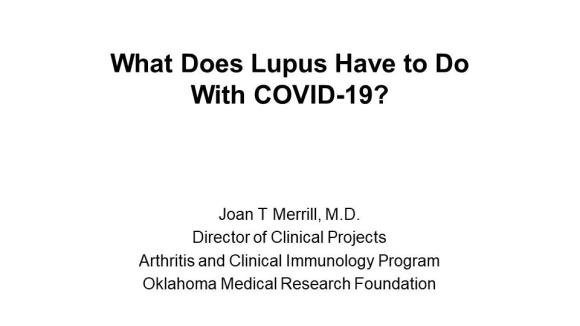
Last night's Tuesday Nite Rheumatology featured Dr. Joan Merrill (OMRF). In her lecture, "What does COVID-19 have to do with lupus?", she discusses the pathogenesis of lupus, and specifically thrombotic microangiopathy, complementopathies, catastrophic lupus syndrome and the potential overlap with the vascular pathology seen with COVID-19 infection.
The EXCEED study was a head-to-head trial of secukinumab (SEC) versus adalimumab (ADA) as first-line monotherapy in psoriatic arthritis (PsA) patients; this 52 week trial showed that while SEC failed to achieve clinical superiority over ADA, SEC treated patients demonstrated higher
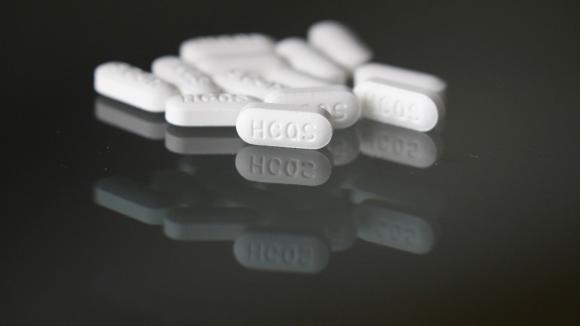
JAMA Cardiology reports the risk of QT (QTc) prolongation when hydroxychloroquine (HCQ) was given to hospitalized patients with coronavirus disease 2019 (COVID-19), especially when given with azithromycin.
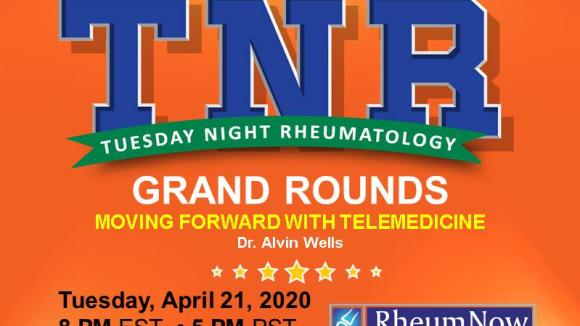
Dr. Alvin Wells gives a primer on Telerheumatology and Telemedicine in the era of COVID-19. This 1 hour Grand Rounds Presentation includes a 30 minute lecture, followed by stimulating 30 minutes of Q&A with a rheumatology attendee audience.
The presentations of the COVID-19 infection have been clearly chronicled with the worrisome onset of sore throat, dry cough, loss of smell and taste with fevers, myalgias, fatigue and the worrisome progression of pulmonary involvement in a minority. Lab findings may include a leukocytosis,
The Journal of Rheumatology reports a retrospective, single center, analysis of 17 rheumatoid vasculitis patients who responded well to intravenous rituximab (RTX) therapy.
The 9/11/01 terrorist attach on the World Trade Center (WTC) resulted in at least 2,977 fatalities, over 25,000 injuries, and caused at least $10 billion in infrastructure and property damage. Arthritis & Rheumatology reports that dust cloud exposure among responders and
The monoclonal antibody guselkumab (Tremfya), which binds the interleukin (IL)-23 p19 subunit, was effective for psoriatic arthritis in two large clinical trials, providing comprehensive benefits for this heterogeneous disorder, investigators reported in The Lancet.
On Tuesday, April 7th, RheumNow hosted its first Tuesday Nite Rheumatology webinar - kicking off a two-month series of Rheumatology Grand Rounds lectures. The first session featured Jack Cush, MD (UT Southwestern) who lectured on "The Safety of Biologics and Newer Agents".
On April 3rd, the National Institute for Health and Care Excellence (NICE) in the UK, published a rapid guideline for managing children and adults with rheumatological autoimmune, inflammatory and metabolic bone disorders during the COVID-19 pandemic, while protecting staff from infection.
Fourteen cases reported from mainland China suggest that tofacitinib (TOFA) may be effective in patients with refractory adult-onset Still’s disease (AOSD), further adding to a growing list of potential use of JAK inhibition in managing inflammatory, and now autoinflammatory, disease.
Abbvie has announced top line results of their SELECT-PSA trial of upadacitinib (UPA), wherein both the 15 and 30 mg doses met the primary endpoint of ACR20 response at week 12 and demonstrated radiographic inhibition at week 24.
Dr Jack Cush reviews the news and journal articles from the past week on RheumNow.com
A metanalysis of phase II, III and IV trials in moderate to severe plaque psoriasis suggests comparative efficacy biologic treatments, but that that brodalumab, guselkumab, ixekizumab, and risankizumab-rzaa were shown to have the past skin (PASI) response rates.
Dr Jack Cush comments on this week's journal articles, reviews and studies.