Article
It has been a wonderful year for autoinflammatory diseases at the ACR Annual Meeting.

Search for Terms or Answers
It has been a wonderful year for autoinflammatory diseases at the ACR Annual Meeting.
A single-center cohort analysis shows that lung disease is increasingly seen in children with systemic juvenile idiopathic arthritis (SJIA), especially those complicated by macrophage activation syndrome.
Prior to 2013, reports of pulmonary disease in SJIA were rare, but since there have been increasing reports of alveolar hypertension, interstitial lung disease and pulmonary alveolar proteinosis; often with a high mortality rate.
As such, since 2014, the Cincinnati Children’s Hospital Medical Center has seen an increase in lung disease and severe lung disease in SJIA.
Dr. Jack Cush reviews this week's news and journal reports featured on RheumNow.com. PsA v. non-PsA pregnancies, Still's disease, lupus, nutritional supplements and dietary interventions, use of cannabis, tanezumab in OA, CBD oils and more.
First-line treatment of systemic juvenile idiopathic arthritis (JIA) with anakinra (Kineret) was highly effective as monotherapy, minimizing the need for glucocorticoids, a single-center prospective study found.

CAPS is caused by mutations in NLRP3, a component of the inflammasome. It is thought that NLRP3 mutations lead to the uncontrolled production of the inflammatory cytokine IL-1b.
CAPS (cryopyrin-associated periodic syndrome) is a heterogeneous group of autoinflammatory conditions that causes intermittent fevers (typically after cold exposure), as well as an urticarial-like rash. #ACR19 @RheumNow
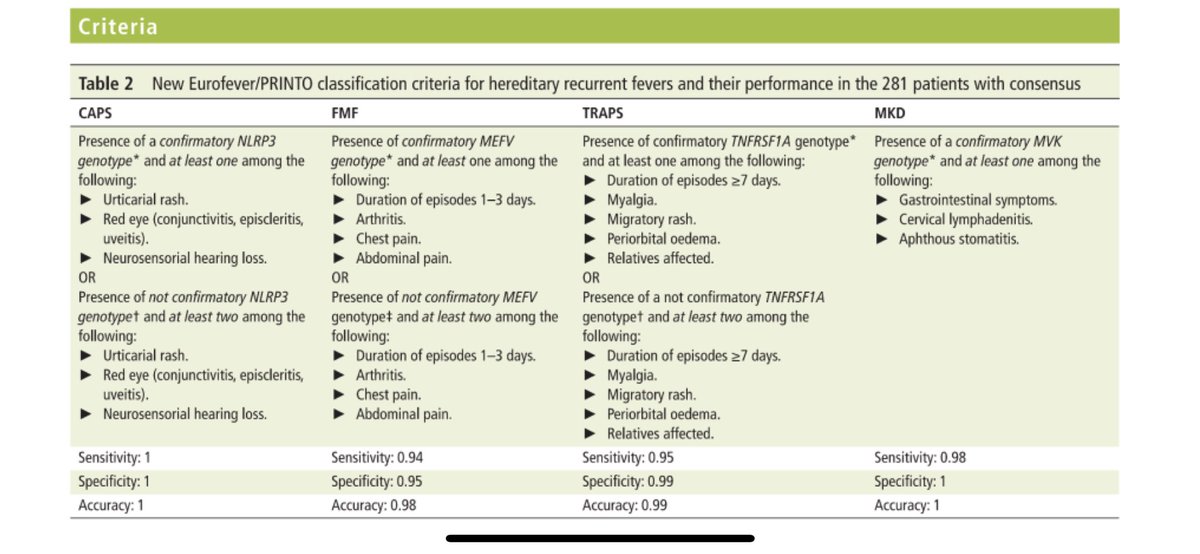
New Eurofever / PRINTO criteria for #autoinflammatory diseases. Dr. Ravelli #ACR19 @rheumnow #Abstr #ACRBest https://t.co/S35Ltegz1F
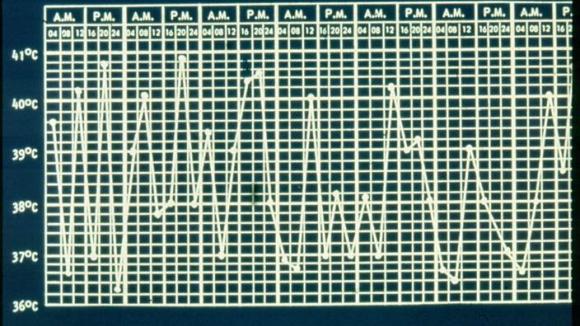
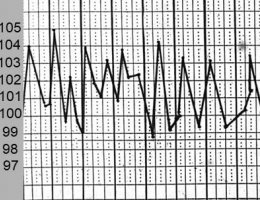
What temp is a fever? Great article from @WSJ that discusses our @feverprints app! https://t.co/Kixwp1JLB8 #rheum https://t.co/54BmZF5PhC

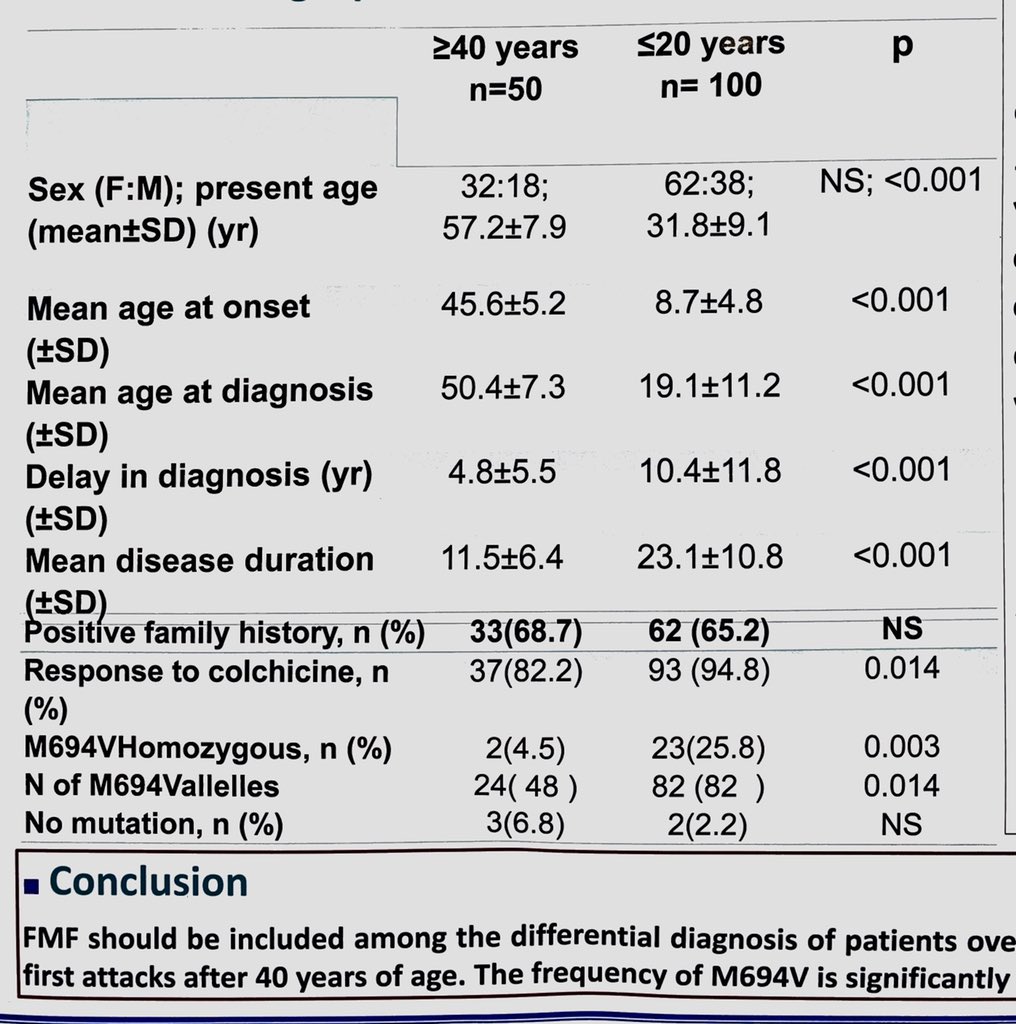
I often wonder why my FMF pts are almost all young... At Cerrahpaşa in Istanbul, 180/≈5000 (3.6%) are >40yo, attacks get less frequent/severe after 40 but more comorbidities to deal with. Onset >40yo possible but milder dx (table⬇️) @egeli_bugra #ACR19 ABST1251/1256 @RheumNow https://t.co/JedUmF7KlR
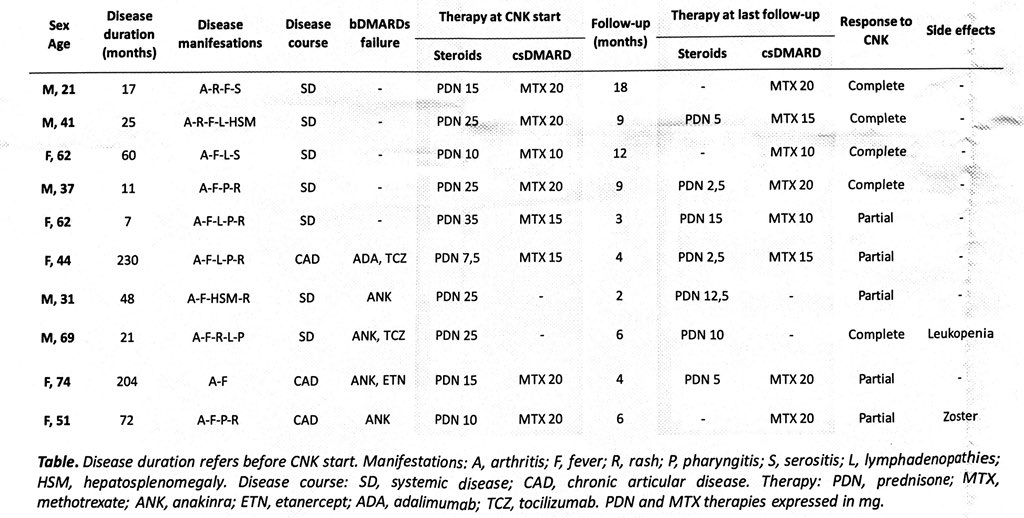
They're both anti-IL-1β agents, but failure of anakinra in adult-onset Still's Disease doesn't mean canakinumab might not work (and work quickly) - see row 7-10 below. Anyone else have that experience? Corrado @Giacomo97811458, San Raffaele Hosp, Milan #ACR19 ABST1245 @RheumNow https://t.co/2qQK08apnT
#ACR19 @rheumnow ABS 1237 OLT1177, oral NLRP3 inflammasome inhibitor- a potential drug for Rx of gout flares: ⬇️ systemic inflamm by ⬇️ WBC count & circulating IL-1β& IL-6 in all3 doses (2000mg, 1000mg or 300mg). ⬇️ ex vivo IL-1β & IL-6 production by cultured PBMCs days 3, 7& 14
The questions that Dr. Amanda Ombrello (@NIH) asks when evaluating patients with recurrent fevers: -Age of onset -Frequency -Duration -Regularity -Height of fever -Prodromal symptoms #ACR19 @rheumnow
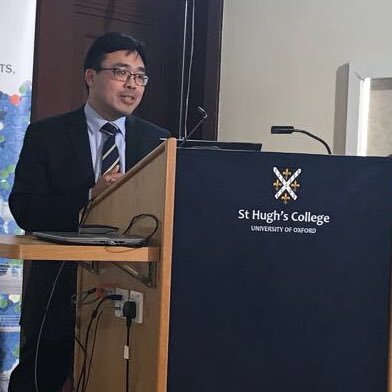
IL-1 blockade beneficial in MAS. Ferritin to ESR ratio useful for identifying these patients. Cytokines Storm Syndrome is one way of thinking of the spectrum of conditions like MAS, HLH, auto inflammatory disease which respond to IL-1 and IL-6 blockade. Cron R #ACR19 @RheumNow
A&R reviews the inflammasome in autoimmune diseases. Pattern recognition recpt induce inflammasome activation, pro-caspase-1 converts to caspase-1 convertin pro-IL-1β and pro-IL-18 active IL-1β and IL-18; seen in RA, SLE, gout, Sjogrens https://t.co/JGadiEWQWf
Analysis of 128 Pediatric Rheum pts (JIA, FMF, etc) analzyed for reactions to 8 different biologics during 32,494 infusions/injections - the frequency of anaphylaxis (from TCZ or RTX) was 3.9% in children. https://t.co/GzvcR0R7Bv
Are you an Expert in Still's disease, Periodic Fevers, FMF or Autoinflammatory Dz? Please let me know ASAP - I want to add you to the list! https://t.co/UwKkco8q1N
Are you an Expert in Dx & management of Still's disease, Periodic Fevers, FMF or Autoinflammatory Dz? If so -- please Direct Message me and tell me where you are and who you want to see (Im developing an EXPERT Referral list). OR TELL ME who is person to see in your town! https://t.co/BGBRbn4yko
Study of 182 hospitalized adult-onset Still's disease patients shows predictive factors for developing macrophage activation syndrome to include: 1. Splenomegaly (OR 5.745), 2. pericarditis (OR 6.5), and 3. ferritin >2000 (OR 4.7). https://t.co/oNsaCL6O92
A study examined whether EGCG suppresses the activation of the NLRP3 inflammasome, thereby effectively preventing gouty #inflammation. It was found that EGCG reduces inflammation in mouse foot tissue making it a promising treatment option for #gout https://t.co/X9O2mbJx6A https://t.co/wgUYz0BmeY

Key features in distinguishing Adult onset Stills disease from Fever of unknown origin: Arthralgia, rash, sore throat, neutrophilia, ferritin >5xULN, LDH based on comparison study of 69 AOSD & 87 FUO pts. 3 or more fever peaks daily makes AOSD less likely. https://t.co/49X4GGludn
By downloading this material, I acknowledge that it may be used only for personal use and personal education and that I will accredit RheumNow.com as the source and owner of this material. Commercial use or mass reproduction of this material without permission from RheumNow (info@rheumnow.com) is prohibited.