The diagnosis of periodic fevers is unified by undiagnosed but recurrent fever. Unfortunately the diagnosis of these disorders is hampered by their infrequency, protean features and a lack of clear criteria. Even more problematic is knowing who should be tested and for which monogenic marker?

All News
Researchers at the National Institutes of Health, led by Dr. Dan Kastner, have led the way in the discovery and understanding of numerous autoinflammatory diseases.
Tumor necrosis factor (TNF) receptor-associated periodic syndrome (TRAPS) is an autosomal-dominant autoinflammatory disease resulting from mutations of the TNF super family receptor 1A (TNFRSF1A) gene.
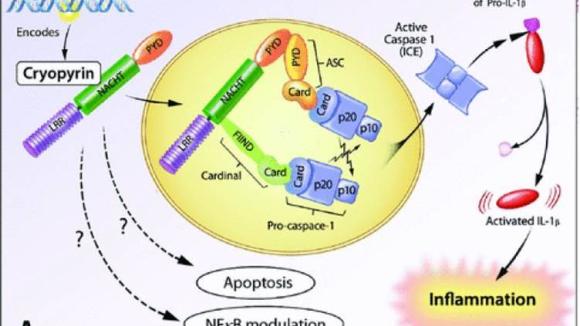
The gene mutations underlying inflammasome activity have been well described, but there appears to be variable penetrance among patients with the same gene mutation, suggesting additional mechanisms may influence disease expression.
Systemic juvenile idiopathic arthritis (SoJIA) is one of the most common underlying etiologies to the macrophage activation syndrome (MAS).
Pregnancy and Immune Modulating Therapies
Althought EULAR currently recommends the pneumococcal vaccine be given to patients with inflammatory rheumatic diseases and the Centers for Disease Control and Prevention (CDC) recommends the vaccine in patients treated with immunosuppressive drugs, a recent brief report suggests it be
Researchers at CHOP have published their investigations into the heritability of pediatric autoimmune diseases that affects roughly one in 12 persons.
The defining triad of Blau's syndrome includes granulomatous polyarthritis, dermatitis and uveitis. This rare, monogenic, autosomal dominant disorder stems from a "gain in function" mutation of the pattern recognition receptor NOD2.
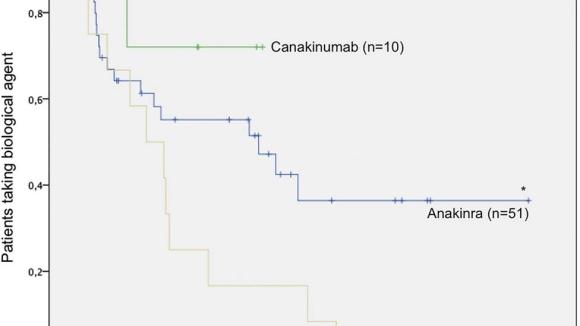
A retrospective review of 77 SoJIA patients revealed that 50-70% achieved inactive disease or remission when treated with IL-1 inhibitors (anakinra, canakinumab). Good responses were seen with tocilizumab or abatacept, but only 8% responded to etanercept.