The RheumNow Week in Review discusses the past week's news, journal articles and highlights from RheumNow.com. This week's report discusses regulatory actions by NICE and FDA, higher death rates in RA and psoriasis, increased risk of RA with Asthma, rising numbers for OA, RA, and STDs.

All News
The CDC has reported its 2013 and 2014 prevalence statistics for arthritis and other chronic medical conditions affecting U.S. adults aged ≥18 years. Data is drawn from the ongoing Behavioral Risk Factor Surveillance System (BRFSS), a state-based, telephone survey of noninstitutionalized adults. Data herein is self-reported arthritis (OA, RA, Gout, FM) and is quantified by state and metropolitan areas.
A Swedish study has shown that occupational silica exposure increases the incidence rates of sarcoidosis and rheumatoid arthritis (RA) in those exposed workers in Swedish iron foundries.
Management of chronic low back pain (CLBP) is often complex, requiring multiple modalities and meds to control pain. An analysis of studies shows that Gabapentinoids, including pregabalin and gabapentin, have little to no benefits but significant risk of adverse effects.
Adult patients with a history of juvenile idiopathic arthritis (JIA) showed poorer health-related quality of life decades later, compared with individuals who were healthy as children -- even if they were in clinical remission, reported researchers in Norway.
Patients with systemic lupus erythematosus (SLE) incur substantial morbidity and complications that may lead to hospitalizations and increased cost of lupus care. Researchers from the University Health Network in Toronto have published a review of SLE hospitalizations showing thta while comm
Dr. Jack Cush reviews the news and articles from the past week on RheumNow.com:
Despite the approval of four anti-TNF biosimilars in 12 months, their introduction into the U.S. market has been slow and - until now - with paultry discounts compared to their introduction throughout Europe, where discounts averaged 50% and were as high as 70% (compared to the price of Remicade).
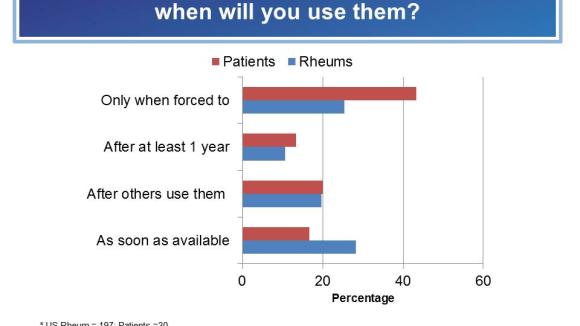
The RheumNow “Live Vote” on the use, uptake and safety of biosimilars contrasts rheumatologist and patient views. Despite FDA approval and looming introduction, there is considerable concern, knowledge gaps and hesitancy regarding their uptake in the US. The survey's primary question demonstrates that less than one-third of US rheumatologists are prepared to adopt biosimilars when they are available.
Among older patients using medium to high doses of the anti-inflammatory steroid prednisolone, treatment with the osteoporosis drug alendronate was associated with a significantly lower risk of hip fracture, according to a study published by JAMA.
Data made public by the Centers for Medicare & Medicaid Services shows that drug and device makers made nearly $8.2 billion in payments to U.S. physicians and teaching hospitals in the last year. Since 2013, CMS has been tracking physician payments as part of the Affordable Care Act.
Dr. Sharad Lakhanpal, President of the American College of Rheumatology has responded to the Senate's proposed changes to healthcare coverage in the USA.
The Canadian Medical Association Journal has studied the costs of prescription drugs in 10 high-income countries (seven European countries, Australia, Canada and New Zealand) and found that many of these medicines varied by more than 600%.
Biosimilars continue to command a great deal of research, development and attention given the promise of significant cost savings and potentially wider use for those in need. Biosimilar Reports is an ongoing series dedicated to advances, discussions and developments in biosimilar agents intended for use by rheumatologists.
The increasing cost of drug has been the subject of concern and review - by legislators, reporters and patients.
The Financial Times has reviewed the annual price increases for the 91 drugs in Pfizers portfolio, showing an average price increase by 20 percent in the past year.
Ohio is suing five major drug manufacturers, accusing them of misrepresenting the risks of prescription opioid painkillers that has resulted in the current opioid epidemic.
Stepping up to biologic therapy when methotrexate (MTX) monotherapy fails was not shown to be cost effective, compared to first trying triple therapy, in a rheumatoid arthritis (RA) study published in Annals of Internal Medicine.
Dr. Jack Cush Reviews highlights from the past week on RheumNow.com:
Dr. Jack Cush highlights the big stories, news and articles from this week at RheumNow.com.
Claims data analysis of 4245 psoriatic arthritis patients on TNF inhibitors showed both higher than expected durations of noncompliance and higher than label dosing - all at an increased cost.