
Article
The following is a collection of gout-specific mentions culled from RheumNow's coverage of the Annual ACR 2017 meeting in San Diego.

Search for Terms or Answers
The following is a collection of gout-specific mentions culled from RheumNow's coverage of the Annual ACR 2017 meeting in San Diego.
Check out this compilation of our ACR17 Day 3 broadcasts, merged into a single one hour podcast !

In the registration trials for febuxostat there were concerns about a cardiovascular (CV) safety signal. In studies of the effect of allopurinol on CV risk/events allopurinol has found to be protective so whether febuxostat is different is a point to clarify.

We take many things for granted. I walked 11,151 steps today going from sessions to posters and exhibit halls to learn as much as I can to take back to my clinic so I can help my patients. My feet were hurting, and my back bothered me as I tried to get comfortable for the next lecture; yet, these minor discomforts are nothing compared to what our patients experience on a daily basis.

Ironwood Pharmaceuticals, Inc. (IRWD) today announced one oral and twelve poster presentations to be presented at the upcoming ACR/ARHP Annual Meeting in San Diego, California from November 3-8, 2017.
The RheumNow Week in Review discusses the past week's news, journal articles and highlights from RheumNow.com. In this week's report, Dr. Jack Cush discusses presentations from APLAR 2017 in Dubai, Catastrophic APS, safety of low-dose prednisone, frequency of psoriatic arthritis and a new drug for PsA and a hepatitis A outbreak in San Diego.

Gout coassociates with many of the disorders within the metabolic syndrome - diabetes, hypertension, hyperlipidemia and obesity. Not surprisingly, gout is a risk factor for cardiovascular disease, but the risk magnitude for myocardial infarction (MI), and stroke are unclear.

The introduction of intravenous pegloticase (PEG) in 2010 was felt by many to be a major advance in the treatment of patients with severe, refractory tophaceous gout. But for some, concerns over infusion reactions and safety have limited its use.

Dr. Jack Cush reviews the news and articles from the past week on RheumNow.com:

Dr. Jack Cush reviews the news from the past week on RheumNow.com:
Numerous studies have shown that gout hospitalizations have increased in the last decade. Also worrisome is a new studiy showing that patients admitted to the hospital are less likely to have received recommended urate-lowering treatment (ULT).
The heat was on at EULAR 2017 for busy presenters and attendees navigating the 104F degree temperatures at the indoor/outdoor IFEMA Convention center in Madrid.
Day 2 (Thursday) were big days for gout, drug safety, psoriatic arthritis and spondyloarthritis.
Pegloticase is indicated for treatment of patients with refractory gout. One major issue hampering the comfort levels of rheumatologists to use this agent is the boxed warning in the package insert regarding the documentation of anaphylaxis with the infusions. It is well known that treatment with pegloticase is associated with the development of anti-drug antibodies, which are believed to belie these reactions.
Lesinurad, a selective URAT-1 inhibitor has been approved for coadministration with a urate-lowering therapy (ULT) in patients with gout for nearly a year. The CRYSTAL study was one of the studies that lead to FDA approval.
Dr. Jack Cush reviews highlights from the past week on RheumNow.com.

The British Society for Rheumatology/British Health Professionals in Rheumatology first published a guideline for the management of gout in 2007. They have just updated and published their new guideline, largely because of new therapies, an increasing incidence of gout, low penetrance of urate lowering therapies, and the inability to achieve a target serum uric acid level.
Two current articles in the Journal of Rheumatology address issues surrounding mortality risk among those with new and established gout.

Dr. Jack Cush reviews highlights in the news from the past week at RheumNow.com. News on hepatitis C in RA and risk of hepatotoxicity; TNF inhibitor persistence in PsA; unnecessary injections in pre-operative OA knee patients; and a delay in the FDA decision on abaloparatide.

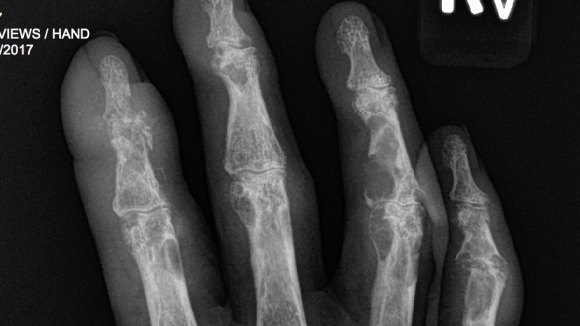
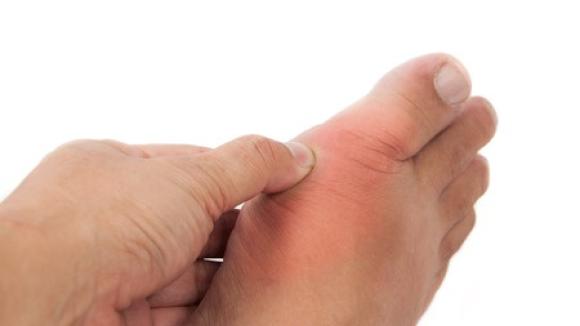
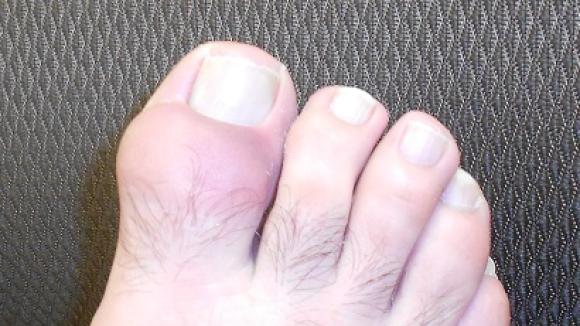
Most physicians believe they understand and can manage gout. Yet, the number of gout patients has risen at an alarming rate and the introduction of 4 new drugs has done little to close the education gap and improve the care and outcomes of gout patients. Misuse, misunderstandings and missed opportunities abound in the wide world of gout.
Treat-to-target (T2T) works when they are pragmatic and conform well to daily practice.
Gout is an ideal therapeutic area where T2T could be and should be applied.

By downloading this material, I acknowledge that it may be used only for personal use and personal education and that I will accredit RheumNow.com as the source and owner of this material. Commercial use or mass reproduction of this material without permission from RheumNow (info@rheumnow.com) is prohibited.

