
Article
Dr. Jack Cush reviews this week's news and information from the 2017 RWCS meeting in Maui.

Search for Terms or Answers
Dr. Jack Cush reviews this week's news and information from the 2017 RWCS meeting in Maui.

Dr. Jack Cush discusses the news and reports from this week on RheumNow:

Dr. Jack Cush reviews this week's highlights from RheumNow.

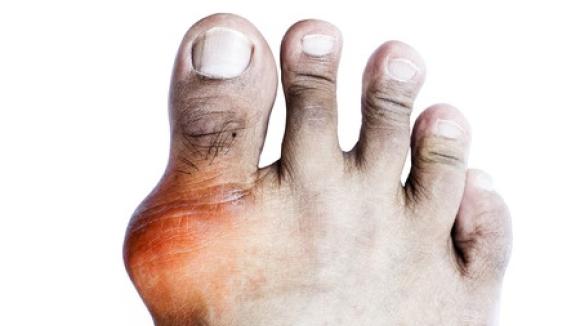
Gout should be one of the easiest and best managed of rheumatic disorders. However, numerous deficits exist with regard to the treatment and long-term care of gout.
Most patients who present with gout to rheumatology clinics are at very high risk of cardiovascular (CV) disease, Spanish researchers found.
Neuromyopathy is a rare side effect of chronic colchicine use. Statins are more commonly implicated as a cause of drug-induced myopathy.
Given the frequent occurrence of the metabolic syndrome, simultaneous use of both colchicine and statins is common.

Dr. Cush highlights reports from this week on RheumNow.com.

Dr. Jack Cush reviews highlights and reports from this week on RheumNow.com, including drug-induced cutaneous lupus, pediatric lupus being worse, new gout drug SEL-12, Gut microbiome and IgA plasmablasts, and the weakly-received new ACP guidelines on gout.
The rising incidence of gout has been directly linked to the obesity epidemic. The influence of obesity on gout was further tested in a cohort study of obese patients undergoing bariatric surgery as part of the Swedish Obese Subjects (SOS) study.
ACP released clinical practice guidelines for the diagnosis and management of gout. Interestingly, these are not always aligned with the 2012 ACR gout guidelines.
Following is a list of top tweets in September and October 2016; they were selected based on the number of clicks, retweets and likes by the viewership. More than 40,000 people were reached with the first one on our list.

Dr. Jack Cush reviews highlights from the journals and news this week on RheumNow.com.
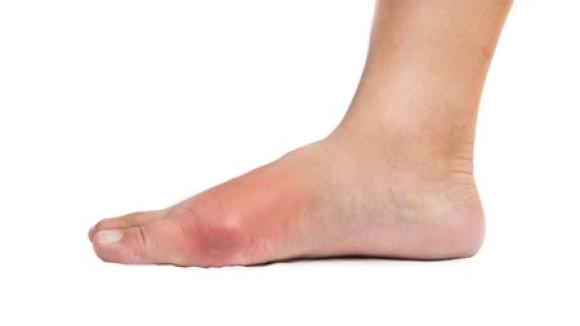
Lesinurad (Zurampic) was approved earlier this year as adjunctive therapy to other urate-lowering therapies. It is a selective uric acid reabsorption inhibitor (URAT-1 inhibitor) designed to treat gout, and be used in combination with other xanthine oxidase inhibitors.
Dr. Jack Cush reviews news and journal reports from the past week on RheumNow.com.
Dr. Cush reviews the RheumNow.com highlights in rheumatology for the week ending 19 August 2016.
People with hyperuricemia who followed the blood-pressure-lowering DASH diet showed significant decreases in serum urate levels, post-hoc analysis of data from an influential randomized study found.
In the Dietary Approaches to Stop Hypertension (DASH) study, participants adhering to the diet, which emphasizes the consumption of vegetables, fruits, and low-fat dairy foods as well as whole grains, poultry, fish, and nuts, had a mean decrease in serum urate levels of -0.35 mg/dL (95% CI -0.65 to -0.05), according to Stephen P. Juraschek, MD, PhD, of Johns Hopkins University, and colleagues.
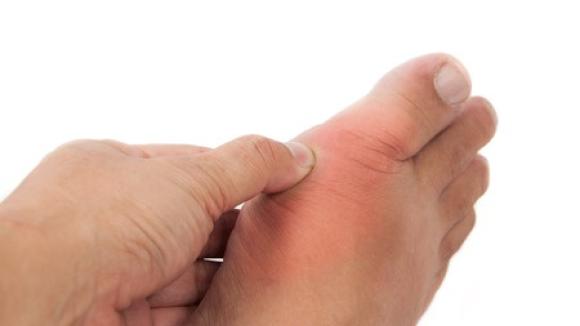
A EULAR task force of 24 individuals (including 15 rheumatologists) have updated their previous 2006 guidelines for gout. The current update, which includes 11 recommendations, is based on a systematic literature review and a Delphi consensus approach to recommendations.
Dr Jack Cush reviews this week's highlights from RheumNow.com.
Dr. Jack Cush reviews highlights from the news and social media in the past week on RheumNow.com
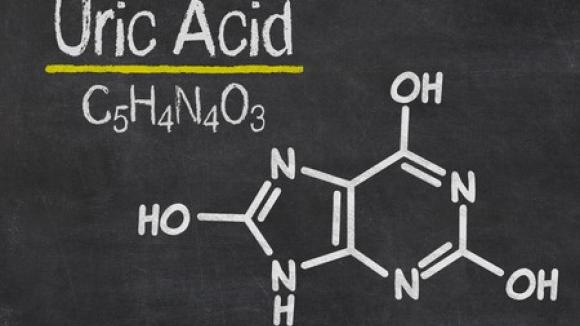
While hyperuricemia is linked to gout and many of the elements that make up the metabolic syndrome, it's not so clear that hyperuricemia is an independant risk factor for hypertension, diabetes, cardiovascular outcomes, etc.
By downloading this material, I acknowledge that it may be used only for personal use and personal education and that I will accredit RheumNow.com as the source and owner of this material. Commercial use or mass reproduction of this material without permission from RheumNow (info@rheumnow.com) is prohibited.

