
Article
Dr. Jack Cush reviews the news and journal reports from the past week on RheumNow.com. This week, neuroimmunology leading to therapy, the cold shoulder approach and Regulatory updates from the FDA.

Search for Terms or Answers
Dr. Jack Cush reviews the news and journal reports from the past week on RheumNow.com. This week, neuroimmunology leading to therapy, the cold shoulder approach and Regulatory updates from the FDA.

Data from Olmstead county, MN over the past four decades shows that the incidence and prevalence of systemic lupus erythematosus (SLE) is increasing.
SLE was diagnosed using the EULAR/ACR criteria and looked at patients seen between 1976–2018.

Science Translational Medicine has published results of a Canadian study of low back pain (LBP) suggests that pain control by anti-inflammatory treatments might have negative effects on pain duration and may be counterproductive for long-term pain outcomes.

Dr. Jack Cush reviews the news and journal reports from the past week on RheumNow.com. Bad news for digitial ulcers in Systemic sclerosis, Readmissions in Lupus and Thrombocytopenia in APL patients.
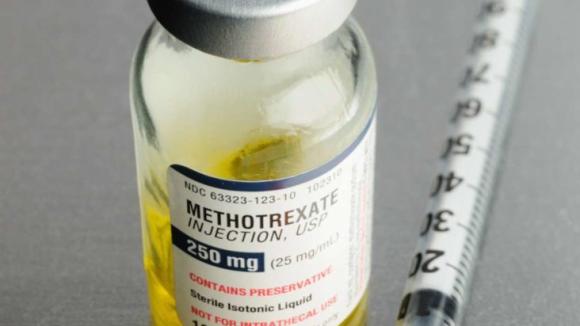
Observational research presented at the British Society for Rheumatology meeting suggest that, based on the COVID-19 pandemic experience, reduced frequency of routine lab monitoring in patients receiving weekly methotrexate therapy for rheumatoid arthritis (RA) was not associated with an increase in adverse outcomes.
The ASCORE (Abatacept SubCutaneOus in Routine clinical practicE) study evaluated efficacy, safety, and drug retention (durability) of abatacept (ABA) moderate-to-severe rheumatoid arthritis (RA) and found consistently better ABA durability in those who were seropositive.
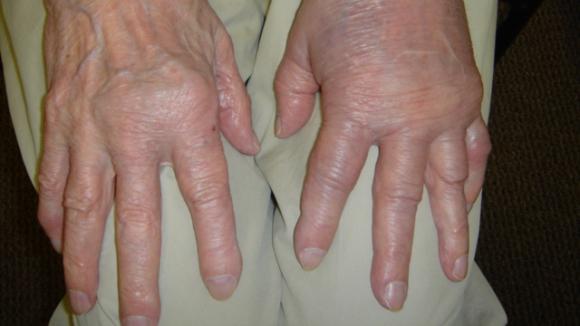
You’ve scheduled an appointment with your medical provider - how do you make the most of it? We've gathered these tips and suggestions to share with patients.

A population based trial has shown that allopurinol use dose escalation and achieving target uric acid levels (with allopurinol), was not associated with increased mortality in patients with gout and concurrent CKD

Mayo Clinic Proceedings reports the results of a retrospective, cross-sectional of patients with HFE hemochromatosis showing that advanced hepatic fibrosis is primarily seen in those with arthritis due to HFE hemochromatosis.
Held on April 19, 2022, Tuesday Night Rheumatology: Controversies in PsA, featured a lively and informative panel discussion, moderated by Dr. Jack Cush.
The PsA Expert panelists included:

Dr. Jack Cush reviews the news and journal Reports from the past week on RheumNow.com - including fellowship COVID-19 concerns, the limits of T2T in gout and the real odds of RA remission with your first biologic.
While treat-to-target (T2T) is commonly advocated in gout management, it is unknown if T2T (or more intensive T2T) may result in less bony erosions in gout.

A study of men with gout from the US Veteran’s Health Administration (VHA) shows that excess mortality in gout could be attributed to comorbidities.

This week we're going to talk about the downside of TNF inhibitors, a few interesting observations in gout, and yes, kids do get COVID. We're also going to preview what's coming in April (hint: it's about PsA). This and more as Dr. Jack Cush reviews the news and journal articles from the past week on RheumNow.com.
Whether patients with ankylosing spondylitis (AS) would improve substantially with tumor necrosis factor (TNF) inhibitor therapy was predicted with moderate to high accuracy based only on a standard lab test and two measures of disease activity, researchers reported from a modeling study.

A phase II trial in patients with active giant cell arteritis shows that mavrilimumab, a monoclonal antibody against granulocyte-macrophage colony-stimulating factor [GM-CSF]) is capable of inducing clinical remission.

The risk of developing axial spondyloarthritis (axSpA) if you’re a first-degree relative (FDRs) of an ankylosing spondylitis (AS) patient has been deflined by a 35 year follow-up study showing that if you are a FDR of axSpA you may be at higher risk of acute anterior uveitis (AAU).

Dr. Jack Cush reviews the news and journal articles from the past week on RheumNow.com.
Concerns about the long-term safety of hydroxychloroquine (HCQ) often results in dose reduction or drug discontinuation; yet a current study shows that, for those in remission, HCQ taper/discontinuation resulted in a significantly higher rate of SLE flares.


By downloading this material, I acknowledge that it may be used only for personal use and personal education and that I will accredit RheumNow.com as the source and owner of this material. Commercial use or mass reproduction of this material without permission from RheumNow (info@rheumnow.com) is prohibited.


