Annals of Internal Medicine reports that patients with chronic low back pain (cLBP) may benefit from physical therapy (PT); but when that fails, other secondary measures (cognitive behavioral therapy (CBT) or mindfulness) may not be effective.

All News
Dr. Jack Cush reviews the news and journal articles from this past week on RheumNow.com
While hydroxychloroquine (HCQ) is thought to be a very safe drug, its ocular risk profile is probably more serious than appreciated. A comprehensive review published in the Journal of Rheumatology discusses HCQ pharmacokinetics, mechanisms of retinal toxicity, risk stratification, and evidence-based screening protocols and how the drug can be used and monitored.
A large target emulation trial suggests that gout patients prescribed urate-lowering treatment who achieve a serum urate level lower than 6 mg/dL significantly lower their risk of cardiovascular events.
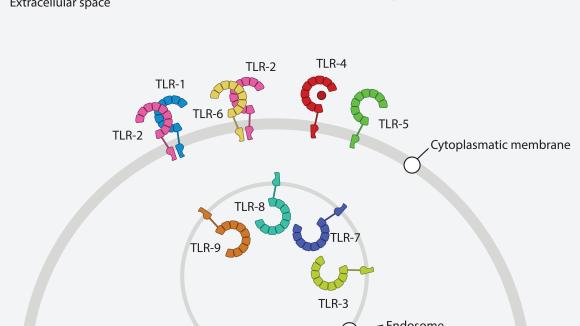
Review of Toll-like Receptor Research
A new review on Toll-like receptors (TLRs) systematically summarizes forty years of discoveries in the TLR field, from the initial identification of Toll in Drosophila embryonic development to the current understanding of
Gloria was the charge nurse on 3 West when a “code” was called. Action, running, and commotion ensues as the crash cart, nurses, and respiratory therapist appear at the bedside. Two residents emerge as the patient is hooked up to the monitor. While everyone assumes their position and role, Gloria ensures the protocol and steers the people, pumping, intubating, monitoring and medicating.
A current article in Nature Reviews Rheumatology has a patient boldly asking why we rheumatologists aren't more like her oncologists?
For decades, the standard of care in rheumatology has been combination therapy - pairing methotrexate (MTX) with an advanced biologic or synthetic agent to achieve optimal outcomes.
Chronic inflammatory arthritis (CIA) is associated with elevated cardiovascular risk. While metabolic syndrome (MetS) is prevalent, how much it contributes to adverse clinical outcomes is unclear.
A systematic review demonstrated that smoking, obesity, fibromyalgia, and depression are significantly associated with difficult-to-treat rheumatoid arthritis (D2T-RA).