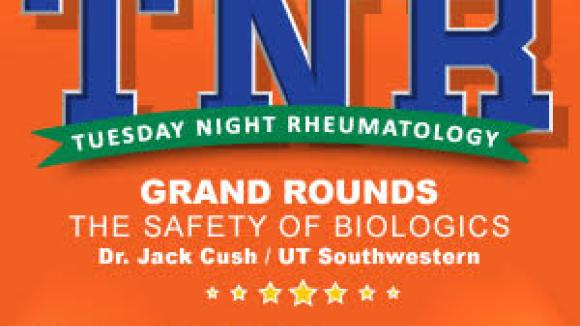
On Tuesday, April 7th, RheumNow hosted its first Tuesday Nite Rheumatology webinar - kicking off a two-month series of Rheumatology Grand Rounds lectures. The first session featured Jack Cush, MD (UT Southwestern) who lectured on "The Safety of Biologics and Newer Agents".
All News
The incubation period for coronavirus disease 2019 (COVID-19) has important implications for surveillance and control activities. The Annals of Internal Medicine reports a pooled analysis of confirmed COVID-19 cases January 4, 2020 and February 24, 2020.
The differential susceptibility to COVID-19 infection is attributable to socioeconomic factors and genetic differences, that together with environmental factors, human-virus interactions, gender, perhaps blood type, and age-related senescence determine the immune response and the likelihood of developing disease.
On April 3rd, the National Institute for Health and Care Excellence (NICE) in the UK, published a rapid guideline for managing children and adults with rheumatological autoimmune, inflammatory and metabolic bone disorders during the COVID-19 pandemic, while protecting staff from infection.
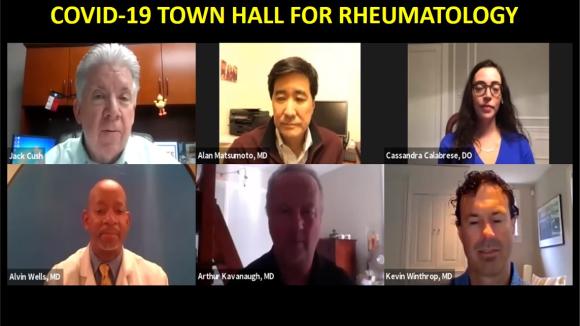
On Thursday, April 2nd, RheumNow hosted its' first Town Hall Meeting for Rheumatologist, with this 90 minute discussion devoted to the COVID-19 crisis as it affects Rheumatologists.
Dr. Jack Cush reviews the news on COVID-19 and FDA actions this past week. Be sure to check out:
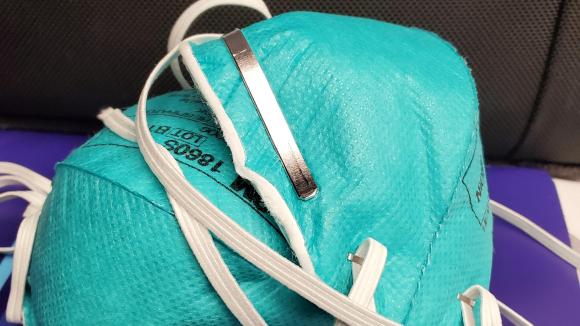
In early March 2020, there were widespread recommendations that wearing routine "surgical masks" by the public sector was not likely to be helpful or advisable. Now we are hearing of a 180 degree shift in thinking with the CDC, leading health officials and the current NEJM Perspective pointing to more widespread use of masks by healthcare workers and even by individuals in the public sector.
The March 31 release of the Morbidity and Mortality Weekly Report (MMWR) reviews the impact of several key comorbidities, most commonly diabetes mellitus, chronic lung disease, and cardiovascular disease, as cofactors leading to worse outcomes with COVID-19 infections. Below are e
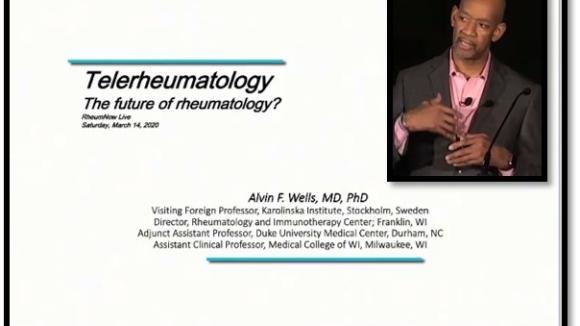
RheumNow Live 2020 featured a series of shorter STEP (TED-like) talks. This one features Dr. Alvin Wells discussing the opportunities and new paradigms encumbent with telemedicine in rheumatology.
Dr. Jack Cush reviews the news and COVID developments from this past week.
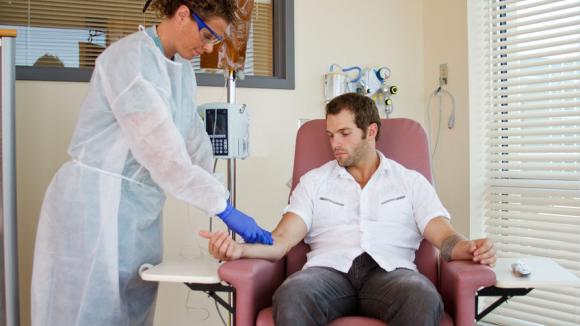
The American College of Rheumatology (ACR) has published a guidance document on infusions and office based therapies.
Drs. Cush and Kavanaugh discuss the downside of stopping hydroxychloroquine, DMARDs and biologics in lupus, RA and pregnancy.
In the midst of a global pandemic of the 2019 Novel coronavirus acute respiratory disease (COVID-19), a small handful of Rheumatologists gathered on social media to collectively grapple with the impact of this virus on vulnerable populations with rheumatic disease.
As they say, necessity is the mother of invention. After years of bemoaning the challenges of telemedicine, our rheumatology clinic transition entirely to a remote clinic in the space of a week.
Dr. Jack Cush reviews the past week of COVID-19 news and advances.
With the COVID-19 pandemic dynamically changing, we have provided several news items germane to the Rheumatologist.
Ready for telemedicine/telerheumatology?
Once you and your patient agree on a virtual visit, the following suggestions may help facilitate the interaction. If you have the ability and the capacity, record the visit.
As the highly virulent SARS-CoV-2 spreads over the world, uncertainty and fear for our patients with rheumatic diseases mount.
We are in the early stages of trying to limit the morbid and mortal consequences of the corona virus pandemic of 2020. Not surprisingly, the recommendations designed to limit exposure and damage continually highlight the fact that the elderly and immunosuppressed may be amongst the most severely affected should they become infected with this virus.
This has led to a great deal of uncertainty by patients and providers about how rheumatic diseases and their treatments need to be specifically addressed.