Highlights from today included presentations on imaging in vasculitis, a debate on whether to treat high risk pre-clinical RA, and EULAR Recommendations on a) Treatment of interstitial lung disease (ILD); b) Physical Activity in people with arthritis; and c) EULAR disease activity score for antiphospholipid syndrome and d) the management of SLE nephritis. Below are a few others that caught my eye today.

All News
Article
Article
At a EULAR 2025 session titled “What makes ‘Difficult-to-treat RA’ so difficult to treat? And what can we do?”, Drs. Paula David and Dennis McGonagle introduced the emerging concept of polyrefractory rheumatoid arthritis (RA), a term now being used to describe a subset of patients who have failed to respond to five or more biologic or targeted synthetic DMARDs. This new classification, derived from recent multinational registry data, represents a significant step in refining our understanding and management of the most treatment-resistant forms of RA.
#EULAR2025 Abstr#POS0301 Real World Multicentre study in Italy reported higher proportion of CRR at 6-mth & Lower GC in people with #lupus nephritis (~96% Class III, IV or Mixed with V) treated with Belimumab+SOC vs matched cohort on SOC. Predicted by early BEL use @RheumNow https://t.co/D6e2qo9NRL
Bella Mehta
Tweet
Social disparities in rheumatology @RheumNow #EULAR2025
~70% of outcomes are determined by Social determinants of health
Modifiable factors ? Maybe? https://t.co/UfC2nQ5Azy
Bella Mehta
Tweet
@RheumNow Achieving health equity is the goal
1.4% of GDP is lost in health inequity in EU https://t.co/50M4SfuxvX
How much of the health outcomes are related to social determinants?
🔺️Up to 75%!
Disaster Medicine Session
Social disparities and impact on outcomes
Dr Kate Webb
#EULAR2025
@RheumNow https://t.co/0Ahbf79Nbx
Bella Mehta
Tweet
What do we know about disparities in #SLE
- worse in women
- worse in non white populations
- have lower quality of care in vulnerable populations
- have worse outcomes in vulnerable populations
#EULAR2025 @rheumnow
Diagnosis itself is difficult in communities with poor access https://t.co/pcUaJ0eK65
#Lupus is one of the biggest social discriminators
🔺️Higher prevalence in Women
🔺️Higher prevalence in Non-Whites
🔺️More catastrophic manifestations in low socioeconomic groups
Disaster Medicine Session
Social disparities and impact on outcomes
#EULAR2025
@RheumNow https://t.co/mewR9NzXHt
Antoni Chan MD (Prof)
Tweet
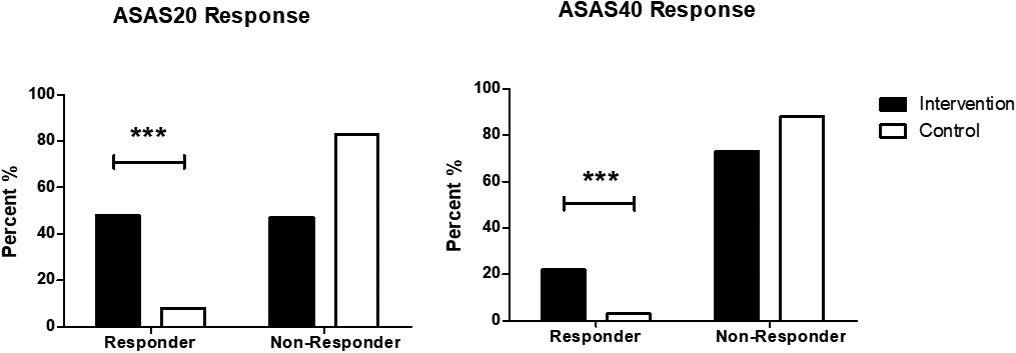
RCT in axSpA (N=200): Digital therapeutic Axia added to stable treatment led to significant improvements in BASDAI (–1.66), BASFI (–1.12), ASQoL (–2.51), with ASAS20/40 responses of 51%/23% vs 9%/3% for usual care. Supports role of DTx in axSpA care. Abstract LB0002 @RheumNow https://t.co/oF6bjIwNIY
David Liew
Tweet
LEVI-04 (neutrophin-3 inhibitor presented as #ACR24 late-breaker in knee OA)
more good efficacy data, no rapidly progressive OA safety signal.
For us clinicians: impressive impact size, esp relative to alternatives.
Finally, something that works??
#EULAR2025 OP0374 @RheumNow https://t.co/iVdlwyaqrv
David Liew
Tweet
It’s a hot topic at #EULAR2025, but the messages on AI in medicine from patient-professional discussions is clear:
- potential upside massive in many domains, but
- patients still want their clinicians by their side
#EULAR2025 meeting highlights @RheumNow https://t.co/4T6gE7TeQp
Health Literacy Matters in Rheumatic Disease Care
Dr. Mrinalini Dey reports on abstract OP0026, "Health literacy associates with clinical, treatment and work status in people with inflammatory arthritis: Results from a national cohort", presented at EULAR 2025 in Barcelona, https://t.co/f45rxHBYnY
Adela Castro
Tweet
NMA of 14RCTs (>2500 pts) eval relative efficacy of bDMARDs and tsDMARDs in mostly biologic naïve nr-axSpA pts.
-All therapies studied significantly improved ASAS40 response rates compared to placebo.
-Certolizumab and Golimumab were the most effective therapies, followed by https://t.co/BJLRpEDYrv
Antoni Chan MD (Prof)
Tweet
In 30 axSpA pts (mean age 42 yrs, BASDAI 3.5, BASFI 2.8, BASMI 2.0, chest expansion 4.5 cm), an 8-wk individualized exercise (cardiorespiratory + trunk strength via cardiopulmonary exercise testing [CPET] & David Back Concept [DBC] devices) ↓ trunk strength deficit 14.1% & https://t.co/505cCEOzu1
Antoni Chan MD (Prof)
Tweet
In 4,121 SpA pts (mean age 45y; 61% male), composite scores w/ joint counts (DAPSA, DAS28, DAS44) best discriminated peripheral arthritis activity vs PGA & SJC alone. All scores had excellent construct validity; CRP weakest. Composite indices may optimize SpA assessment. https://t.co/oM97BEkkH5
Janet Pope
Tweet
1/3 of #ERA pts poor
Outcomes despite controlled disease!
2 #RCT with T2T in early #RA
#CARERA
👇
persistent impact
⬆️TJC, comorbidities
⬇️SJC, CRP, global, HAQ,
F>M
⬆️disease durat’n
▶️
⬆️ b/tsDMARDs despite =diseaese vs others
?overRx
OP0330 #EULAR2025 @RheumNow
@eular_org
Who/When to Treat Clinically Suspect Arthralgia
Dr. Jack Cush discusses risk stratification in Clinically suspect arthralgia; referencing EULAR2025 abstracts OP0004 (ALTO study) and OP0325 (long term Followup of ARRIA)
https://t.co/FCO80mdHLg https://t.co/sX9u8mUoak
#EULAR2025 Abstr#OP0281 Not just shredding the weight but now also the pain! Another potential benefit of GLP-1 agonists - reducing symptoms of patients with Fibromyalgia. Propensity matched analysis using TrinetX database showed reduction on opiates, fatigue and pain @RheumNow https://t.co/oh6ecJmM5e
Aurelie Najm
Tweet
Depression and anxiety in PsA is higher and has more consequences than in general population
Swedish and Danish clinical registers 23000+ PsA pts
HR 1.4 specialised psychiatric out/ inpatient care vs. general pop
HR for psychiatric in patient care numerically higher but ns.
No https://t.co/qduMcwGK0S
Aurelie Najm
Tweet
Prediction of PsA in PSO pts: does it work?
First predictive model using mainly clinical data and labs extracted from primary care
Performs well in the cohort it was trained w/ but not in validation cohort.
Often an issue with prediction models!
Needs more granularity than https://t.co/5cVgqfd4fX