
Article
Dr. Jack Cush Reviews the news and journal articles from the past week on RheumNow.com

Search for Terms or Answers
Dr. Jack Cush Reviews the news and journal articles from the past week on RheumNow.com

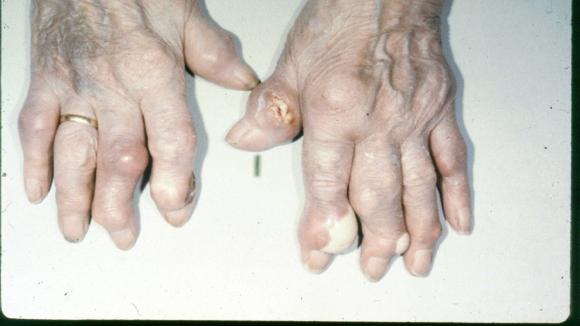
It his often said that gout and rheumatoid arthritis (RA) cannot coexist and where confusion exists, a good history and testing for serum urate (SUA) and rheumatoid factor (RF) can usually clarify the dominant disorders. A recent study shows that hyperuricemia and gout are uncommon in RA, but when present shows an increased risk of comorbidities and cardiovascular (CV) mortality.
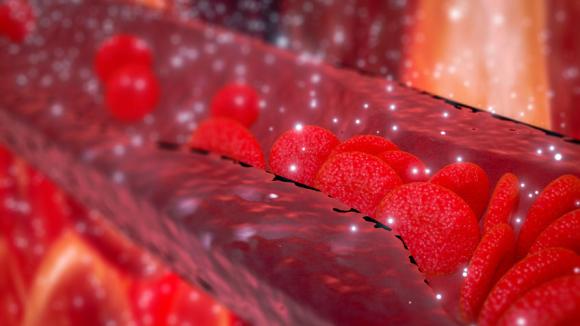
A combination risk score helped predict recurrent thrombosis -- particularly arterial -- among patients with antiphospholipid syndrome (APS), an international study found.

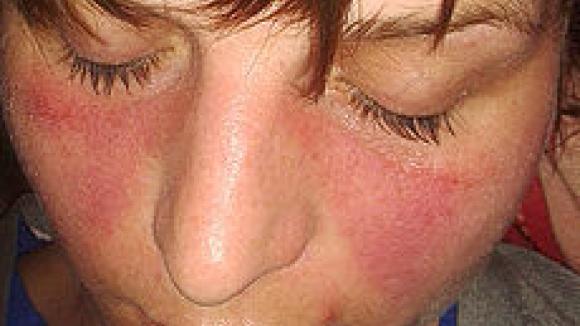
A composite risk score that included three biomarkers predicted thrombotic events among patients with systemic lupus erythematosus (SLE), a cross-sectional study found.

An unusual pilot study has shown that insulin resistence (IR), assessed by Hgb-A1c levels, was more prevalent in fibromyalgia (FM) patients compared to non-diabetic controls and that when FM patients were given metformin, half had complete resolution of their pain.

Systemic lupus erythematosus (SLE) is an autoimmune disease with a propensity to develop glomerulonephritis (47-70%) or end-stage kidney disease despite therapy.

Dr. Jack Cush reviews the news and journal articles from the past week on RheumNow.com
Patients with RA, but without CV disease, who were treated with atorvastatin appeared to experience cardiovascular (CV) benefits similar to what has been observed in other populations, with a risk reduction of approximately one-third, according to a large, but prematurely terminated, trial in the
The goal of SLE treatment is remission or low disease activity and flare prevention. Hydroxychloroquine is recommended in all patients with lupus, at a dose not exceeding 5 mg/kg real body weight. Glucocorticoids (GC) should be minimised to less than 7.5 mg/day (prednisone equivalent). Appropriate initiation of immunomodulatory agents (methotrexate, azathioprine, mycophenolate) can be tailored to the clinical scenarios and may allow for tapering or discontinuation of GC.

The advent of "big data" and "-omics" technologies offers hope that clinicians will soon have better diagnostics for systemic lupus erythematosus, rheumatologists here were told.

Dr. Jack Cush reviews the news and journal reports from the past week on RheumNow.com.
What clinical features best identify early systemic lupus erythematosus (SLE) patients from mimics? A multicenter, multinational study aimed to evaluate manifestations at disease onset and to compare early SLE manifestations to those of diseases mimicking SLE.
The JAAD has published joint guidelines from the American Academy of Dermatology (AAD) and National Psoriasis Foundation (NPF) on the approach, management and dermatolgist roles for select comorbid conditions.

Dr. Jack Cush discusses the news from the past week on RheumNow.com - including the SEAM trial, MRI guided T2T, biologics and infection, contraceptive use, ANA negative lupus, etc.
Dr. Jack Cush reviews this past week's news and reports from RheumNow.com:
A subanalysis of the early rheumatoid arthritis (RA) "IMPROVED" study has shown that changes in RA-autoantibody levels are not associated with disease activity or or long-term drug response, but instead reflect intensity of immunosuppression.

Despite striking improvements in survival among patients with systemic lupus erythematosus (SLE) in recent decades -- from 1-year survival of less than 50% before the introduction of prednisone to 90% today in most specialized treatment centers -- many challenges remain in this perplexing, multis
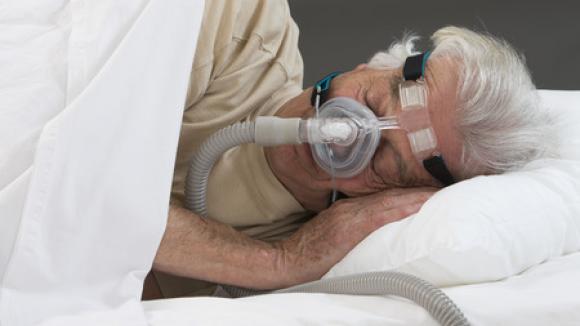
Both Gout and obstructive sleep apnea (OSA) comingle with a wide range of serious comorbidities. A matched retrospective cohort study from the UK Clinical Practice Research database shows those with OSA are at a higher risk of developing gout.
Hydroxychloroquine retinopathy prevention guidelines have revised from ideal body weight-based dosing to actual body weight-based dosing; the question remains whether these have been adopted in clinical practice.
A database of nearly 21,000 new HCQ users from a UK general population database studied HCQ dosing and use between 2007 and 2016. Specifically they examined whether users were subjected to excess HCQ dosing per ophthalmology guidelines (defined by exceeding 6.5 mg/kg of IBW and 5.0 mg/kg of ABW).

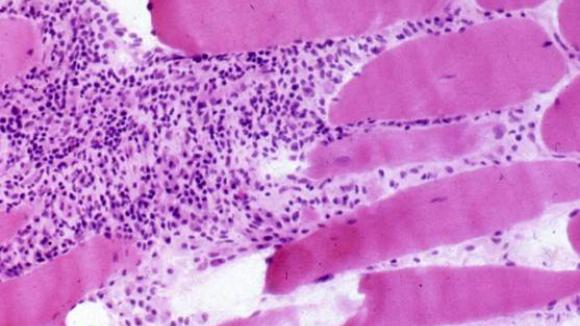
Several epidemiological studies have reported that a diagnosis of DM or PM may be associated with increased cancer risk. The association appears stronger for DM than PM.
By downloading this material, I acknowledge that it may be used only for personal use and personal education and that I will accredit RheumNow.com as the source and owner of this material. Commercial use or mass reproduction of this material without permission from RheumNow (info@rheumnow.com) is prohibited.

