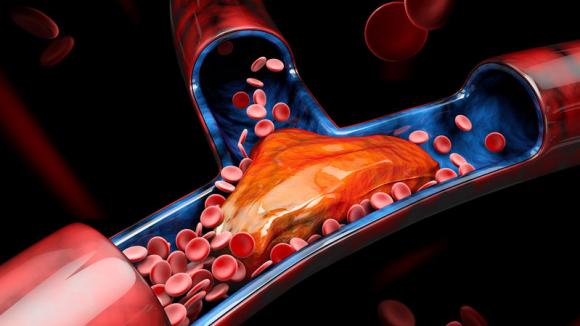
Arthritis & Rheumatology reports that biologic (bDMARD) use in rheumatoid arthritis may decrease cardiovascular disease risk by retarding coronary plaque formation and progression (especially non‐calcified and low‐attenuation plaque).

All News
Dr Jack Cush reviews the news, journal reports, twitter feed and COVID developments from the past week on RheumNow.com
Patients with rheumatoid arthritis (RA) treated with abatacept (Orencia) had a lower risk of developing diabetes mellitus compared with those receiving certain tumor necrosis factor (TNF) inhibitors, a large cohort study suggested.
Dr. Jack Cush reviews the appproach to evaluating fever in adults suspected of having a rheumatic disease, Stills disease or autoinflammatory conditions.
On April 11th, the ACR Board of Directors approved a COVID-19 guidance document written by an ACR task force charged with updating and clarifying recommendations for rheumatologists and rheumatic disease patient management during the current COVID-19 crisis.
The monoclonal antibody guselkumab (Tremfya), which binds the interleukin (IL)-23 p19 subunit, was effective for psoriatic arthritis in two large clinical trials, providing comprehensive benefits for this heterogeneous disorder, investigators reported in The Lancet.
On April 3rd, the National Institute for Health and Care Excellence (NICE) in the UK, published a rapid guideline for managing children and adults with rheumatological autoimmune, inflammatory and metabolic bone disorders during the COVID-19 pandemic, while protecting staff from infection.
Dr. Jack Cush reviews the news on COVID-19 and FDA actions this past week. Be sure to check out:
The March 31 release of the Morbidity and Mortality Weekly Report (MMWR) reviews the impact of several key comorbidities, most commonly diabetes mellitus, chronic lung disease, and cardiovascular disease, as cofactors leading to worse outcomes with COVID-19 infections. Below are e
The American College of Rheumatology (ACR) has published a guidance document on infusions and office based therapies.
Drs. Cush and Kavanaugh discuss the downside of stopping hydroxychloroquine, DMARDs and biologics in lupus, RA and pregnancy.
In the midst of a global pandemic of the 2019 Novel coronavirus acute respiratory disease (COVID-19), a small handful of Rheumatologists gathered on social media to collectively grapple with the impact of this virus on vulnerable populations with rheumatic disease.
With the COVID-19 pandemic dynamically changing, we have provided several news items germane to the Rheumatologist.
As the highly virulent SARS-CoV-2 spreads over the world, uncertainty and fear for our patients with rheumatic diseases mount.
Dr. Jack Cush reviews the news and journal articles from the past week on RheumNow.com.
While there are numerous agents approved for use in juvenile idiopathic arthritis, little is know about actual use biological disease-modifying antirheumatic drug (DMARD) use or switching in the biologic era. A cohort comparison study has shown that after an unsuccessful trial of a first biologic, changing to a second TNFi is as effective as switching to a non-TNFi biologic.
On 14 November 2019 the European Medicines Agency (EMA) concluded that Xeljanz (tofacitinib) could increase the risk of blood clots in the lungs and in deep veins in patients who are already at high risk. These recommendations have been formally published and are intended for EU nation
A full-read, novel Viewpoint article published in the Annals of Rheumatic Disease (Huizinga TWJ, et al) spotlights a recent international meeting of big thinkers, scientific collaborators and industry dedicated to innovation in rheumatology.