A National Institutes of Health (NIH) expert panel has developed consensus treatment guidelines for the management of coronavirus (COVID-19). To date no drug has been proven to be safe and effective for treating COVID-19. Moreover, they found no evidence to recommended the use of hydroxychloroquine for prophylaxis or treatment of COVID-19 outside of a current clinical trial.

All News
The presentations of the COVID-19 infection have been clearly chronicled with the worrisome onset of sore throat, dry cough, loss of smell and taste with fevers, myalgias, fatigue and the worrisome progression of pulmonary involvement in a minority. Lab findings may include a leukocytosis,
The 9/11/01 terrorist attach on the World Trade Center (WTC) resulted in at least 2,977 fatalities, over 25,000 injuries, and caused at least $10 billion in infrastructure and property damage. Arthritis & Rheumatology reports that dust cloud exposure among responders and
On April 3rd, the National Institute for Health and Care Excellence (NICE) in the UK, published a rapid guideline for managing children and adults with rheumatological autoimmune, inflammatory and metabolic bone disorders during the COVID-19 pandemic, while protecting staff from infection.
Drs. Cush and Kavanaugh discuss the downside of stopping hydroxychloroquine, DMARDs and biologics in lupus, RA and pregnancy.
With the COVID-19 pandemic dynamically changing, we have provided several news items germane to the Rheumatologist.
Blood pressure should be maintained at a level below 130/80 mm Hg in all patients with lupus to lessen their likelihood of atherosclerotic vascular events, Canadian researchers asserted.
Dr. Jack Cush reviews the news and journal articles from the past week on RheumNow.com.
On 14 November 2019 the European Medicines Agency (EMA) concluded that Xeljanz (tofacitinib) could increase the risk of blood clots in the lungs and in deep veins in patients who are already at high risk. These recommendations have been formally published and are intended for EU nation
Dr. Jack Cush reviews the news and journal articles from the past week on RheumNow.com.
A cohort analysis of the Nurses' Health Study suggests that asthma and COPD are associated with increased risk for incident rheumatoid arthritis (RA), independent of smoking- thus airway inflammation may be an important factor in the evolution of pre-cllnical RA.
In a study of rheumatoid arthritis (RA) patients, JAMA reports that serum folate level of greater than 4.3 ng/mL was associated with lower CV mortality risk.
Dr Jack Cush Reviews the news and journal articles from the past week on RheumNow.com
There are numerous associations between hyperuricemia and cardiovascular disease (CVD). An analysis of the Swedish SCAPIS Pilot study shows that higher levels of serum urate (SU) are associated with an increase in coronary artery calcification score in men but not in women. SU is not associated with common carotid intima-media thickness and carotid plaque scores in either men or women.
Dr. Jack Cush reviews the news and journal articles from the past week on RheumNow.com.
Women who were seropositive for anti-citrullinated protein antibodies (ACPA) and ultimately went on to develop rheumatoid arthritis (RA) were also at increased risk for being diagnosed with chronic obstructive pulmonary disease (COPD), analysis of data from the Nurses' Health Study showed.
Lancet Rheumatology has reported the results of a multicenter follow-up study of systemic lupus erythematosus (SLE) patients showing that organ damange is linked to glucocorticoid use, independent of clinical or serological disease activity.
In the United Kingdom, NICE has looked to the British Society of Rheumatology (BSR) to develop evidence based guidance on the safe use of biologic DMARDs in patients with inflammatory arthritis.
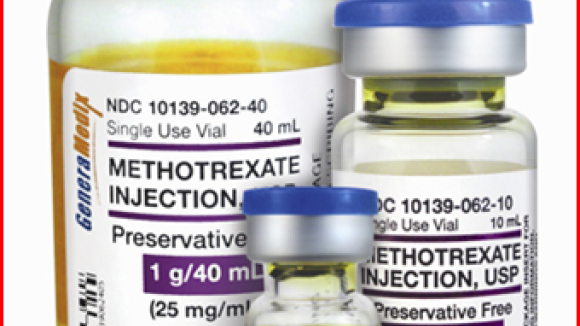
Rheumatology has a comprehensive overview of methotrexate (MTX) and the risk of lung injury, MTX-related pneumonitis and interstitial lung disease (RA-ILD) with rheumatoid arthritis (RA). Past reports suggest the frequence of MTX-pneumonitis to be between 0.3 and 11.6%; recent studies suggest it may be much lower.
ENTRACTE trial studied the risk of major adverse CV events (MACE) in 3080 RA pts Rx with tocilizumab (TCZ) vs etanercept (ETN), and found no increased risk of MACE in TCZ patients compared to ETN (HR 1.05 (95% condence interval 0.77–1.43). https://t.co/QxOlzfDcZD