A Canadian administrative claims analysis has shown that gout-associated inflammation increases the risk of venous thromboembolism (VTE), deep vein thrombosis (DVT), and pulmonary embolism (PE) before and after the diagnosis of gout.

All News
Dr. Jack Cush reviews the news and journal articles from the past week on RheumNow.com.
Continuous use of nonsteroidal anti-inflammatory drugs (NSAIDs) among patients with ankylosing spondylitis (AS) was associated with the development of incident hypertension, a prospective cohort study found.
Dr. Jack Cush reviews the news and journal articles from the past week on RheumNow.com.
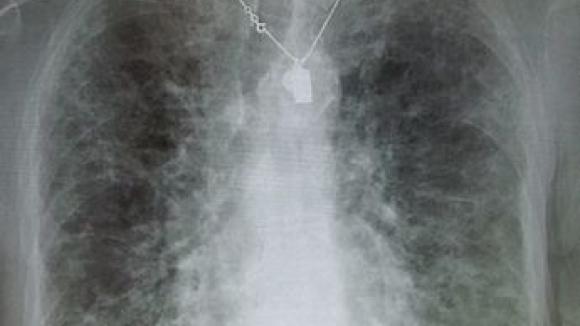
Last Friday, the US Food and Drug Administration approved Ofev (nintedanib) to slow the rate of decline in pulmonary function in adults with interstitial lung disease associated with systemic sclerosis or scleroderma, called SSc-ILD.
ILD as a complication of SSc may lead to progressive loss of lung function and may be associated with a significant mortality risk. Prior to the approval of Olev, there were no FDA approved drugs for SSc-ILD.
An insurance claims based study of RA patients with COPD shows that biologics do not have an increased rate of respiratory events compared to those on conventional DMARDs.
A real world cohort of RA patients with COPD was drawn from US-based MarketScan databases. Patients on biologic DMARDs and/or targeted synthetic DMARDs (tsDMARDs) were propensity matched to those on conventional synthetic DMARDs (csDMARDs).
The ENTRACTE trial examined the risk for major adverse cardiovascular events (MACE) in RA patients and found no increased risk of MACE in patients treated with tocilizumab (TCZ) versus etanercept (ETN).
Vitamin D might not be much help for strengthening bones among healthy adults without osteoporosis, Canadian researchers reported, even at doses far higher than recommended daily allowances.
In a clinical trial assessing three levels of daily vitamin D supplementation -- 400 IU, 4,000 IU, and 10,000 IU -- radial volumetric bone mineral density was significantly lower among those (ages 55-70) taking higher doses for 3 years, according to Steven Boyd, PhD, of the University of Calgary in Canada, and colleagues.
Osteoporosis treatments were not linked with reduced overall mortality, according to a meta-analysis of placebo-controlled trial data.
Dr. Jack Cush reports the news and important journal articles from the past week on RheumNow.com.
The Journal of Bone and Mineral Research (JBMR) has published a report showing that a reduction in the rate of bone loss by nitrogen bisphosphonates was associated with a 40% lower mortality risk.
A longitudinal study from the BRASS registry shows that increase rheumatoid arthritis disease activity increases the risk of RA-associated interstitial lung disease (RA-ILD).
RA patients without RA-ILD at baseline, enrolled in the Brigham RA Sequential Study (BRASS, 2003–2016), were followed from 2003-2016 with serial clinical, DAS28, serologic and imaging assessments.
NSAIDs have been linked to an increased risk of cardiovascular disease, but does this also hold for osteoarthritis (OA) patients.
Dr. Jack Cush reviews the news and journal reports from the past week on RheumNow.com, including new SLE criteria, ULT in gout and MSU reductions, IVIG in ANCA vasculitis and non-TNF biologics outperform the TNF inhibitors.
A single-center cohort analysis shows that lung disease is increasingly seen in children with systemic juvenile idiopathic arthritis (SJIA), especially those complicated by macrophage activation syndrome.
Prior to 2013, reports of pulmonary disease in SJIA were rare, but since there have been increasing reports of alveolar hypertension, interstitial lung disease and pulmonary alveolar proteinosis; often with a high mortality rate.
As such, since 2014, the Cincinnati Children’s Hospital Medical Center has seen an increase in lung disease and severe lung disease in SJIA.
Dr. Jack Cush reviews the journal articles and news reports from the past week on RheumNow.com:
MMP-7 and Myositis-ILD; Post-surgical gout attacks; CV events and testosterone; and a Boxed warning for tofacitinib.
Part II of this series is a direct message to rheumatologists. If we’re doing such a great job in RA, then why do we need a war on RA? Why is this conflict being laid at the feet of good soldier rheumatologists, those who toil daily at winning therapeutic battles one patient at a time? The reasons are blunt and true.
The U.S. Food and Drug Administration has approved new warnings about an increased risk of blood clots and of death with the 10 mg twice daily dose of tofacitinib (Xeljanz, Xeljanz XR), which is used in patients with ulcerative colitis.
The FDA convened Arthritis Advisory Committee to consider nintedanib for the treatment of systemic sclerosis-associated interstitial lung disease (SSc-ILD) and voted 10-7 in favor of approving the drug for this new indication.
Hip and knee osteoarthritis patients have been shown to have increased mortality rates from cardiovascular events when compared to the general population.