Baricitinib is an oral, small molecule, once-daily DMARD, that specifically inhibits Janus kinase 1 and 2 and is being developed for use in rheumatoid arthritis. With much of the developmental clinical trials completed, the drug is slated for review and potential approval near the end of the year.

All News
Three new FDA approvals, proteomics, cancer, infectious risk, nonadherence and disappointing clinical trial results covered in this RheumNow Week in Review.
2016 has been a big year for biosimilars in rheumatology.
Most US rheumatologists use multiple TNF inhibitors before switching. A new French study suggests that "other-MOA", non-TNF biologics are more effective after failing a TNF inhibitor.
A recent review has shown that tumor necrosis factor-α inhibitors (TNFi) rarely cause MS-like disorders.
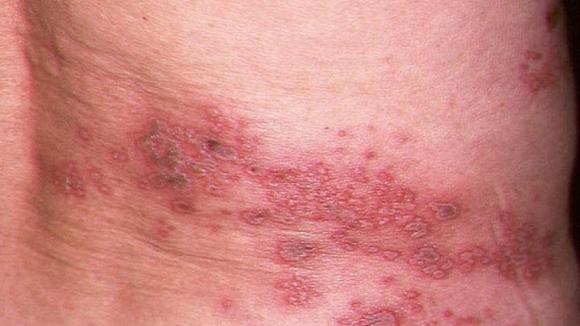
In the current issue of the NEJM, a Herpes zoster subunit vaccine was reported to be highly effective in adults - specifically in 2 studies (ZOE50 and ZOE70) targeting adults over age 50 and over age 70 years. (Citation source: http://buff.ly/2cMng17)
Updates and journal articles on opioids, drug induced sarcoidosis, cancer and cancer recurrence risks with TNF inhibitors and biologics, and FDA labeling changes.
Rheumatologists may encounter patients with intermediate, posterior and pan-uveitis as part of certain rheumatic diseases such as Behcet’s, but more frequently may be called on to co-manage these patients with steroid sparing agents.
Dr. Jack Cush reviews highlights from the past week on RheumNow.com, including IBD/TNFi and cancer risk, fracture nonunion, PMR worse in women, not treating asymptomatic hyperuricemia, and shingles followed by stroke.
Patients with autoimmune inflammatory diseases who develop herpes zoster are at increased risk of stroke for the subsequent 3 months, with risks diminishing thereafter, analysis of Medicare data showed.
Dr. Jack Cush reviews highlights from this week in RheumNow:
Disease flares are common in rheumatoid arthritis (RA), often causing patients to seek additional care, if not medication.
The frequency of flares varies amongst studies in different populations. But the consequence of flares has only recently been studied.
Yesterday the U.S. Food and Drug Administration approved a new biosimilar, Erelzi, (etanercept-szzs), for the same multipile indications as the originator Enbrel, including rheumatoid arthritis, plaque psoriasis, Erelzi, will be generically labelled as etanercept-szzs.
Dr. Jack Cush reviews news and journal reports from the past week on RheumNow.com.
Current guidelines regarding the use of biologics in patients who have previously had a malignancy are based more on opinion than evidence.
It has long been observed that patients receiving monoclonal antibody based anti-TNF (TNFi) therapies for spondylitis or psoriatic disease have less inflammatory eye complications, such as uveitis. These agents have become common interventions based on these observational results.
Researchers from Germany have analyzed their large prospective rheumatoid arthritis (RA) registry to address whether being on biologic therapies leads to poorer outcomes - namely sepsis or death, following a serious infection (SIE).
The goal in rheumatoid arthritis (RA) treatment is remission. But what level or method of remission is best?
A U.S. court has affirmed its decision that the patent for Johnson & Johnson's drug Remicade is invalid. This new ruling favors the intent of Celltrion and Pfizer, who are seeking to bring their biosimilar versions of infliximab to market in the near future.
A new national survey in the United States of nearly 600 individuals with psoriasis, reveals that although patients have numerous treatment options, they have difficulty finding treatment plans that work. In addition, respondents reported a heavy emotional toll, with many feeling isolated and stigmatized due to the condition.