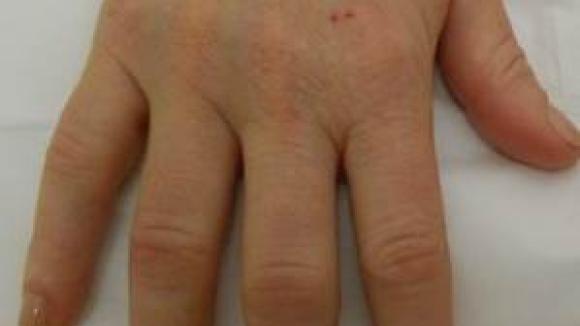
A pooled analysis of 5 randomized controlled trials (RCTs) shows that the effects of 2 years of low-dose glucocorticoid (GC) treatment in rheumatoid arthritis (RA) can significantly increase increase body weight, but not blood pressure.

All News
Monoarticular Juvenile Idiopathic Arthritis (monoJIA) is typically classified under oligoarticular JIA, but a recent study suggests it is a separate entity.
Dr. Jack Cush reviews the news and journal reports from the wonderful wide world of Rheumatology. This week:
In research published in Arthritis & Rheumatology, investigators developed and validated a tool called PRESTO that identif
The COLCHICORT trial in patients with acute calcium pyrophosphate crystal arthritis (CPPD) demonstrated equivalent efficacy for both colchicine and prednisone, yet different safety signals were seen.
Research from the COVID-19 Global Rheumatology Alliance included surveys and data gathering from rheumatology patients.
Steroid Tapering Called Safe in Older RA Patients
Most rheumatoid arthritis (RA) patients 65 and older who had 5 mg/day of prednisolone added to standard care were successfully weaned from the steroid without seeing substantial increases in disease activity, researchers said.
The American College of Rheumatology (ACR) said it has already joined with hundreds of organizations to submit 26 health policy comment letters to federal officials this year—surpassing the 24 letters the College submitted in 2022.
The Cleveland Clinic Journal has published a full-read review of postural orthostatic tachycardia syndrome (POTS), a condition often seen in clinic with symptoms like fibromyalgia, but is clinically diagnosed with finding sustained tachycardia upon standing without orthostatic hypotension.
Dr. Jack Cush reviews the news and journal articles from the past week on RheumNow.com. This week highlights Veterans, Vegetarians and Antenatal Corticosteroids.
A claims data study shows that maternal use of antenatal corticosteroids may be associated with an increased risk of serious infection in the offspring's first 12 months.
Johns Hopkins Hospital in Baltimore has been named the top hospital for rheumatology by U.S. News & World Report. This is the 6th year in a row they have held this spot.
A novel B-cell depletion trial, using obexelimab (a bifunctional, monoclonal antibody that binds CD19 and Fc gamma receptor IIb), has shown efficacy and safety in patients with active IgG4-related disease.
The Annals of Internal Medicine has published a predictive score to distinguish low-risk from high-risk inflammatory arthritis (IA) and who may benefit from risk stratification and preventive measures.
IL-23 inhibitors are approved for the treatment of psoriasis and psoriatic arthritis; a single center real-world observational study shows three commercially available IL-23 inhibitors have high and similar drug survival and effectiveness in difficult-to-treat psoriasis and PsA.
The prevalence of radiographic chondrocalcinosis is estimated to be 4% to ≥10% in older adults, but the prevalence of symptomatic calcium pyrophosphate deposition (CPPD) disease is unknown. To advance our understanding of CPPD, the American College of Rheumatology and EULAR have published validated classification criteria for symptomatic CPPD disease.
More than half of patients with auto-immune conditions experience mental health conditions such as depression or anxiety, yet the majority are rarely or never asked in clinic about mental health symptoms, according to new research from the University of Cambridge and King’s College London.
A EULAR/American College of Rheumatology task force has established evidence based, up-to-date guidance and expert opinion on the evaluation, management and monitoring of patients with Haemophagocytic lymphohistiocytosis (HLH) and macrophage activation syndrome (MAS), with the primary intent to halt disease progression and prevent life-threatening complications from HLH/MAS.
Large scale analysis of adverse events (AEs) in World Health Organization (WHO) VigiAccess database showed no new safety signals associated with long-standing use of five TNFα inhibitors.
Link Between Vitamin D and Psoriasis Severity
More than eight million people in the U.S. experience psoriasis, a condition in which skin cells build up and form itchy dry patches. A person’s vitamin D levels could play an important role in psoriasis severity, according to one of the largest studies to date.