Patients with psoriatic skin and joint disease are uniquely susceptible to multiple comorbidities, obesity and possibly more cardiovascular risks. In rheumatoid arthritis, the increased CV risk and CV events have been closely aligned with inflammation and disease activity.

All News
Psoriasis and psoriatic arthritis patient have significantly higher rates of comorbidity, including hypertension (HTN). This population-based, nested case–control study analyzed an inception psoriasis cohort from Taiwan's National Health Insurance Research Database between 2000–2010.
Clements et al presented the results of their Scleroderma Lung Study II wherein PSS patients with interstitial lung disease were randomized to receive either 3 grams daily of mycopheonolate or 2mg/kg/day of cyclophosphamide.
Myasoedova and colleagues from the Mayo Clinic have reported their new data that demonstrates improving cardiovascular (CV) mortality rates in current RA patients treated with modern drugs.
"Doc....the pain is killing me."
This oft heard patient complaint may be truer than you think.
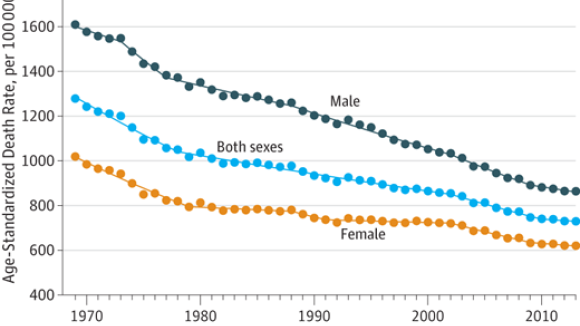
Using death certificate data from US National Vital Statistics System of the National Center for Health Statistics (NCHS) and the Centers for Disease Control and Prevention, JAMA reports a downward trend in death rates in the USA from 1969 - 2013).
UK investigators have shown that rheumatoid arthritis patients with bronchiectasis (BRRA) have a five-fold increased mortality compared to RA without bronchiectasis. It is unclear if serologic differences, activity measures and biomarkers may be different in this cohort.
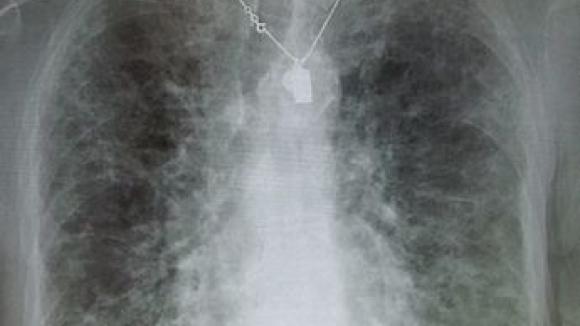
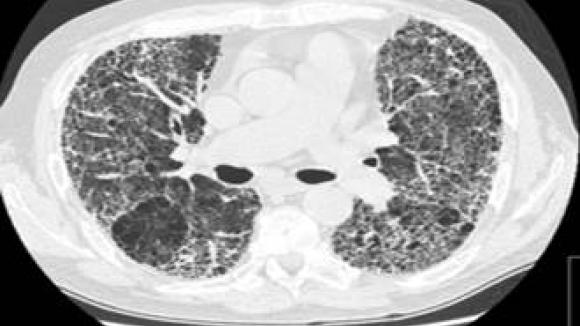
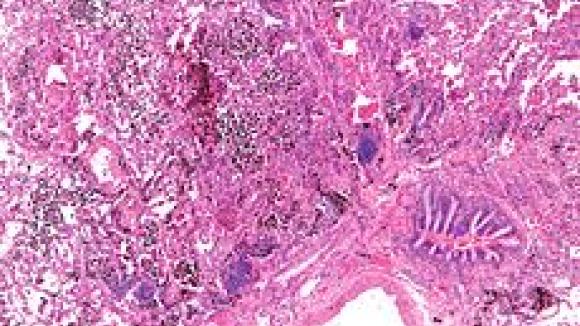
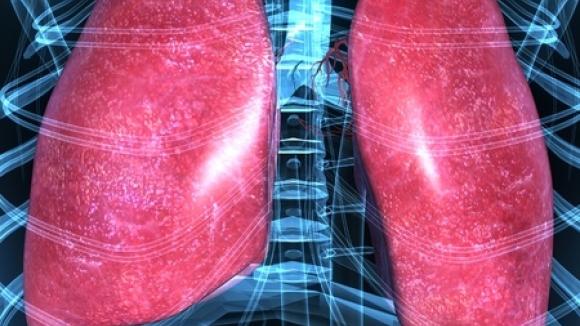
Interstitial lung disease (ILD) is a common extra-articular manifestation of rheumatoid arthritis (RA). Its presence may portend grave outcomes for those affected. The prevalence of ILD in RA ranges from 7.7% to 44% depending on the assessment tools used.
Diffuse alveolar hemorrhage (DAH) is a rare but catastrophic complication of systemic lupus erythematosus. Presentations are usually acute and the potential for significant morbidity and mortality risk mandates early diagnosis and aggressive interventions.
Acute coronary syndromes (ACSs), myocardial infarctions and heart failure appear to be a hazardous consequence to systemic and articular inflammation in rheumatoid arthritis.
The Wall Street Journal reports that new drug development offers hope for people with idiopathic pulmonary fibrosis, a rare, progressive fibrosing lung disorder that affects nearly 200,000 Americans, mostly middle-aged and older adults.
Poor cardiovascular outcomes have been linked to inflammation and rheumatoid arthritis (RA). This includes higher rates of MI and heart failure (HF).
Researchers in Zurich studed 102 systemic sclerosis with serial PFTs and high-resolution computed tomography of the chest (HRCT). They found significant interstitial lung disease (ILD) by HRCT in 63 percent.
Since the 2005 FDA hearing that resulted in the removal of Vioxx and Bextra from the US market, the safety of nonselective NSAIDs (nsNSAIDs) and selective Cox-2 inhibitors (e.g., celecoxib) has been repeatedly questioned, often without new or substantive data.
Haroon et al has analyzed administrative claims data from Ontario, Canada and compared 21473 AS patients with 86606 normal comparators matched for age, sex, and location of residence.
Are the benefits of androgen supplementation in older men overstated? Might the risks be understated?
Since publication of the Jupiter trial that showed statin effects may include the lowering of C-reactive protein levels and inflammation, there have been several efforts to study the adjunctive effects of statins in rheumatoid arthritis treatment.
A new expanded cardiovascular (CV) risk calculator for use in patients with rheumatoid arthritis (RA) has been developed to take into account disease-specific factors that can worsen risk, researchers reported.
Rheumatoid arthritis not only affects the joints but can also increase risk for cardiovascular disease. The mechanism of the increased risk of cardiovascular disease in rheumatoid arthritis remains uncertain.
Idiopathic pulmonary fibrosis (IPF) is a chronic, progressive, fibrosing form of interstitial pneumonia, with poor survival rates of nearly 50% at 3 years.