
Article
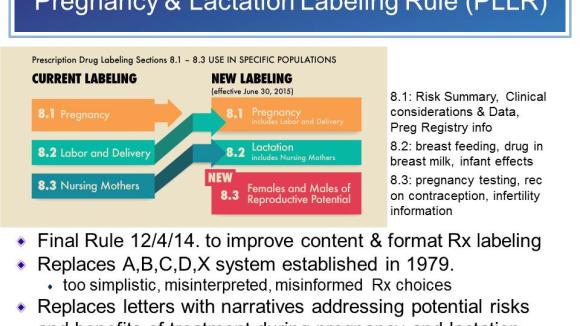
A recent article from Healio.com reviewed the FDA’s Pregnancy and Lactation Labeling Rule (PLLR) that became effective June 30th.

Search for Terms or Answers
A recent article from Healio.com reviewed the FDA’s Pregnancy and Lactation Labeling Rule (PLLR) that became effective June 30th.
The American College of Rheumatology (ACR) has published guidelines to manage reproductive health issues in rheumatic disease (RMD) patients before, during and after pregnancy.

Rheumatoid arthritis affects women in their child-bearing years and many will face the issue of pregnancy and RA management at some point. Here are11 considerations for those managing RA patients who wish to become pregnant.

The American College of Rheumatology established a guidelines committee that consisted of both patients, rheumatologists and maternal-fetal health experts. After a a systematic review of the medical literature regarding contraception, assisted reproductive technology, fertility preservation, hormone replacement therapy pregnancy, lactation, and medication use in rheumatic disease patients, they published 12 good practice statements and 131 recommendations for reproductive health care in RMD patients.

Hydroxychloroquine (HCQ) helped reduce recurrent maternal autoantibody-mediated congenital heart block (CHB) in fetuses, an open-label study suggested.

Dr Jack Cush reviews the news, journal articles and takes a few Back Talk questions this week:

Pisetsky and Lipsky have reviewed the evolving literature on the utility of antinuclear antibodies (ANA). ANAs generated as part of an autoimmune disorder may form immune complexes that mediate pathogenesis by tissue deposition or cytokine induction.

Extraintestinal manifestations (EIMs) frequently accompany inflammatory bowel disease, often augmenting morbidity and mortality are associated with disease activity and may increase the need for surgery or treatment escalation. A recent review in GUT details the treatment options for patients with EIM.

Since patients with SLE have longer life expectancies in the modern era, they may be at elevated risk for HCQ adverse events, including maculopathy and cardiomyopathy. Therefore, Peter M. Izmirly, MD, of New York University School of Medicine in New York City, and colleagues assessed whether older SLE patients could safely discontinue HCQ.

By downloading this material, I acknowledge that it may be used only for personal use and personal education and that I will accredit RheumNow.com as the source and owner of this material. Commercial use or mass reproduction of this material without permission from RheumNow (info@rheumnow.com) is prohibited.


