
Article
The American College of Rheumatology (ACR) has published evidence that rheumatologic care can save more than $2700 per patient per year.

Search for Terms or Answers
The American College of Rheumatology (ACR) has published evidence that rheumatologic care can save more than $2700 per patient per year.

The US Food and Drug Administration (FDA) has approved canakinumab (Ilaris) for the treatment of gout flares in adults who cannot be treated with NSAIDs, colchicine, or repeated courses of corticosteroids. The drug is also indicated for people who could not tolerate or had an inadequate response to NSAIDs or colchicine.

Patients with gout and type 2 diabetes treated with SGLT2 inhibitors not only had reduced numbers of gout flares, but also lived longer compared with other such patients receiving other medications, researchers said.

The American College of Rheumatology (ACR) and EULAR have combined efforts to establish an international multidisciplinary Steering Committee to develop classification criteria for the new antiphospholipid syndrome (APS) to be applied in observational studies and clinical trials.
Medical schools are rife with mentors. In my rheumatology fellowship I had tow great mentors, Peter Lipsky and Morris Ziff. They introduced me, and other young rheumatologists, to other rheumatology giants and mentors, including Dr. Naomi Rothfield - who they often spoke of as a leader worth following. She was engaging and inclusive. And she stood out as one of the few strong rheumatology department chairs in the 1980s.
Naomi F. Rothfield, MD, famed leader from the University of Connecticut, passed away on Sunday, July 2, 2023, at the age of 94.

Researchers have shown that gut microbiome differences may be associated with later development of juvenile idiopathic arthritis (JIA), and that such differences are present years before the disease is diagnosed.

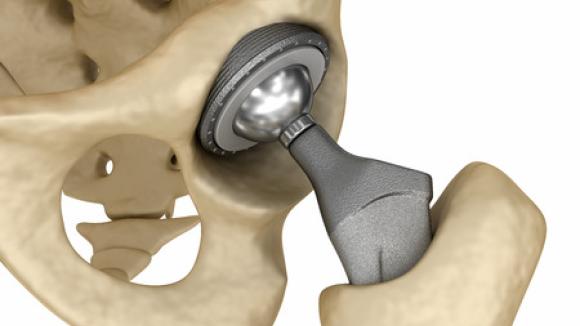
Potentially modifiable comorbid conditions and complications have a major impact on the risks of total hip arthroplasty (THA) for people in their nineties, reports a study in The Journal of Bone & Joint Surgery.
Dr. Jack Cush comments on the news and journal articles from the past week on RheumNow.com: VEXAS scoring, scleroderma sine scleroderma and head scratchers from southeast Asia.

A real-world rheumatoid arthritis (RA) cohort study from Israel shows significant variability of drug survival using biologic disease-modifying anti-rheumatics drugs (bDMARDs) and targeted synthetic DMARDs (tsDMARDs).

The American College of Rheumatology released summaries of two new guidelines for the Screening and Monitoring of Interstitial Lung Disease in People with Systemic Autoimmune Rheumatic Disease and for the Treatment of Interstitial Lung Disease in People with Systemic Autoimmune Rheumatic Diseases.
A recent Wall St. Journal essay (by AB Jena and C Worsham) suggests that a physician’s effectiveness has less to do with age than with how many patients they see and how well they stay up to date on research.

EULAR has published its expert consensus regarding the recommendations for imaging in the most common types of large vessel vasculitis (LVV) -- giant cell arteritis (GCA) and Takayasu arteritis (TAK).
Medicare beneficiaries with ankylosing spondylitis (AS) incur frequent bone fractures, a new study indicated, with the risk boosted by some unsurprising factors but also including one that was not expected.

The Lancet reports a new study revealing that the most common form of arthritis, osteoarthritis, affects 15% of the global population over the age of 30.
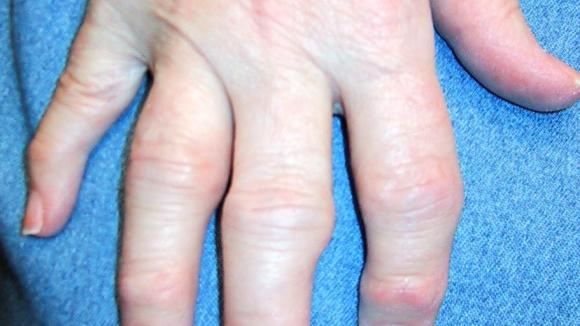
A nested case–control study from the Danish Nationwide Registries finds an increased risk of cardiovascular (CV) disease in the months preceding diagnosis of ANCA-associated vasculitis (AAV).

Systemic sclerosis (SSc) sine scleroderma is a unique and rare subset of SSc defined by the absence of skin fibrosis. An analysis of the EUSTAR database suggests systemic disease can be a problem, including interstitial lung disease (>40%) and SSc renal crisis (almost 3%).

Dr. Jack Cush reviews the news and journal reports from RheumNow.com this past week.
The IL-23 inhibitor guselkumab was studied in active psoriatic arthritis patients in the phase 3b COSMOS trial, and shown to be clinically effective while reducing multiple effector cytokines, including those associated with the IL-23/IL-17 pathway.
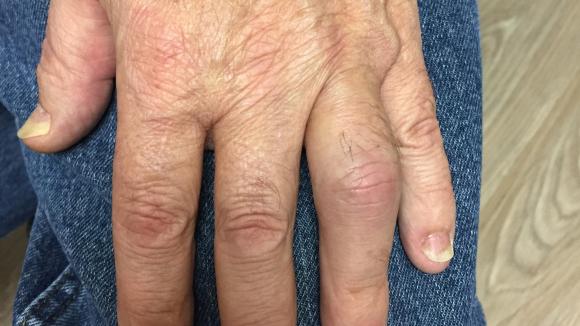
Lupus researchers from the University of Houston are reporting the first use of the powerful imaging mass cytometry to examine the kidneys of patients with systemic lupus erythematosus, as a means of diagnosing lupus nephritis in SLE patients. LN is a severe inflammation of the kidneys and a major cause of death in lupus patients. Up to 60% of SLE patients will develop renal symptoms with 5–20% of those patients progressing to end stage kidney disease within 10 years.
Despite being in a state of remission or low disease activity state, in patients with axial spondyloarthritis, up to 42% may still have residual disease.
By downloading this material, I acknowledge that it may be used only for personal use and personal education and that I will accredit RheumNow.com as the source and owner of this material. Commercial use or mass reproduction of this material without permission from RheumNow (info@rheumnow.com) is prohibited.

